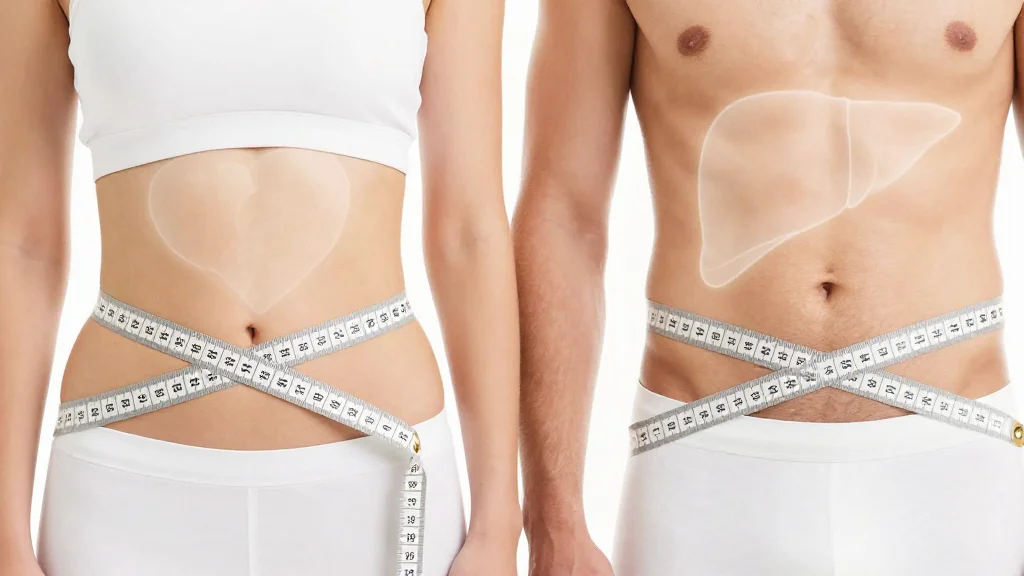
Gender‑Specific Obesity Risks Prompt New Index to Replace BMI for Heart Disease Prediction

Why It Matters
The shift from BMI to a waist‑centric index resonates with the biohacking community’s emphasis on granular, data‑driven self‑optimization. By pinpointing where fat accumulates, individuals can tailor nutrition, exercise, and even pharmacologic strategies to mitigate the specific risks that affect them based on sex. This precision approach could accelerate the adoption of personalized health protocols that move beyond generic weight loss goals. Moreover, the gender‑specific findings challenge the one‑size‑fits‑all paradigm that dominates many commercial health platforms. Biohackers who rely on wearable devices and metabolic trackers now have a scientific basis to demand sex‑adjusted algorithms, potentially spurring new product development and data‑analytics services that incorporate liver enzyme and inflammatory marker monitoring alongside anthropometrics.
Key Takeaways
- •Study of 886 women and 248 men with obesity presented at ECO in Istanbul (May 12‑15, 2026).
- •Men showed higher waist circumference (120 cm) and liver enzymes; women had higher cholesterol and inflammatory markers.
- •Researchers introduced a waist‑to‑height ratio index that predicts heart‑failure risk 30 % better than BMI.
- •Index correlates with high‑sensitivity CRP, linking central obesity to systemic inflammation.
- •Prospective validation trial planned for late 2026 to test waist‑reduction interventions on heart‑failure outcomes.
Pulse Analysis
The emergence of a waist‑to‑height ratio index marks a pivotal moment for the biohacking ecosystem, which has long critiqued BMI’s bluntness. Historically, DIY health enthusiasts have leveraged body‑fat calculators, but few have had access to clinically validated metrics that differentiate risk by sex. By anchoring risk assessment in visceral fat—an organ‑proximate, metabolically active depot—the new index offers a quantifiable target that can be monitored with existing wearables capable of measuring waist girth or estimating body composition via bio‑impedance.
From a market perspective, this development could catalyze a wave of niche devices and software platforms that integrate waist‑centric analytics with real‑time inflammation tracking (e.g., CRP sensors). Companies that already provide continuous glucose monitors or lipid panels may expand their portfolios to include liver‑function and inflammatory biomarkers, creating a more holistic health‑dashboard. The gender‑specific data also opens opportunities for gender‑tailored coaching services, a segment that has been under‑served despite clear physiological differences.
Looking ahead, the key challenge will be translating the academic findings into actionable consumer tools without over‑promising. Validation in diverse populations, regulatory clearance for any diagnostic claims, and clear guidance on intervention thresholds will determine whether the index becomes a staple of the biohacker’s toolkit or remains a research curiosity. If the upcoming 2026 trial confirms that waist‑focused lifestyle changes cut heart‑failure rates, we could see insurance providers and employers incentivizing waist‑reduction programs, further embedding this metric into mainstream preventive health.
Gender‑Specific Obesity Risks Prompt New Index to Replace BMI for Heart Disease Prediction
Comments
Want to join the conversation?
Loading comments...