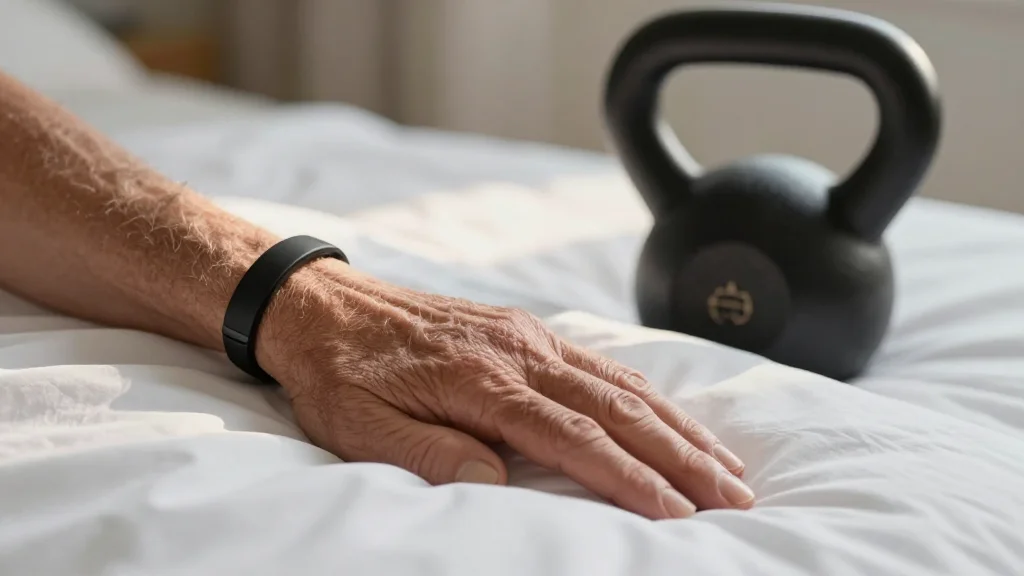
High‑Intensity Exercise Cuts Sleep Disruptions in Older Adults with Cognitive Impairment

Companies Mentioned
Why It Matters
Sleep quality is a modifiable risk factor for cognitive decline, and interventions that can be self‑administered hold outsized appeal for both individuals and health systems. By demonstrating that vigorous activity yields measurable reductions in sleep disturbances, the study provides a low‑cost, scalable tool that aligns with the biohacker ethos of self‑optimization through data‑driven lifestyle changes. Moreover, as the MCI population is set to more than double by 2060, widespread adoption of such exercise protocols could alleviate future burdens on caregiving infrastructure and reduce the incidence of dementia. The findings also bridge a gap between academic research and consumer health technology. Wearables like the Oura Ring, already popular among longevity enthusiasts, can now serve as both diagnostic and therapeutic platforms, enabling continuous monitoring and iterative adjustment of exercise intensity. This convergence of objective measurement, personalized coaching, and evidence‑based practice could accelerate the mainstreaming of biohacking strategies in geriatric care.
Key Takeaways
- •High‑intensity exercise cuts sleep disruptions by ~0.2 seconds per extra second of activity.
- •Study used Oura Ring data from seven older adults with mild cognitive impairment over 14 days.
- •Light activity also improves sleep, but moderate exercise showed no significant effect.
- •U.S. MCI population projected to grow 76% to >21 million by 2060.
- •Findings support wearable‑driven, intensity‑based exercise programs as a biohack for sleep and cognition.
Pulse Analysis
The Texas A&M study arrives at a moment when the biohacking community is increasingly looking beyond supplements to behavioral interventions that can be quantified and optimized. Historically, sleep‑enhancement strategies have centered on pharmacology or ambient modifications; this research re‑positions physical activity—particularly at high intensity—as a primary lever. The quantitative link between each second of vigorous movement and a fractional reduction in sleep fragmentation offers a novel metric that can be embedded into algorithmic coaching platforms, turning raw biometric streams into actionable prescriptions.
From a market perspective, the convergence of wearables, digital health platforms, and evidence‑based exercise protocols creates a fertile ground for new service models. Companies that can integrate real‑time intensity tracking with personalized coaching—potentially leveraging AI to predict optimal workout windows based on circadian rhythms—stand to capture a segment of the aging population that is both tech‑savvy and motivated to extend cognitive health. However, the study’s limitations—small sample size and lack of activity type differentiation—signal that broader validation is essential before commercial roll‑outs can claim efficacy.
Looking ahead, the key question is scalability. If larger trials confirm these findings, we may see a shift toward community‑based high‑intensity programs tailored for cognitively impaired seniors, supported by remote monitoring and feedback loops. Such an ecosystem would not only empower individuals to take charge of their sleep health but also provide clinicians with objective data to guide interventions, potentially reshaping preventive strategies for dementia.
High‑Intensity Exercise Cuts Sleep Disruptions in Older Adults with Cognitive Impairment
Comments
Want to join the conversation?
Loading comments...