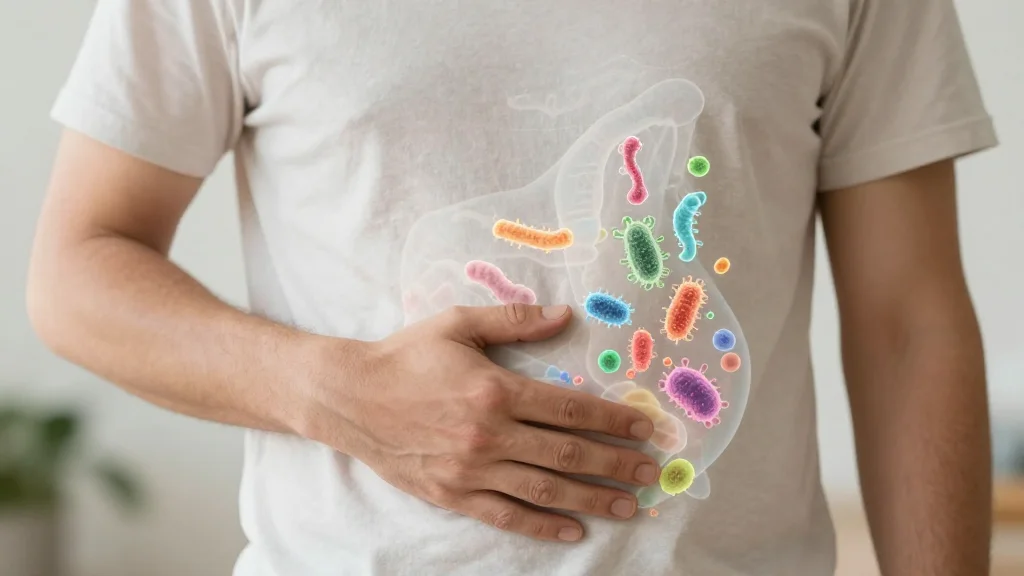
Study Links Higher Gut Bacteria Diversity to Stronger Hormonal Stress Response

Why It Matters
Understanding the gut‑brain axis at the level of stress hormones opens a new frontier for personal health optimization. If microbial diversity can be harnessed to calibrate cortisol spikes, individuals could gain a non‑pharmacological tool for improving mental performance under pressure, enhancing recovery, and possibly mitigating chronic stress‑related disorders. The findings also underscore the importance of dietary diversity, reinforcing public‑health messages about fiber‑rich, plant‑based nutrition. For the biohacking industry, the research validates a core premise: that microbiome engineering can produce measurable physiological benefits. This could accelerate investment in next‑generation probiotics, microbiome‑targeted diagnostics, and personalized nutrition platforms that promise to fine‑tune stress resilience as a competitive edge for athletes, executives, and anyone seeking cognitive edge.
Key Takeaways
- •Study of 74 healthy adults links higher gut microbial alpha diversity to stronger cortisol responses during stress.
- •Higher estimated butyrate production correlates with increased hormonal reactivity; higher propionate production shows the opposite effect.
- •Researchers used a standardized stress test and saliva cortisol measurements alongside stool microbiome sequencing.
- •Lead author Thomas Karner emphasizes that a robust acute stress response can aid flexible adaptation.
- •Findings suggest diet‑based microbiome modulation could become a biohacking strategy for stress resilience.
Pulse Analysis
The Vienna study arrives at a moment when the biohacking market is saturated with claims about gut health, yet few have demonstrated a direct physiological endpoint. By tying microbial diversity to cortisol—a gold‑standard stress biomarker—the research provides a rare quantitative anchor for the gut‑brain narrative. Historically, microbiome research has focused on chronic conditions like obesity or inflammatory disease; this shift toward acute neuroendocrine outcomes broadens the commercial appeal of microbiome‑focused products.
From a competitive standpoint, companies that can reliably shift SCFA profiles may differentiate themselves. Existing probiotic brands largely market generic gut health benefits, but a formulation that demonstrably raises butyrate production could command premium pricing, especially if paired with wearable cortisol monitors that validate real‑time effects. Moreover, the nuanced finding that propionate may dampen stress reactivity warns against one‑size‑fits‑all solutions; precision microbiome kits that assess individual SCFA capacity could become the next wave of personalized biohacking tools.
Looking ahead, the key challenge will be moving from correlation to causation. Longitudinal trials, perhaps integrating controlled dietary interventions or targeted microbial consortia, will be essential to prove that intentional microbiome changes can reliably modulate stress hormones. If successful, we could see a new class of “stress‑optimizing” nutraceuticals, a shift that would reshape both the wellness industry and clinical approaches to stress‑related disorders. Until then, the study serves as a compelling proof‑of‑concept that the gut microbiome is not just a passive passenger but an active lever for acute physiological performance.
Study Links Higher Gut Bacteria Diversity to Stronger Hormonal Stress Response
Comments
Want to join the conversation?
Loading comments...