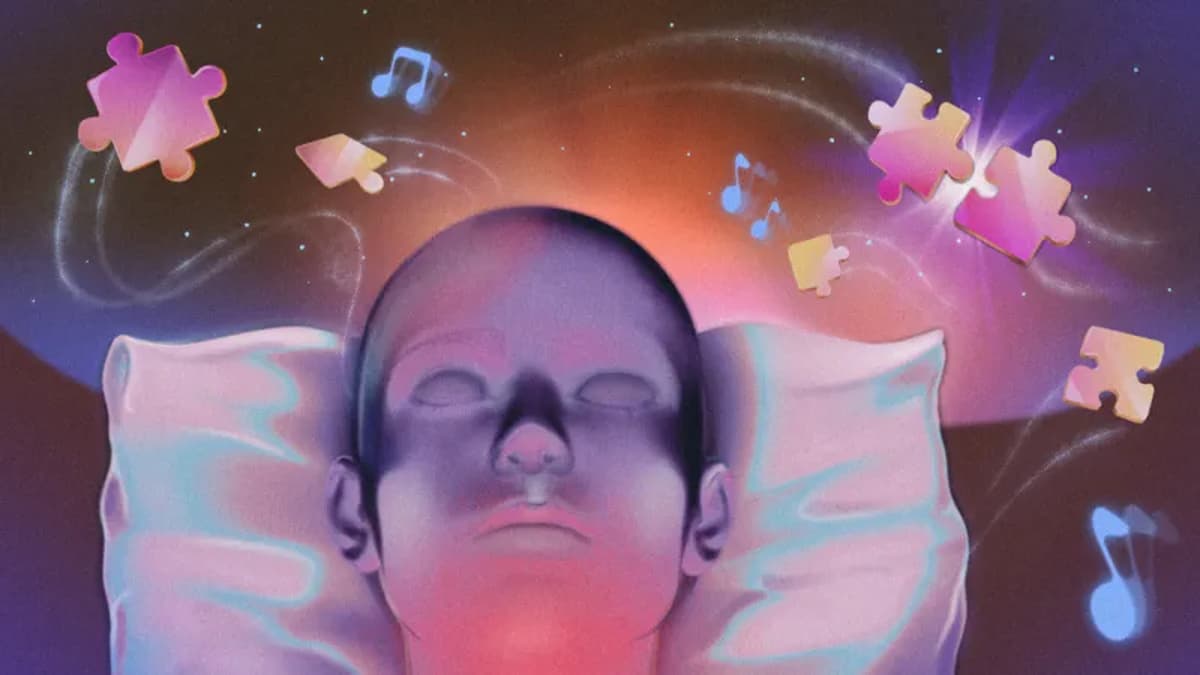
The Right Sounds May Turn Sleep Into a Problem-Solving Tool
•March 3, 2026
0
Why It Matters
The findings suggest that external cues can steer subconscious processing, opening new avenues for enhancing creativity and productivity through sleep.
Key Takeaways
- •Sound cues during REM boost puzzle solving
- •75% dreamed unsolved puzzles after cue
- •Solved rate rose to 42% vs 17% without dreaming
- •Study used lucid dreamers, 20 participants
- •Targeted memory reactivation works beyond deep sleep
Pulse Analysis
Sleep has long been linked to insight, but scientific evidence for directing dream content has been sparse. Recent advances in targeted memory reactivation (TMR) have shown that subtle sensory cues—sounds, odors, or vibrations—can reactivate specific memories during deep, slow‑wave sleep. By shifting the focus to rapid eye movement (REM) sleep, where vivid dreaming and creative cognition converge, researchers are probing a new frontier that blends neuroscience with practical problem‑solving strategies.
In the Northwestern experiment, 20 experienced lucid dreamers were presented with a series of brain‑teasing puzzles, each paired with a unique instrumental snippet. During the participants’ REM cycles, the associated soundtracks for unsolved puzzles were replayed, prompting the sleepers to engage with the problems in their dreams. Seventy‑five percent reported dreaming about the cued puzzles, and those who did achieved a 42% success rate on the next‑day solutions, a stark contrast to the 17% success among participants who did not dream about the cues. These metrics underscore a quantifiable boost in creative processing when external stimuli intersect with subconscious rehearsal.
The implications extend beyond academic curiosity. If TMR can reliably enhance creative output, industries ranging from product design to strategic planning could integrate low‑cost auditory cues into employee wellness programs. However, ethical considerations arise around manipulating dream content for performance gains. Future research must balance potential productivity benefits with respect for the intrinsic value of dreaming, ensuring that any commercial applications preserve individual autonomy and mental health.
The right sounds may turn sleep into a problem-solving tool
0
Comments
Want to join the conversation?
Loading comments...