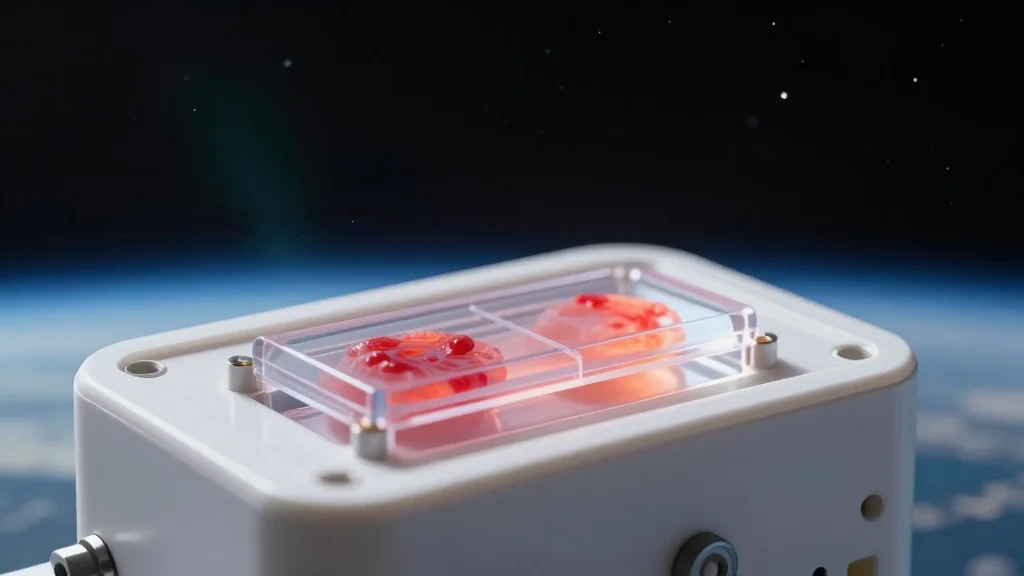
Wyss Institute’s Organ‑Chip Avatars Fly on Artemis II to Probe Astronaut Health

Why It Matters
The deployment of organ‑chip avatars on Artemis II marks the first time living human tissue has been sent into deep space for real‑time monitoring, bridging a critical gap between in‑vitro models and actual human physiology under extreme conditions. For the biohacking ecosystem, the experiment offers a proof‑of‑concept that microphysiological systems can survive and function in harsh environments, suggesting they could be repurposed for rapid, on‑demand health testing on Earth. Moreover, the data could accelerate the development of personalized countermeasures against radiation, a key hurdle for both space exploration and cancer therapy. Beyond immediate scientific value, the project signals a shift toward modular, tissue‑level diagnostics that can be scaled across industries—from aerospace to pharmaceutical R&D—potentially democratizing access to high‑fidelity biological testing. As biohackers and longevity researchers seek ever more precise models of human aging, the success of AVATAR could catalyze a wave of investment in organ‑chip platforms, driving down costs and expanding their use beyond elite research labs.
Key Takeaways
- •Wyss Institute and Emulate placed bone‑marrow organ‑chip avatars on Artemis II, launched April 1, 2026.
- •Chips contain cells harvested from the four astronauts and travel alongside the crew on Orion.
- •Paired Earth‑based control chips will enable direct comparison of microgravity and radiation effects.
- •The AVATAR experiment aims to expand sample sizes for space‑medicine risk assessments on future Moon and Mars missions.
- •Success could accelerate adoption of organ‑chip technology in both aerospace health monitoring and terrestrial biohacking research.
Pulse Analysis
The Artemis II organ‑chip payload is more than a scientific curiosity; it is a strategic asset that could reshape the economics of space health monitoring. Historically, NASA has relied on limited blood draws and post‑flight analyses, which constrain the granularity of risk models. By embedding living tissue in the spacecraft, the agency can collect continuous, organ‑specific data without invasive procedures, potentially reducing the need for costly in‑flight medical interventions. This shift mirrors trends in the broader biotech sector, where microphysiological systems are moving from niche academic tools to commercial platforms capable of high‑throughput drug screening.
For biohackers, the AVATAR project validates a core premise: that engineered tissue can survive and provide actionable data outside the controlled environment of a lab. If the bone‑marrow chips demonstrate robust performance, we can expect a surge in DIY‑oriented kits that leverage similar technology for personalized health monitoring—think portable radiation detectors paired with tissue‑level readouts. Companies may begin to market “space‑grade” organ chips to research institutions and even affluent consumers seeking cutting‑edge longevity diagnostics.
Looking ahead, the integration of organ‑chip data with AI analytics could create a feedback loop where real‑time physiological changes inform adaptive countermeasure deployment, both on spacecraft and in clinical settings. The success of AVATAR could thus accelerate a convergence of space medicine, precision health, and biohacking, turning what was once a niche research experiment into a cornerstone of next‑generation health technology.
Wyss Institute’s Organ‑Chip Avatars Fly on Artemis II to Probe Astronaut Health
Comments
Want to join the conversation?
Loading comments...