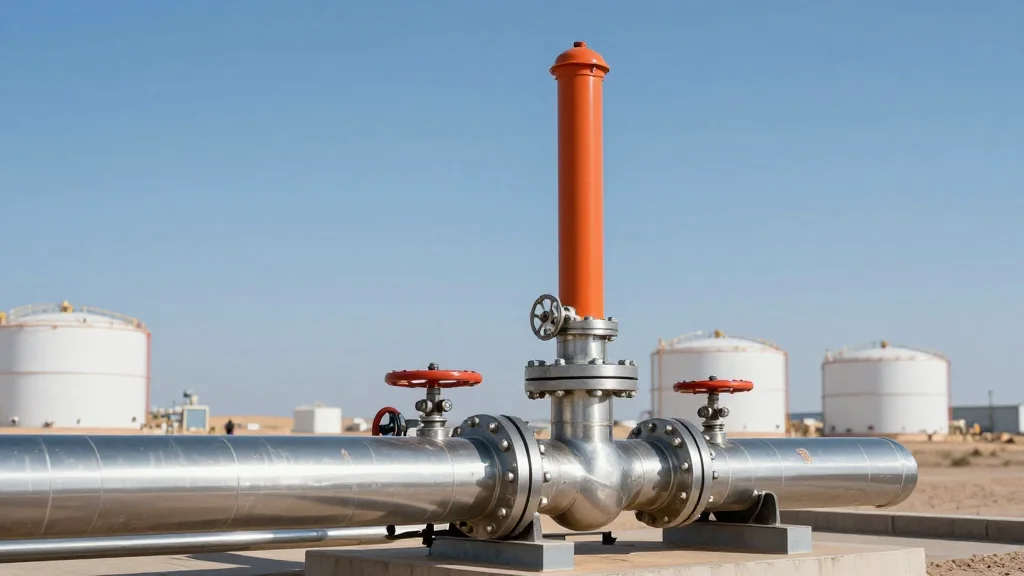
Turkmengaz Signs $‑$ Contract with Chinese Firm to Build New Galkynysh Gas Facility

Why It Matters
The Galkynysh field is a cornerstone of Turkmenistan’s gas export strategy. By adding a new production unit, the country can increase its export capacity at a time when global markets are scrambling for reliable supply after disruptions in the Persian Gulf. The Chinese partnership also deepens economic ties between Turkmenistan and Beijing, potentially shifting trade flows toward Asia and reducing Europe’s reliance on Russian gas. Moreover, the concurrent airstrikes on Iran’s South Pars zone highlight how geopolitical risk can quickly translate into commodity price volatility, making alternative sources like Turkmen gas more attractive to import‑dependent economies. For investors and policymakers, the deal signals a concrete step toward diversifying the global gas supply chain. It underscores the importance of infrastructure investment in maintaining market stability and offers a glimpse of how emerging partnerships can reshape the energy landscape in a region fraught with conflict.
Key Takeaways
- •Turkmengaz to sign contract with Chinese firm for new Galkynysh gas facility
- •Project aims to design, construct and equip a new production unit at the field
- •Deal announced on April 6, 2026, as part of Turkmenistan’s fuel sector expansion
- •Airstrikes on Iran’s South Pars zone raise regional energy security concerns
- •Potential increase in Turkmen gas exports could affect European and Asian markets
Pulse Analysis
Turkmenistan’s decision to enlist a Chinese partner for the Galkynysh expansion reflects a pragmatic response to two converging pressures: the need for capital‑intensive infrastructure and the desire to hedge against geopolitical shocks in the Gulf. Historically, Turkmen gas projects have been financed by Western lenders, but the tightening of sanctions on Russia and heightened scrutiny of Middle‑East supply routes have nudged Turkmen authorities toward Asian capital. Chinese firms bring not only financing but also a track record of rapid delivery on large‑scale energy projects, which could shorten the time‑to‑revenue for Turkmenistan.
From a market perspective, the added capacity from Galkynysh will likely ease the supply crunch that has pushed European gas prices upward since the early 2020s. While the exact output boost remains undisclosed, even a modest increase could provide a buffer against further disruptions, especially if the South Pars attacks lead to prolonged output cuts in Iran. Traders will be watching the contract’s financing details closely; a favorable debt structure could make Turkmen gas a more price‑competitive alternative to LNG imports from the United States or Qatar.
Strategically, the partnership may also signal a broader realignment of Central Asian energy corridors. With China already a major buyer of Turkmen gas via the Central Asia–China pipeline, the new facility could be designed to feed that route directly, reducing reliance on the aging Caspian‑Black Sea export chain. This shift could diminish the leverage of traditional European pipelines and accelerate the diversification of Turkmenistan’s export portfolio. In the longer term, the success of this joint venture could encourage other Central Asian states to pursue similar Asian‑led projects, reshaping the geopolitics of the Eurasian energy market.
Turkmengaz signs $‑$ contract with Chinese firm to build new Galkynysh gas facility
Comments
Want to join the conversation?
Loading comments...