
Big Think
Knowledge channel featuring experts and thought leaders across disciplines. In biotechnology, Big Think hosts concise interview clips with scientists and industry experts about trends like gene editing, biotech ethics, and future medicine, delivered in an insightful talk format.
The Quantum Realm, the Cosmological Realm, and the Multiverse, in 69 Minutes | Hakeem Oluseyi
In this Big Think presentation, astrophysicist Hakeem Oluseyi explores three of his "Nine Realms": the quantum realm, the cosmological realm, and the multiverse. He frames the discussion around how quantum physics reshapes our intuition, describing particles not as tiny billiard balls but as excitations of omnipresent quantum fields. Oluseyi emphasizes that quantum fields fill all of spacetime, with electrons, quarks and photons emerging as energy packets in these fields. He likens identical electrons to musical notes—each C is the same—and explains that the Higgs field endows particles with mass. Wave functions, he notes, are vectors in an abstract Hilbert space that assign probabilities to every possible measurement outcome, collapsing to a single value only when observed. To make abstract concepts tangible, Oluseyi uses analogies: vibrating strings that never truly stop, a swimming pool filled with multiple colored jell‑o layers representing co‑existing quantum fields, and pendulums whose extreme positions are visited more often than the equilibrium point. He also touches on entanglement, describing how separated particles behave as a single entity. The talk underscores the unresolved tension between treating spacetime as a fundamental backdrop versus an emergent phenomenon arising from quantum fields. Quantizing spacetime remains a major open problem, and the multiverse idea extends these layered fields into a broader reality, hinting at future breakthroughs in both theoretical physics and emerging technologies.

3 Experts Explain Everything You Need to Know About Loneliness
The video brings together three experts to unpack loneliness, framing it as both a psychological state and a measurable health risk. They explain how perceived isolation triggers a cortisol‑driven stress response, heightening inflammation and weakening immunity—effects researchers say are comparable to...
The Productivity Advice that Will Actually Improve Your Life | Chris Bailey: Full Interview
The interview with productivity author Chris Bailey centers on intentionality as the true engine of effective work. He argues that most generic productivity tips are fluff, and real progress comes from aligning time, attention, and energy with deliberate intentions rooted...
Why Humans Need Fiction, According to Neuroscience
The video explores neuroscience behind humanity’s craving for fiction, focusing on the left‑hemisphere “interpreter” that weaves our experiences into coherent stories. It argues that consciousness is not a seamless, linear stream but a post‑hoc narrative constructed by unconscious processes. Key insights...
What Newton and Einstein Agreed on that Our Society Doesn’t | Sean Carroll
The video explains that both Newtonian and Einsteinian physics share a core principle: the fundamental equations are reversible in time, meaning a complete state determines both past and future. Sean Carroll emphasizes that this time‑symmetry contrasts with our everyday experience...

How Music Rewires and Impacts the Human Body | Michael Spitzer: Full Interview
In a wide‑ranging interview, University of Liverpool music professor Michael Spitzer argues that music is a fundamental biological force that predates Homo sapiens and continues to shape our bodies and societies. He traces music’s deep roots from animal calls to the...
How Hope Changes the Structure of Your Brain
The video explores how hope reshapes brain architecture, linking optimism, spirituality, and measurable neuro‑biological changes. It argues that hope occupies the narrow corridor between absolute impossibility and certainty, allowing agency without demanding proof, and that this mental stance correlates with...
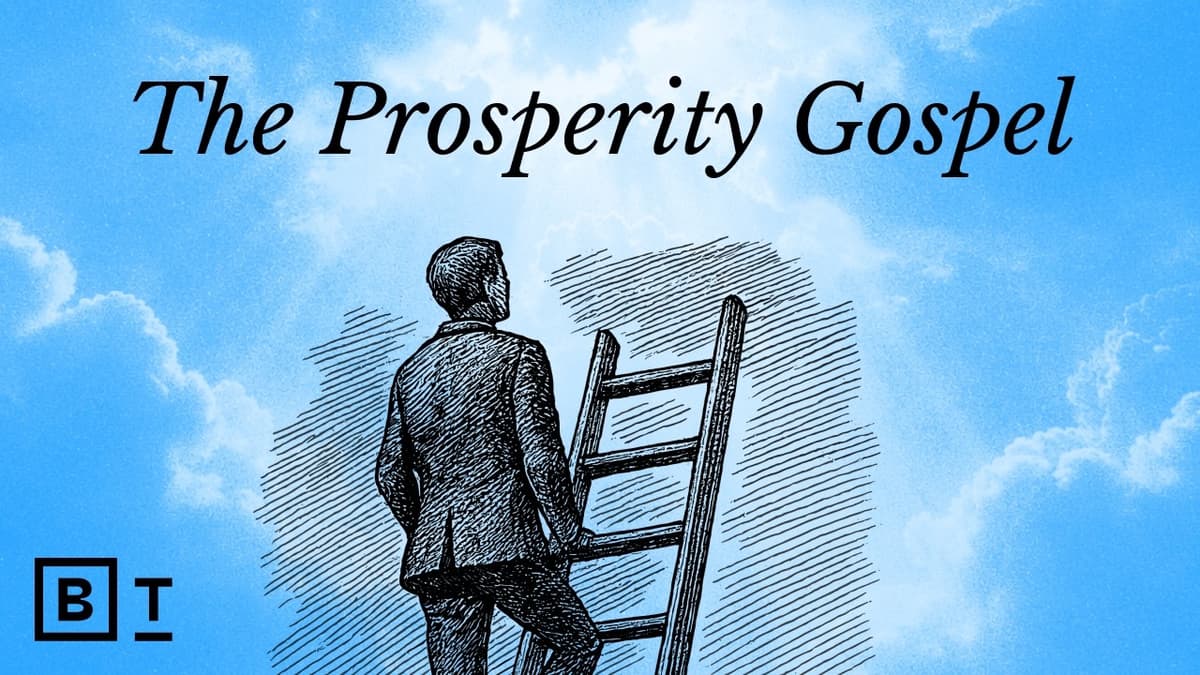
The Dangerous and Addictive Fantasy of “Unlimited Potential” | Kate Bowler
In this talk, historian Kate Bowler argues that the American obsession with “unlimited potential” is a cultural fantasy rooted in 19th‑century self‑help and the prosperity gospel. She traces how the belief that the mind can conjure wealth, health, and happiness turned...
The Child Who Learned to Disappear Is Still Running Your Adult Relationships | Nicole LePera
Dr. Nicole LePera, a holistic psychologist, opens the conversation by explaining how unresolved childhood trauma silently governs adult relationships. She introduces her new book, *Reparenting the Inner Child*, and outlines six archetypal patterns—denial, emotional invisibility, parental projection, boundarylessness, appearance‑focus, and...
The Biggest Red Herring in Our Search for Alien Life | Sara Seager
In this talk, astrophysicist Sara Seager reframes the classic Drake Equation to hunt for life by detecting biosignature gases in exoplanet atmospheres rather than listening for intelligent radio transmissions. She explains how transit spectroscopy works: when a planet passes in front...
The Real Secret of the Periodic Table | David Epstein
David Epstein’s talk debunks the romantic legend that Dmitri Mendeleev dreamed the periodic table into existence, revealing instead a pragmatic origin rooted in publishing pressures. Mendeleev was contracted to write a two‑volume chemistry textbook. With only eight of the 63 known...

The Blueprint for Becoming an Emotionally Mature Adult, in 68 Minutes | Mark Manson: Full Interview
Mark Manson sits down with Big Think to outline a practical blueprint for becoming an emotionally mature adult. He argues that contemporary society’s obsession with constant happiness—what philosophers call hedonia—distracts us from the deeper, purpose‑driven eudaimonia that truly sustains life...
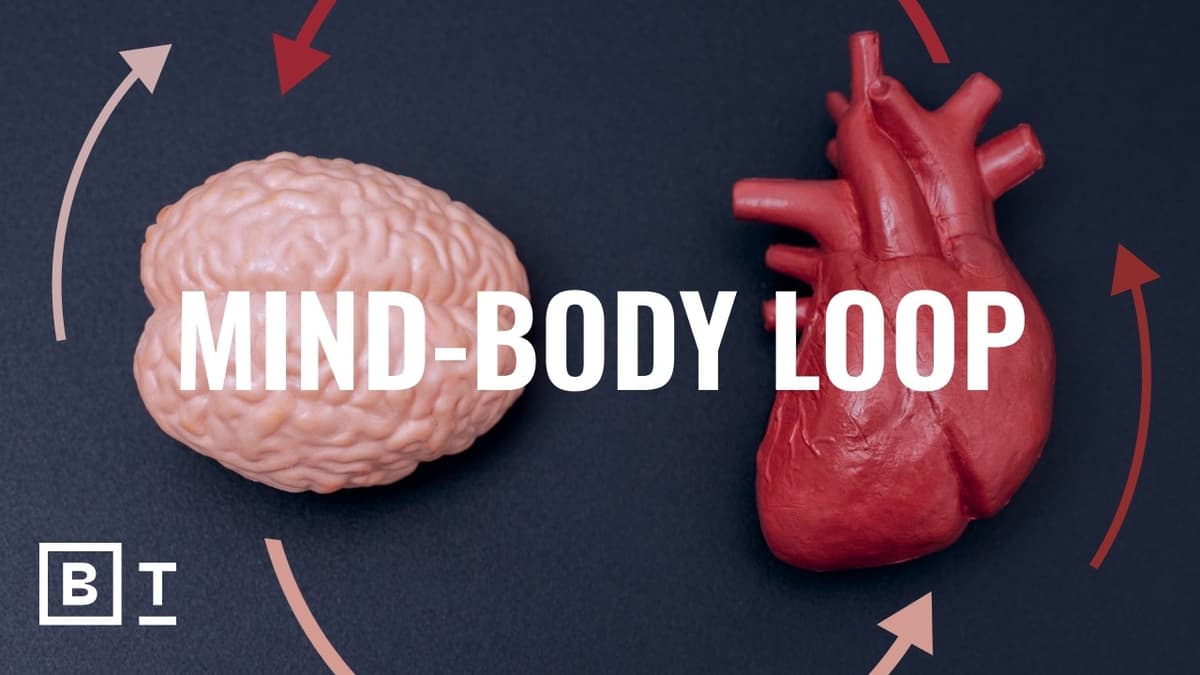
The Brain-Body Loop That's Running Your Life
The video explores the brain‑body loop, emphasizing that the brain continuously maps the body’s internal state to drive corrective actions, from thirst to stress responses. This bidirectional communication underpins the mind‑body connection, a silent engine that shapes perception, emotion, and...
The Secret to Beating Procrastination | Chris Bailey
In the short talk, productivity author Chris Bailey tackles the perennial problem of procrastination, offering a simple, science‑backed tactic to overcome it. He notes that research shows 15‑20 % of adults chronically procrastinate, but emphasizes that everyone delays tasks at times because...
Hustle Culture Stole the Word Excellence and Gutted Its True Meaning | Brad Stulberg: Full Interview
In this Big Think interview, author and professor Brad Stulberg challenges the prevailing hustle narrative, arguing that true excellence is not a checklist of early‑morning routines or metric‑obsessed habits. Instead, he defines excellence as "involved engagement" in activities that resonate...