
Big Think
Knowledge channel featuring experts and thought leaders across disciplines. In biotechnology, Big Think hosts concise interview clips with scientists and industry experts about trends like gene editing, biotech ethics, and future medicine, delivered in an insightful talk format.
The Hidden Cause of Trauma | Nicole Lepera
The video argues that trauma is rooted less in the magnitude of an event and more in the absence of supportive processing. Nicole Lepera emphasizes that everyday experiences—such as a divorce or school bullying—can become traumatic when children lack empathetic adults to help them navigate distress. Lepera highlights several mechanisms: a present, validating parent can buffer a child’s grief, while a dismissive response (e.g., scrolling on a phone) signals that emotions are unwelcome. Repeated exposure to such neglect cultivates hyper‑independence, as children learn to conceal vulnerability and rely solely on themselves. These patterns, she notes, shape long‑term stress resilience and coping styles. A memorable line underscores the thesis: “It’s not what happened, it’s how we are supported.” She illustrates this with contrasting scenarios—a child comforted during a divorce versus one left alone—showing how the same event yields divergent outcomes based on relational context. The implication for businesses, educators, and policymakers is clear: fostering environments where emotional expression is acknowledged and supported can mitigate trauma’s hidden costs. Investing in training for managers, teachers, and caregivers to respond empathetically may improve mental‑health outcomes and productivity across the lifespan.

America’s Unhealthy Obsession with Making Pain Meaningful | Kate Bowler
In her talk "America’s unhealthy obsession with making pain meaningful," historian Kate Bowler argues that U.S. culture has turned purpose‑seeking into a compulsive narrative, insisting that every hardship must serve a lesson. She calls this the rise of "purpose monsters," a...

The Brain on MDMA Can Go Somewhere CBT Has Never Been Able to Reach | Rachel Yehuda: Full Interview
The interview with Dr. Rachel Yehuda explores why trauma endures far beyond the original event and how emerging psychedelic‑assisted treatments, especially MDMA, are reshaping PTSD care. Yehuda distinguishes stress—typically resolved by removing the stressor—from trauma, which acts as a lifelong watershed....

A Scientific Tour of Your Dreaming Brain
The video takes viewers on a scientific tour of the dreaming brain, arguing that REM sleep is not a vestigial quirk but a critical evolutionary adaptation that underpins human creativity and higher‑order cognition. It contrasts ancient reverence for dreams with...

The Search for Aliens Is Shifting Its Criteria | Sara Seager
Sara Seager argues that the hunt for extraterrestrial life is moving beyond classic radio‑beacon SETI toward a broader suite of technosignatures. She outlines how scientists now scan for anomalous infrared excesses, artificial illumination, satellite swarms, and even megastructures such as Dyson...

How Accurate Are Our Memories? | Lisa Genova
The video explores how different types of memory vary in reliability, distinguishing semantic, procedural (muscle), and episodic systems. Semantic memory stores factual knowledge—like multiplication tables—while procedural memory preserves learned motor skills such as riding a bike, both remaining remarkably stable...

The Bizarre Phenomena that Medicine Struggles to Explain | David Linden: Full Interview
In this interview, Johns Hopkins neuroscientist David Linden explains how recent research is overturning the old split between mind and body, showing that the brain not only reacts to bodily states but actively governs them. He traces his own shift...

How Experiences Affect Your DNA | Rachel Yehuda
In a recent talk, neuroscientist Rachel Yehuda explains how epigenetics— the regulatory layer that determines which genes are active— can be reshaped by life experiences. She notes that epigenetic marks are stable through mitosis and meiosis, allowing environmental signals such as...

Robert Herjavec: The Hidden Reason Smart People Stop Growing | Big Think+
Robert Herjavec addresses common misconceptions about mentorship, emphasizing that mentors need not be famous figures and that mentorship is situational, evolving with each career stage. He outlines key principles: mentors change as careers progress, openness and humility are prerequisites, and learning...

The Problem with Always Looking on the Bright Side | Kate Bowler
Kate Bowler argues that the cultural habit of “always look on the bright side” is more harmful than helpful, labeling it toxic positivity—a stubborn optimism that refuses to acknowledge reality. She explains that this mindset turns optimism into denial, stigmatizes sadness,...

Will AI Friends Become the Norm? | Derek Thompson
Video host Derek Thompson explores whether AI companions will become commonplace, focusing on the rapid growth of platforms like Character AI that already host tens of millions of users forming emotional bonds with chatbots. He argues that the phenomenological experience of...

Modern Physics Is Forcing Us to Rethink Existence | Michelle Thaller: Full Interview
In a candid interview, NASA Goddard astronomer Michelle Thaller explains how modern physics is reshaping our view of existence while demystifying the day‑to‑day life of a professional astronomer. She traces the historical split between "astronomer" and "astrophysicist" and shows that...

What Does MDMA Therapy Actually Look Like? | Rachel Yehuda
Rachel Yehuda explains that MDMA‑assisted psychotherapy for PTSD is a structured, multi‑phase program rather than a one‑off drug experience. Patients undergo extensive preparation, discussing stuck points, hopes, and readiness before any medication is administered. The protocol currently approved for FDA...

Last Call for Tomorrow's Print Order
Big Think announced today that it is the final day to join the next print magazine shipment, the second issue of its newly launched physical publication. The call‑to‑action emphasizes that the issue will be dispatched tomorrow, with a follow‑up shipment...

The Major Societal Consequences of Finding Alien Life | Sara Seager
In her talk, astrophysicist Sara Seager explores how confirming extraterrestrial life would reshape society, science, and belief systems. She argues that finding robust, independent biosignatures would indicate that life arises readily, citing liquid environments on Mars, Venus’s clouds, and icy moons...

Can Psychedelics Be Tools for the Brain? | Rachel Yehuda
In the talk, Rachel Yehuda frames psychedelics as cognitive lenses, likening them to telescopes for astronomy and microscopes for biology. She argues that compounds such as MDMA can serve as tools that let therapists and patients explore mental terrain otherwise...

Your Life Needs More ‘Existential Grit.’ Here’s How to Find It | Kate Bowler
In a candid TED‑style talk, historian and podcaster Kate Bowler argues that modern life needs more "existential grit," which she defines as the capacity to experience joy amid suffering. Bowler frames her message around her own trajectory—from a period of...

We Are on the Verge of Becoming a Spacefaring Civilization | Brian Cox
In a recent talk, physicist Brian Cox argues humanity stands at the threshold of a spacefaring era, driven by a decade‑long engineering revolution that has made reusable launch vehicles a reality. The cost plunge has turned low‑Earth orbit into an emerging...

The Deep Mystery Physicists Call “the Problem of Time” | Jim Al-Khalili: Full Interview
In this interview, physicist Jim Al‑Khalili frames the “problem of time” as four separate puzzles: whether time truly flows, how quantum field theory can be reconciled with general relativity, why the present moment feels special, and where the arrow of...
The Difference Between Stress and Trauma | Rachel Yehuda
Rachel Yehuda explains that stress and trauma, while often viewed on a continuum, differ fundamentally in severity and lasting impact. Stressful events are temporary challenges—such as work conflicts or illness—that subside once the stressor is removed, allowing individuals to move...

The Planet in Our Solar System That’s Hiding a Weird Secret | Sara Seager
Professor Sara Seager outlines humanity’s generational quest for an Earth‑twin, emphasizing that the search for exoplanets has shifted from a fringe curiosity to a central pillar of modern astronomy. She recounts how, thirty years after the first exoplanet discovery, thousands...

The Difference Between Quantum Hype and Quantum Reality | Jim Al-Khalili
Jim Al‑Khalili explains that while quantum mechanics is often hyped, its real impact lies in the emerging second quantum revolution. He contrasts the first wave—lasers, transistors, microchips, GPS—that stemmed from early 20th‑century theory with today’s push to harness entanglement and...
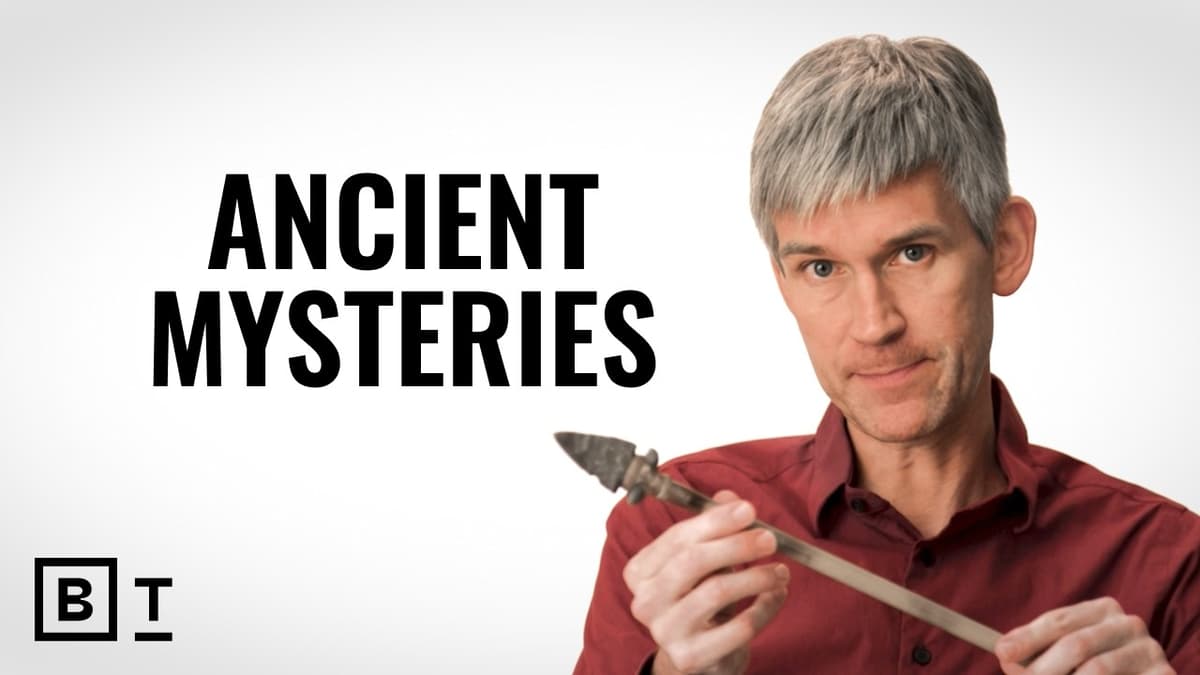
Decoding History’s Mysteries: From the Pyramids to the Hidden Atomic Bomb | Sam Kean: Full Interview
In a recent interview, author Sam Kean discusses his new book, “Dinner with King Tut,” which chronicles his immersion in experimental archaeology—a hands‑on discipline that goes beyond traditional excavation to recreate the sights, sounds, smells and tastes of ancient peoples. Kean describes...
Why Culture Beats Technology | Daphne Koller
Daphne Koller, co‑founder of Coursera, argues that culture, not technology, is the primary driver of lasting organizational performance. She recounts an early interview where a senior candidate asked, “What would you like the culture here to be?” prompting her realization that...