
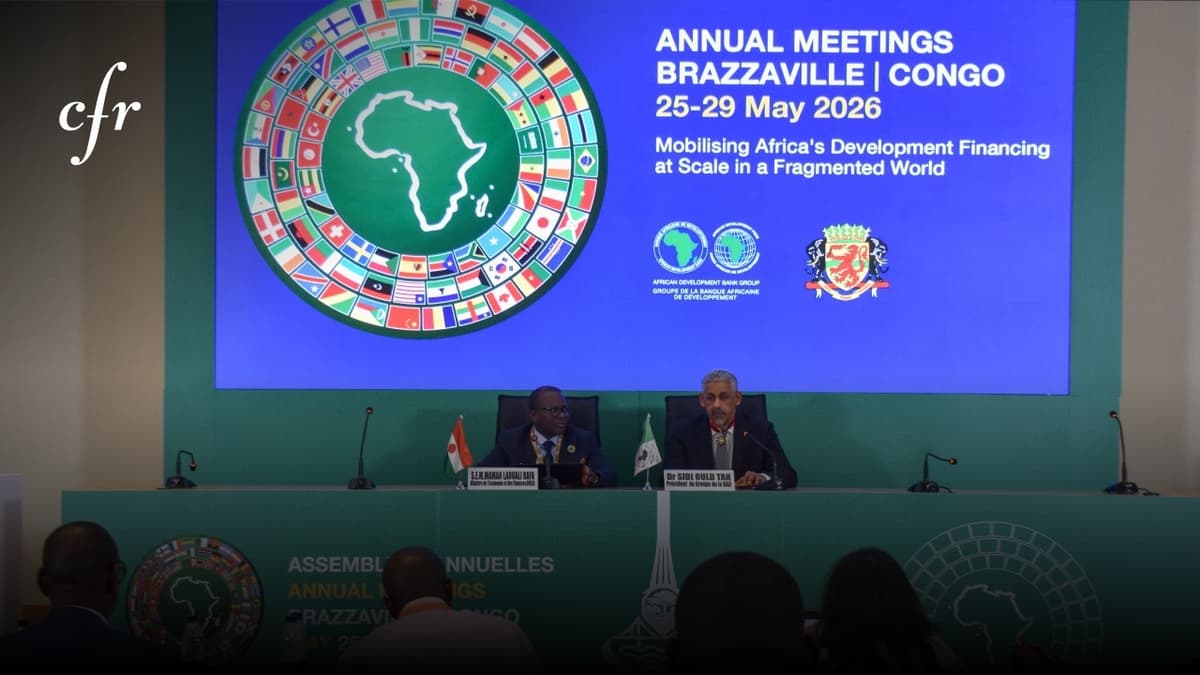
Africa's Economic Landscape
The Council on Foreign Relations hosted a Daryl G. Behrman Lecture on Africa Policy, featuring a panel of senior leaders—including Flory B. Lysere of the Corporate Council on Africa, journalist Yinka Adegoke, and Dr. Vera Songwe of the Brookings Institution—to dissect Africa’s evolving economic landscape. The discussion centered on the United States’ pivot from traditional aid toward private‑sector‑led investment, emphasizing industrialization, value‑added processing, and co‑investment models that align with the African Union’s Agenda 2063 and the African Continental Free Trade Area (AfCFTA). Panelists highlighted that the AfCFTA now binds 53 of 54 African states into a $3.4 trillion market of 1.4 billion consumers, creating a fertile ground for U.S. firms in sectors such as agribusiness, digital fintech, and critical minerals. Lysere stressed the role of the Corporate Council on Africa in convening public‑private partnerships, while noting the availability of U.S. development finance tools—USDFC, Export‑Import Bank, and TDA—to de‑risk private investment. Adegoke added that African governments are diversifying partnerships beyond the U.S., leveraging leverage from the UAE, Saudi Arabia, India, and Turkey. Songwe and other speakers underscored that critical minerals are merely a conduit to broader opportunities: energy infrastructure, grid digitization, AI compute capacity, logistics networks, and health services are attracting “smart money.” She cited the International Solar Alliance’s work on grid privatization and the continent’s mere 5 % share of global compute facilities as a massive growth frontier. Logistics, she argued, is essential for intra‑continental supply chains that can mitigate external shocks, such as fertilizer shortages caused by the Ukraine war. The implications are clear: investors must navigate a more competitive, multi‑partner environment while U.S. policymakers need a coherent, visa‑friendly strategy to sustain influence. Aligning commercial diplomacy with African agency will determine whether the U.S. remains a preferred partner or becomes just another bilateral player in a crowded marketplace.
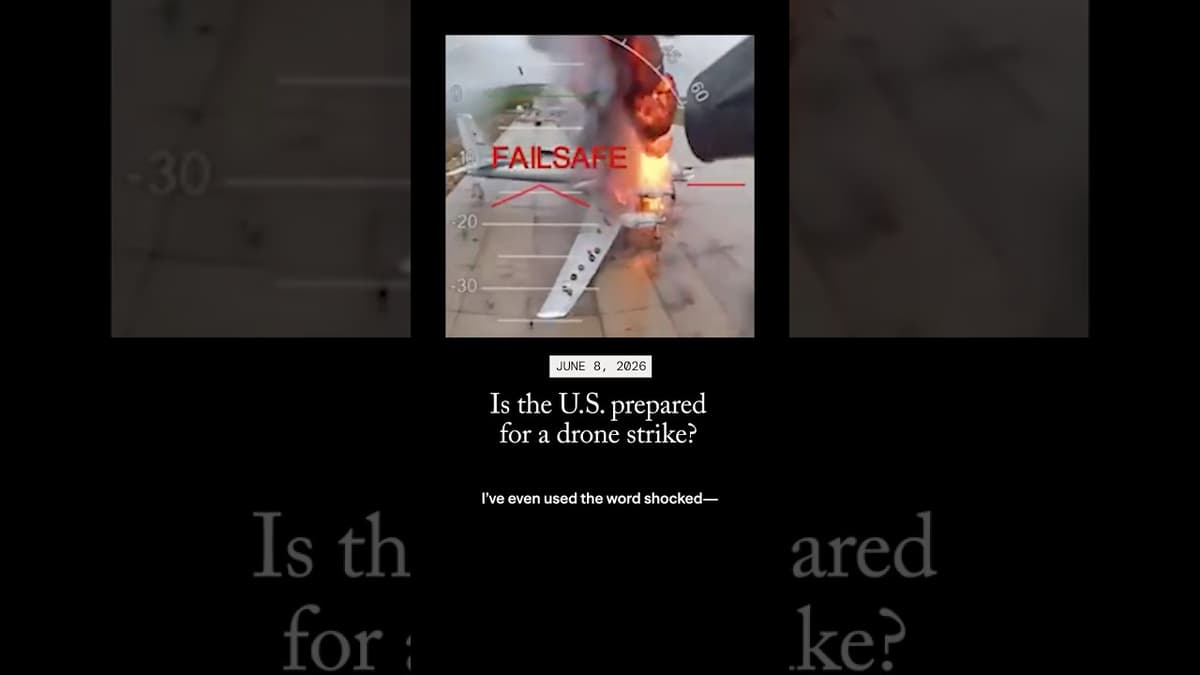
Is the U.S. Prepared for a Drone Attack?
The video questions whether the United States is prepared for a coordinated drone assault, likening the threat to Ukraine’s “Operation Spiderweb” that penetrated deep into Russian airspace. Speakers argue that current defenses—such as the Golden Dome system—are inadequate without a granular,...
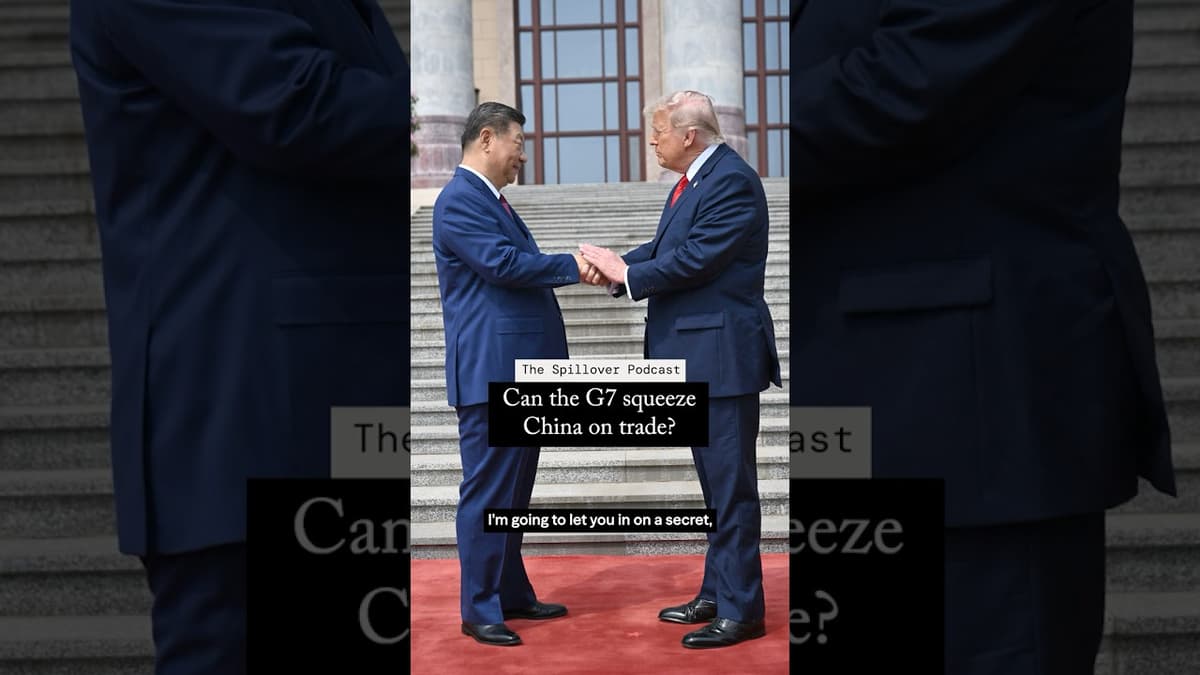
Can the G7 Squeeze China on Trade?
The video examines whether the Group of Seven can leverage trade policy to compel China to adopt a more reciprocal stance. It argues that the G7 should consider restricting market access until Beijing aligns its export‑driven growth with comparable import...
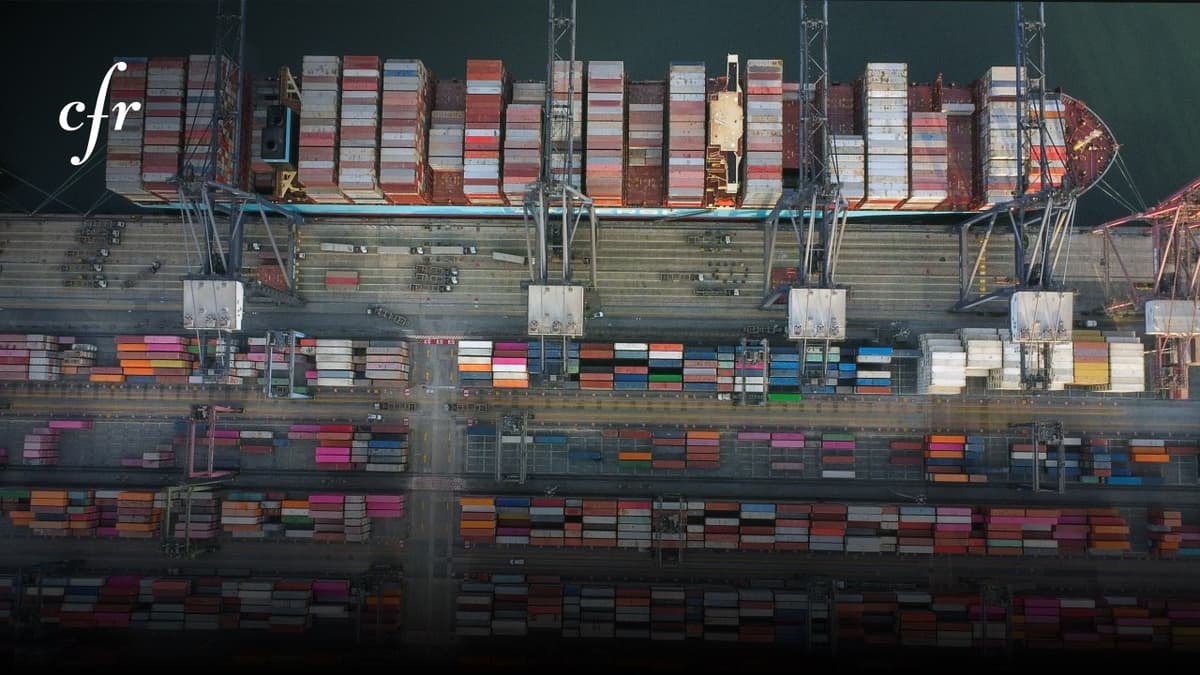
How the Iran War Is Remaking the Global Economy
The Council on Foreign Relations convened a virtual panel to examine how the ongoing Iran‑Israel war is reshaping the global economy, focusing on energy markets, commodity flows and the future of the petrodollar. Panelists highlighted that the closure of the Strait...
Why the U.S. Needs an Africa Strategy, With Michelle Gavin | The President’s Inbox
The President’s Inbox episode argues that the United States must craft a coherent Africa strategy rather than treating the continent as a peripheral development zone. Host Jim Lindsay and CFR senior fellow Michelle Gavin contend that outdated, dismissive policies jeopardize...
Japan Rearms + Guns Vs. Butter + Global Defense Spending Boom | The Spillover
The episode examines the accelerating global rearmament trend, framing it as a classic "guns versus butter" dilemma. Hosts Rebecca Patterson and Sebastian Malaby cite SIPRI data showing a 2.9% real increase in worldwide defense budgets last year, which would have...
A Conversation With Jamieson Greer
In a Council on Foreign Relations session, former U.S. Trade Representative Jameson Greer outlined the Biden administration’s trade agenda, emphasizing the interplay of tariffs, domestic manufacturing outreach, and broader pro‑production policies. He highlighted that the monthly goods trade deficit has...

Superintelligence Is Coming. Does Humanity Have a Plan?
The video warns that superintelligence, once realized, could end human sovereignty on Earth, echoing Alan Turing’s 1954 caution that such intelligence would be difficult to control. It frames the emergence of advanced AI as a pivotal event comparable to the...
Are Data Centers in Space Inevitable?
The video examines whether orbital data centers are inevitable, arguing that the core obstacle for terrestrial facilities is energy. Traditional data centers rely on ground‑based solar or other renewables, which are intermittent and require costly batteries, nuclear, or geothermal backup,...
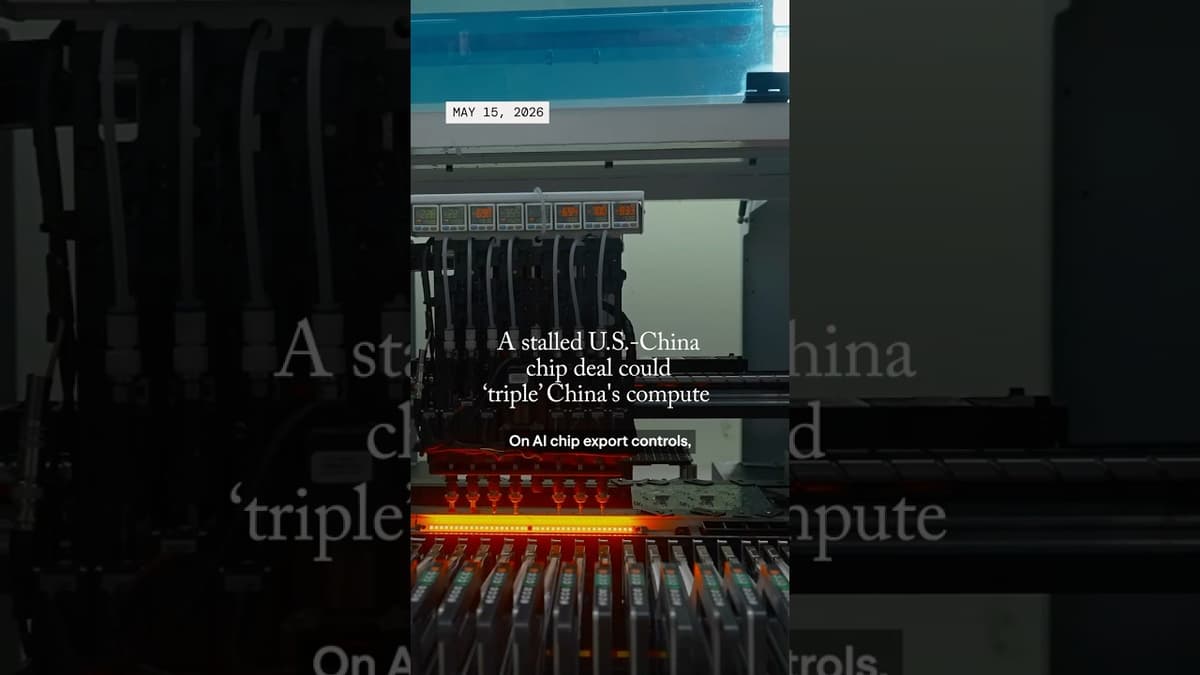
A Stalled U.S.-China Chip Deal Could ‘Triple’ China’s Compute
The video discusses a pending export‑license deal that would allow Nvidia’s H200 AI accelerator chips to be shipped to China, a move that could dramatically reshape the global AI hardware balance. The U.S. Commerce Department has issued licenses for up to...

The Fate of the Dollar: Digital Currencies and Geopolitical Challengers
The Council on Foreign Relations hosted a panel titled “The Fate of the Dollar, Digital Currencies and Geopolitical Challengers,” featuring experts from academia, China studies, and the Algorand Foundation. The discussion examined whether the U.S. dollar’s half‑century‑long reserve‑currency supremacy...

Trump-Xi + Mutually Assured Disruption + Boeing, Beef, and Beans | The Spillover
President Trump arrived in Beijing with a delegation of over a dozen CEOs, marking the first U.S. presidential visit to China since 2017. The agenda spans technology, trade, Taiwan and broader geopolitical friction, but expectations for concrete breakthroughs remain modest. The...

Suspected Weather Scams and Insider Trades Reveal Polymarket Risks
The video highlights two distinct threats to the integrity of Polymarket, a popular crypto‑based prediction platform: alleged physical manipulation of a weather sensor at Paris‑Charles de Gaulle airport and insider trading based on classified information. French authorities are investigating whether...
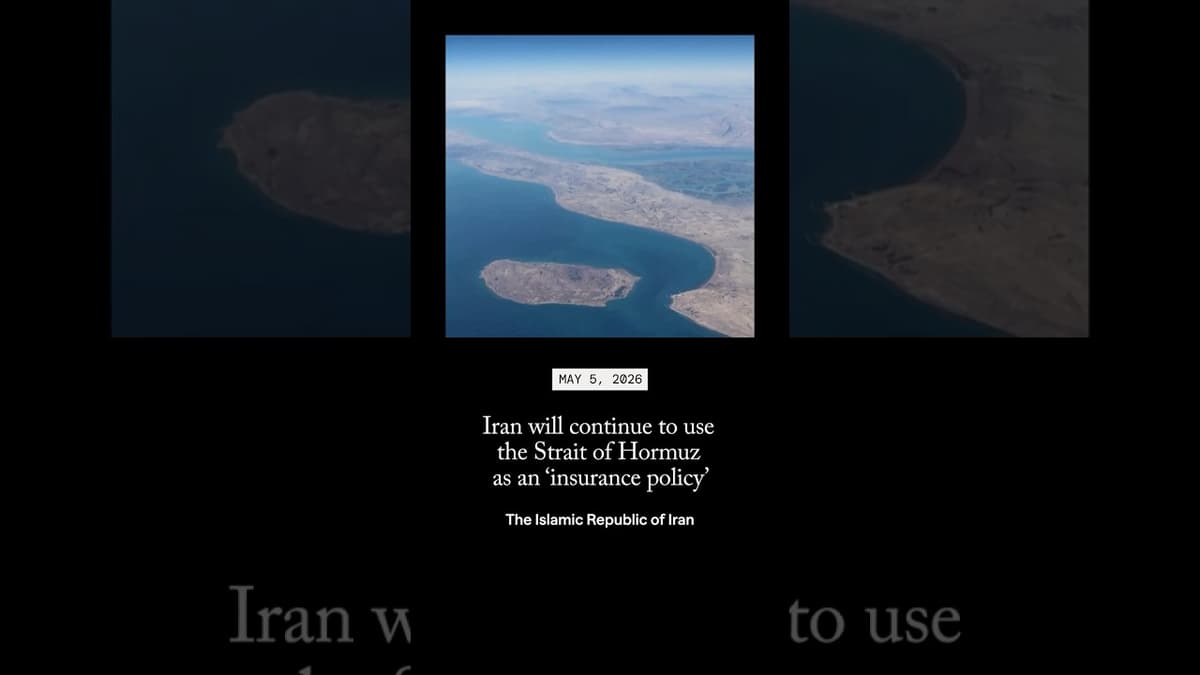
Iran Will Continue to Use the Strait of Hormuz as an ‘Insurance Policy’
Iran’s leadership announced that the Strait of Hormuz will become a permanent geopolitical "insurance policy" against any future U.S. administration reversing the Trump‑era nuclear deal. Tehran is positioning the narrow waterway as a bargaining chip, insisting that any future arrangement...

Military Analysis of the War with Iran
The panel, led by Georgetown’s Rob Dineen, examined the military dimension of the U.S.-Israel campaign against Iran, questioning whether air power and naval actions are achieving the war’s stated goals. Participants distinguished two concurrent air wars: a high‑altitude “war of destruction”...