

From Witnesses to Targets: Civilians in the Drone War Era
The video examines how modern drone warfare transforms civilians from passive witnesses into active documentarians and, increasingly, direct targets, questioning the relevance of traditional protections. It argues that the precision and anonymity of unmanned systems blur the civilian‑combatant distinction, undermining the Geneva Conventions and leaving civilians without the legal shield once guaranteed by post‑World War II treaties. The speaker cites recent atrocities in Tigray, the ongoing conflict in Ukraine, and the Iranian protests, noting the stark sentiment that “you’re just totally on your own,” and highlighting the International Criminal Court’s limited reach. The analysis warns that without updated international norms, civilian casualties will rise, humanitarian NGOs will face greater risk, and states may be less deterred from employing drones, reshaping the calculus of modern warfare.

Rahm Emanuel on the Strait of Hormuz Crisis
Rahm Emanuel used a recent interview to frame the Strait of Hormuz as a strategic flashpoint that could cripple global energy markets if left unchecked. He argued that the United States and its allies must adopt a clear policy—either keep...

AI Layoffs Are Overblown, but Bigger Disruptions Are Coming
The video argues that the wave of AI‑related layoffs being reported in the press is largely exaggerated. While some firms have cited artificial intelligence as the reason for cutting staff, the speaker says there is little statistical proof that AI...

A Conversation With Darío Gil on AI, Quantum, and the Future of American Science
The Department of Energy’s Genesis mission, announced by Undersecretary for Science Dario Gil, is a federal initiative to create a national AI engine that unites high‑performance computing, AI supercomputing, and quantum computing to reshape American scientific research. Backed by $293 million, the...
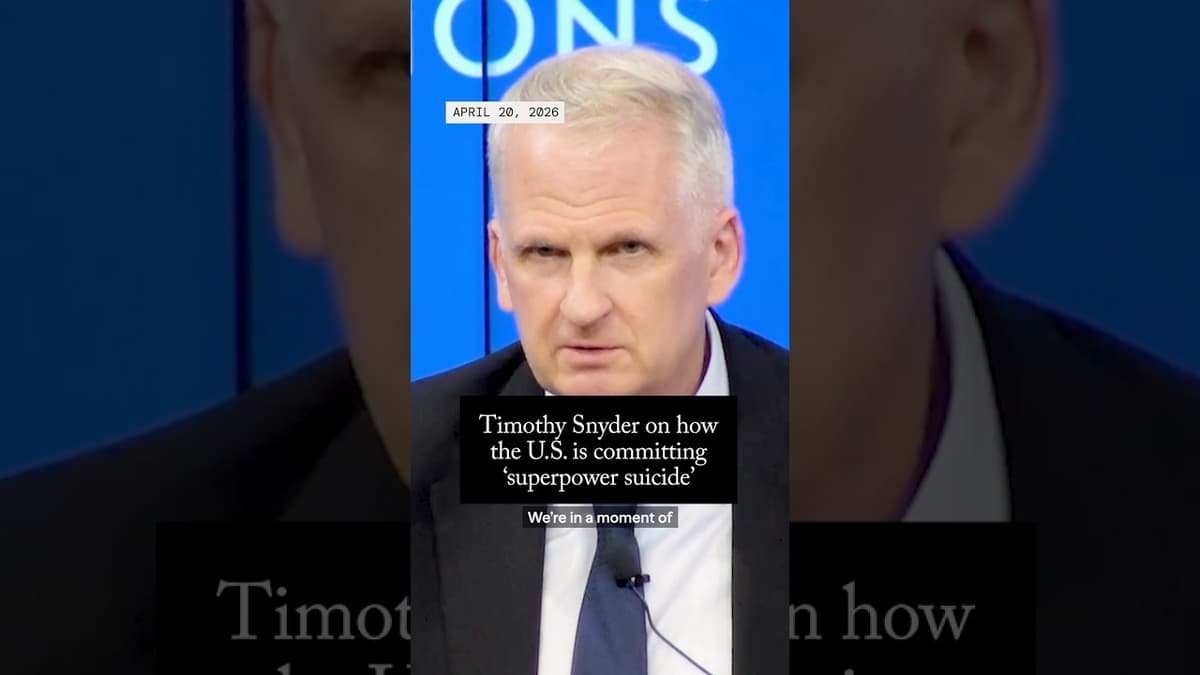
Timothy Snyder on How the U.S. Is Committing ‘Superpower Suicide’
Timothy Snyder argues the United States is actively engineering its own decline, labeling it “superpower suicide.” He contends that beyond inevitable structural shifts—global wealth redistribution and rapid technological change—the U.S. is making conscious policy choices that diminish its power. Snyder points...
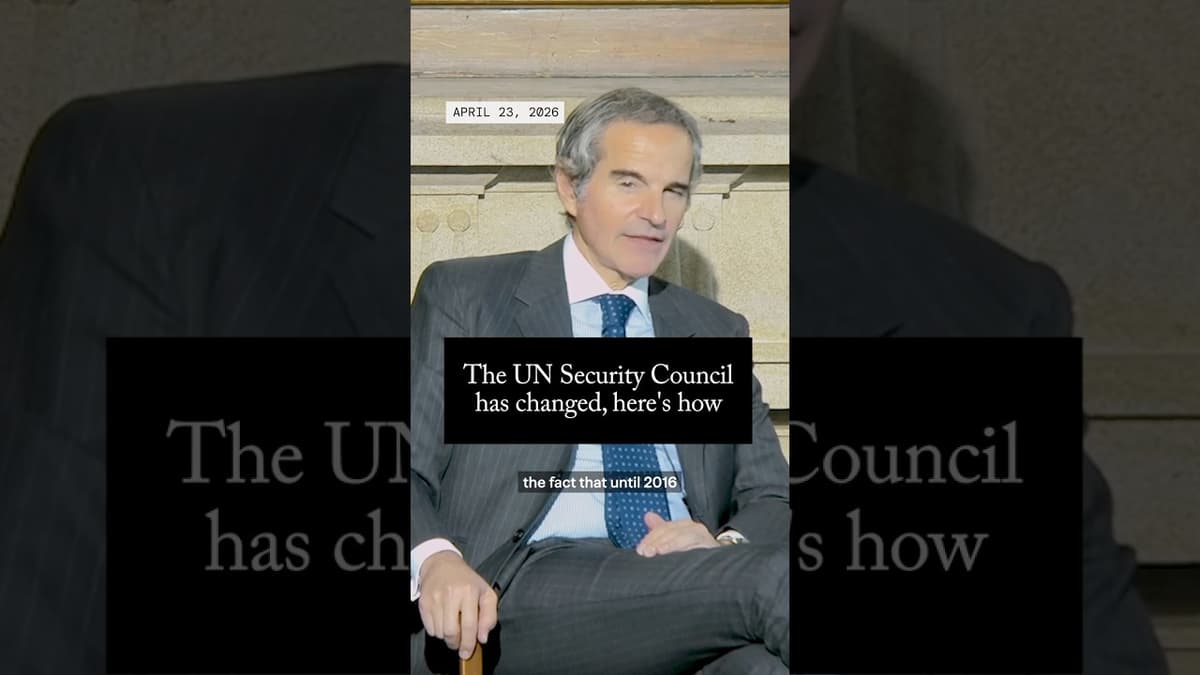
The UN Security Council Has Changed, Here’s How
The video explains that the United Nations Security Council, which once routinely adopted resolutions on Iran and North Korea by unanimous consent, has lost that ability to reach consensus. Historically, from the early 2000s through 2016, the P5 managed to align...

Booms and Busts in the Gulf Are Often Cyclical. Is that Still True?
The latest episode of CFR’s "The Spillover" debates whether Gulf instability from the Iran‑Israel conflict and a potential closure of the Strait of Hormuz is a temporary, cyclical shock like past oil price spikes, or a lasting disruption that could...

Why Trump’s Pressure on the Fed Might Be Counterproductive
Former Fed official William C. Dudley warned that President Trump’s public attacks on the Federal Reserve undermine its independence. He argued that questioning the Fed makes policymakers more cautious about cutting interest rates. The comment came during a CFR‑hosted Spillover...

How Pain at the Pump Spreads Across the Global Economy
In a recent CFR podcast episode, William Dudley warned that a flare‑up in the Iran‑Russia conflict could drive gasoline prices to record highs. Elevated pump prices would make the affordability of everyday goods a headline issue for consumers worldwide. The...

A Conversation With President Masato Kanda of the Asian Development Bank
Asian Development Bank President Masato Kanda warned that the ongoing Middle East conflict is driving oil prices above $100 a barrel and tightening financing conditions for Asian and Pacific economies. He outlined ADB’s rapid response, including a $2 billion emergency financing...

How to Stop Food Weaponization, According to the Experts
Food weaponization—using control over food access, infrastructure, or supplies to achieve strategic objectives—has surged in modern conflicts, causing humanitarian crises and threatening national security. Experts highlighted recent examples in Ukraine, Gaza, and Yemen where hunger has been weaponized to destabilize...

CFR Fellows' Book Launch Series: The Infinity Machine
The Council on Foreign Relations hosted a launch for Sebastian Mallaby’s new book, *The Infinity Machine*, chronicling the life of Demis Hassabis and his quest to build superintelligent AI through DeepMind. Mallaby, a seasoned author on finance and technology, frames Hassabis’s...

Are Russia and Iran Allies?
Thomas Graham, a distinguished fellow at the Council on Foreign Relations, described the Russia‑Iran partnership as a "frenemies" relationship, underscored by a shared goal of sidestepping U.S. sanctions. The two nations cooperate on diplomatic, military, and economic fronts, yet persistent...

The Iran War: What’s Legal?
Former U.S. Ambassador at Large for War Crimes David Scheffer, a key architect of the International Criminal Court, breaks down five legal questions surrounding the ongoing Iran conflict. He stresses that every U.S. and allied decision must adhere to international...

The Modern Oppenheimer + Mailbag Contest Winners | The Spillover
The Spillover episode features CFR senior fellow Sebastian Mallaby discussing his new book, The Infinity Machine, while dissecting AI’s rapid evolution, especially DeepMind’s contributions and AlphaFold’s impact on drug discovery. The hosts also examine the enduring dominance of the U.S....

CFR 3/31 Religion and Foreign Policy Webinar: Faith and Democracy in Venezuela
The Council on Foreign Relations hosted a webinar titled “Faith and Democracy in Venezuela,” featuring Laura Cristina Dib of the Washington Office on Latin America and bishop‑elect Antonio Gallardo. The panel examined how Venezuelan religious groups and leaders are influencing...

The Gulf Countries Are Seeking More than a Ceasefire
Gulf states are pressing for a political settlement with Iran that goes beyond a simple ceasefire, insisting on a security guarantee and the dismantling of Tehran's missile program. Mina Al-Oraibi, editor‑in‑chief of The National, highlighted these demands on The President’s...

Fannie Mae Now Accepts Bitcoin as Mortgage Collateral
Fannie Mae announced it will accept Bitcoin and the dollar‑backed stablecoin USDC as eligible collateral for mortgage loans. The move positions the government‑sponsored enterprise as the first major GSE to formally recognize cryptocurrency assets in its underwriting guidelines. Borrowers will...

10 Best U.S. Foreign Policy Decisions: The Creation of NATO
The Council on Foreign Relations surveyed historians and identified the creation of the North Atlantic Treaty Organization as one of the United States’ best foreign‑policy decisions. Formed in 1949, NATO cemented a collective defense commitment that anchored America’s post‑World War II...

Were Gulf States Surprised by Iranian Missile and Drone Attacks?
The video examines whether Gulf states were caught off‑guard by Iran’s wave of missile and drone attacks that followed a U.S. response to Israeli strikes. Tehran targeted the United Arab Emirates, Saudi Arabia and Kuwait, prompting the question of whether...

“I Knew I Was Going to Dedicate My Life to Fighting Russia Off” Says Cat Buchatskiy
In a candid interview, Cat Buchatskiy recounts how the Russian invasion of Ukraine in early 2022 forced her to abandon her university studies in California and return home to join the fight. Buchatskiy describes hearing Putin’s “special operation” address, the immediate...

CFR 3/23 Discussion at ISA: Strategic Frontiers in U.S. Foreign Policy: Arctic, Climate, and Space
The Council on Foreign Relations convened a panel of scholars and a senior military officer to examine three emerging frontiers of U.S. foreign policy— the Arctic, climate change, and outer space. The discussion framed these domains as zones beyond traditional...

Investors Have Tried to Withdraw $10 Billion From Private Credit in 2026—What’s Next?
The video examines a wave of $10 billion redemption requests from investors seeking to pull money out of private‑credit funds in the first quarter of 2026, highlighting a liquidity strain in an asset class that now totals roughly $1.5‑$3 trillion. While the $10 bn...

Private Credit's Black Box + Why It's Not 2008 (But Still Risky) | The Spillover
The private‑credit market has ballooned to roughly $1.5 trillion, yet its opacity is raising alarm as $10 billion in redemption requests hit major funds in Q1 2026. Hosts Sebastian Mallaby and Rebecca Patterson highlight liquidity mismatches, redemption gates, and growing retail exposure as...

Ukraine’s Battlefield Hacks: Jet Skis, Drones, and Parts From Alibaba
Ukraine is turning everyday items into weapons, from jet skis rigged with explosives to drones built with cheap components. Former drone pilot Cat Buchatskiy explains how volunteers repurpose civilian tech, sourcing parts on Alibaba to create low‑cost UAVs that strike...

State and Local Officials Webinar: Critical Minerals From the Ground Up
Heidi Crebo‑Rediker of the Council on Foreign Relations presented findings from her report “Leapfrogging China’s Critical Minerals Dominance,” highlighting the national‑security risks of relying on China for rare earths, lithium and other critical minerals. She outlined policy levers—tax incentives, R&D...

China to Spend $400 Billion on Robotics in 2026, the U.S.’s CHIPS Act Spent $50 Billion over Years
China plans to allocate roughly $400 billion to its robotics sector in 2026, dwarfing the U.S. CHIPS Act’s cumulative $50 billion investment. In 2024 Chinese factories installed about 300,000 new industrial robots, compared with just 30,000 in American plants. The country now...

Are Lethal Autonomous Weapons Systems Compatible with International Law?
The Council on Foreign Relations hosted a discussion on whether lethal autonomous weapon systems (LAWS) can meet the international law principle of distinction, which requires separating civilians from combatants. Experts questioned if machines operating without human control can reliably make...

How Did the Japanese PM Take Trump’s Pearl Harbor Comment?
President Donald Trump’s off‑the‑cuff reference to Japan’s Pearl Harbor attack during a recent summit ignited a flurry of social‑media commentary and raised questions about diplomatic decorum. The remark, framed as a joke about “surprise,” was unprecedented in U.S.–Japan interactions and...

Allied Manufacturing Could Counter China’s Dominance in Robotics
Rush Doshi of the Council on Foreign Relations argues that the United States cannot out‑manufacture China in robotics on its own. He proposes a coalition of American and allied manufacturers—particularly Europe, Japan, and South Korea—to collectively exceed China’s scale. The...

Is There Still Bipartisan Consensus on China?
The video examines whether the once‑clear bipartisan agreement that China is the United States’ primary pacing threat still holds under the new administration. Early in the Biden era, both Democrats and Republicans in the national‑security establishment publicly affirmed a unified...

Why Allies Aren’t Following on Iran | The President’s Inbox
The President’s Inbox examined President Trump’s demand that allies help reopen the Strait of Hormuz after Iran’s missile strikes shut the waterway, a chokepoint through which one‑fifth of global oil flows. While the United States frames the operation as...

Can Trump Carry Out Regime Change in Cuba?
President Donald Trump claimed he could do anything with Cuba, sparking debate over the feasibility of U.S.-backed regime change. Cuba is entrenched in a deep economic crisis, with shortages and a stagnant GDP exacerbating public discontent. Yet the island has...

Government Media Shouldn’t Compete with CNN or Fox News, Says Sebastian Gorka
Sebastian Gorka, a senior counterterrorism official on the National Security Council, argued that U.S. government‑funded media should not vie with commercial outlets like CNN or Fox News. He urged that taxpayer money be directed toward agencies such as the Agency...

Surveying America: What Do People Really Think About Tariffs?
The Council on Foreign Relations and Morning Consult released a national survey probing American attitudes toward tariffs and trade policy. Findings reveal that most respondents misunderstand who actually pays for tariffs, while partisan and generational divides shape views on costs,...

The Iran War Is Revealing U.S. Military Weaknesses to China and Russia
The video examines how the Iran‑Israel conflict is exposing American military shortcomings that Beijing, Moscow and Pyongyang are keenly observing. While U.S. air superiority and real‑time intelligence proved decisive, the discussion highlights deeper structural gaps. The analyst points to three critical...

What Is the U.S. Trying to Accomplish in the Iran War?
The video examines the United States’ evolving goals in the three‑week Operation Epic Fury against Iran, highlighting the lack of a single, coherent objective. President Trump has floated regime change, unconditional surrender, and even a street‑level revolution, while the Pentagon repeatedly...

Joe Kent’s Resignation: Sebastian Gorka Responds
The video centers on former congressional candidate Joe Kent’s abrupt resignation letter, in which he alleged that the United States entered the current war under pressure from Israel and its American lobby and claimed Iran posed no immediate threat. Sebastian...

10 Worst U.S Foreign Policy Decisions: The Invasion of Iraq, 2003
The video examines the 2003 invasion of Iraq as one of the United States’ worst foreign‑policy choices, as identified by historians specializing in American diplomatic history. It situates the decision in the aftermath of the September 11 attacks, when fears that...

Oil Prices Could ‘Lead to Something Close to a Recession,’ Says Expert
The video features an energy market expert warning that a $30‑per‑barrel jump in crude prices could push the global economy toward a recession‑like slowdown. The analyst frames the current oil shock as a “balanced probability” between a prolonged period of...

What Is the U.S. and Israel’s Goal in Lebanon?
The video discusses the United States and Israel’s strategic objective in Lebanon: establishing a fully sovereign Lebanese government that can govern without Hezbollah’s dominance. The plan calls for the Lebanese army to drive Hezbollah forces north of the Litani River...

Wealth of Nations: Do Free Markets Need Empathy?
The latest episode of The Spillover, titled “Wealth of Nations: do free markets need empathy?,” features CFR senior fellow Sebastian Mallaby discussing the nuanced role of empathy in market systems. Mallaby argues that market behavior is neither purely altruistic nor...

How a Weakened Iran Can Still Claim Success
Ray Takeyh, a Council on Foreign Relations Iran specialist, argues that both the United States and Iran can claim plausible success after recent confrontations. The U.S. narrative emphasizes degrading Iran’s proxy networks, conventional forces, and nuclear infrastructure while eliminating senior...

What's Next for Trade and Tariffs?
Panelists from the Council on Foreign Relations and the Peterson Institute examined the latest shifts in U.S. trade policy, noting a modest easing of tariffs on Chinese goods and a renewed focus on supply‑chain resilience. They highlighted the administration’s push...

America at 250: The Lend-Lease Act, With Lynne Olson
The Council on Foreign Relations released a podcast episode titled “America at 250: The Lend‑Lease Act, With Lynne Olson,” where historian Lynne Olson discusses the 1941 Lend‑Lease Act and the fierce domestic political battles that paved the way for U.S....

The Wealth of Nations Turns 250 + Free Markets Face Off Against Industrial Policy | The Spillover
On its 250th anniversary, Adam Smith’s *The Wealth of Nations* is revisited to assess its enduring influence on economic thought. The episode highlights how specialization and global trade, as Smith argued, continue to drive prosperity when competition is framed by...

Ukraine Will Produce 4 Million Military Drones This Year
Ukraine announced a goal to manufacture four million military drones in 2024, dramatically expanding its unmanned‑air capabilities. The surge aims to replace foreign‑sourced components with domestically produced systems, bolstering supply chain resilience. Experts say one‑way attack drones now account for...

Building National Security Capacity and Policy: A Conversation With Christine Wormuth
Christine Wormuth, CEO of the Nuclear Threat Initiative, discussed strategies for strengthening national security capacity with CFR senior fellow Linda Robinson. The conversation highlighted the critical role of public‑private partnerships, workforce development, and integrating emerging technologies into policy. Wormuth urged...

The Trump Administration’s ‘3-Pronged Approach’ to Military Operations
The video outlines the Trump administration’s three‑pronged strategy for U.S. military operations, centering on a massive $1.5 trillion defense budget, a declared national mobilization, and deeper burden‑sharing with allies. It frames these moves as a direct response to emerging global threats...

Has the U.S. ‘Gone Soft’ on China?
Elbridge Colby, the State Department’s under secretary for policy, dismissed the narrative that the United States has softened its stance toward China under President Trump. He argued that Washington maintains a clear set of objectives that reflect American interests and...