
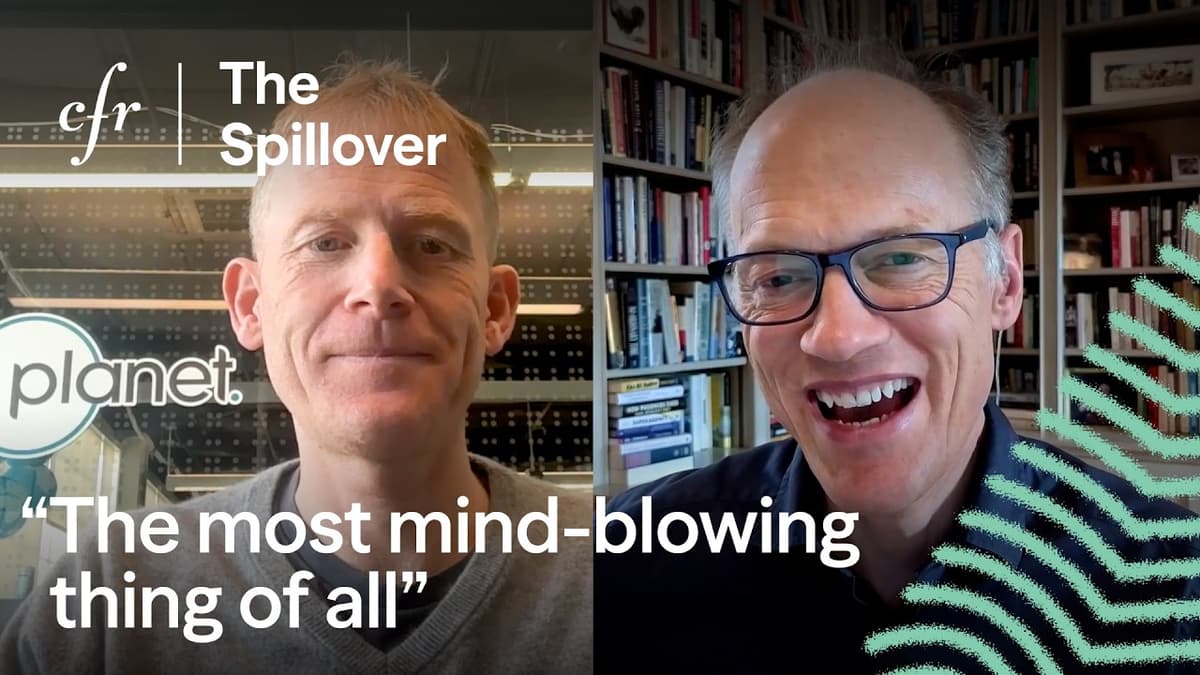
Data Centers In Space? + Planet Labs CEO Talks ‘Large Earth Models’ | The Spillover
The Spillover episode features Planet Labs co‑founder Will Marshall discussing how his company’s constellation of small satellites delivers daily, high‑resolution images of the entire planet and why that data is becoming a cornerstone of modern AI‑driven decision‑making. Marshall explains that the recent space boom is driven less by cheaper rockets and more by the Moore‑law‑style miniaturization of consumer‑grade electronics, which shrank satellite costs from hundreds of millions to a few hundred dollars per kilogram. Planet now streams roughly 30 terabytes of imagery each day, and AI tools are turning that raw feed into actionable insights for governments, insurers, NGOs and hedge funds. A vivid example he cites is the detection of a pontoon bridge on the Belarus‑Ukraine border on Valentine’s Day 2022, giving analysts early warning of Russian troop movements. He also notes that most climate and weather models still rely on space‑borne sensors, and that the iconic “Blue Marble” photo sparked the modern environmental movement. As satellite data becomes embedded in the global decision loop, Marshall warns that the next frontier—space‑based supercomputers for AI—could generate unprecedented spillovers, from increased orbital debris to new geopolitical friction, making planetary intelligence both an opportunity and a strategic risk.
Iran’s Nuclear Program: Has the War Changed Anything?
The video examines whether the ongoing conflict has altered Iran’s nuclear trajectory, concluding that the war has left Tehran’s capabilities and red‑line calculations essentially unchanged. Analysts argue that any attempt to physically retrieve the highly enriched uranium buried after the...

Europe's Response to the Iran War
The panel convened by New York Times reporter Serge Maimon examined Europe’s ambiguous stance amid the escalating Iran‑U.S. conflict. While European capitals have largely refrained from direct military involvement, the discussion highlighted how the continent’s basing rights, logistics networks, and...

A Conversation With Rahm Emanuel
The Council on Foreign Relations hosted former ambassador and mayor Rahm Emanuel for a candid discussion on America’s deepening political fractures and foreign‑policy challenges. Emanuel traced today’s volatility to four pivotal crises—the Iraq war built on false pretenses, the 2008...
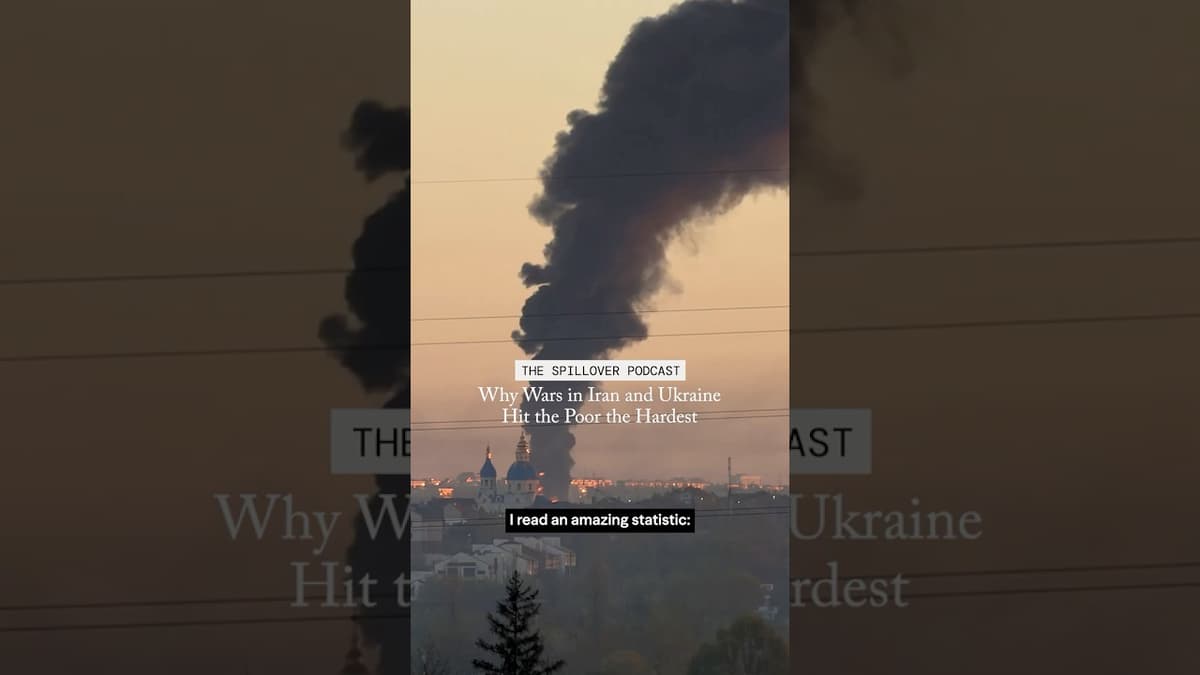
How Wars in Iran and Ukraine Are Driving Up Food and Energy Costs
The video examines how the wars in Ukraine and Iran are pushing global food and energy prices higher, creating a ripple effect that reaches both developing nations and affluent economies. Both conflicts have disrupted grain exports and oil supplies, driving price...
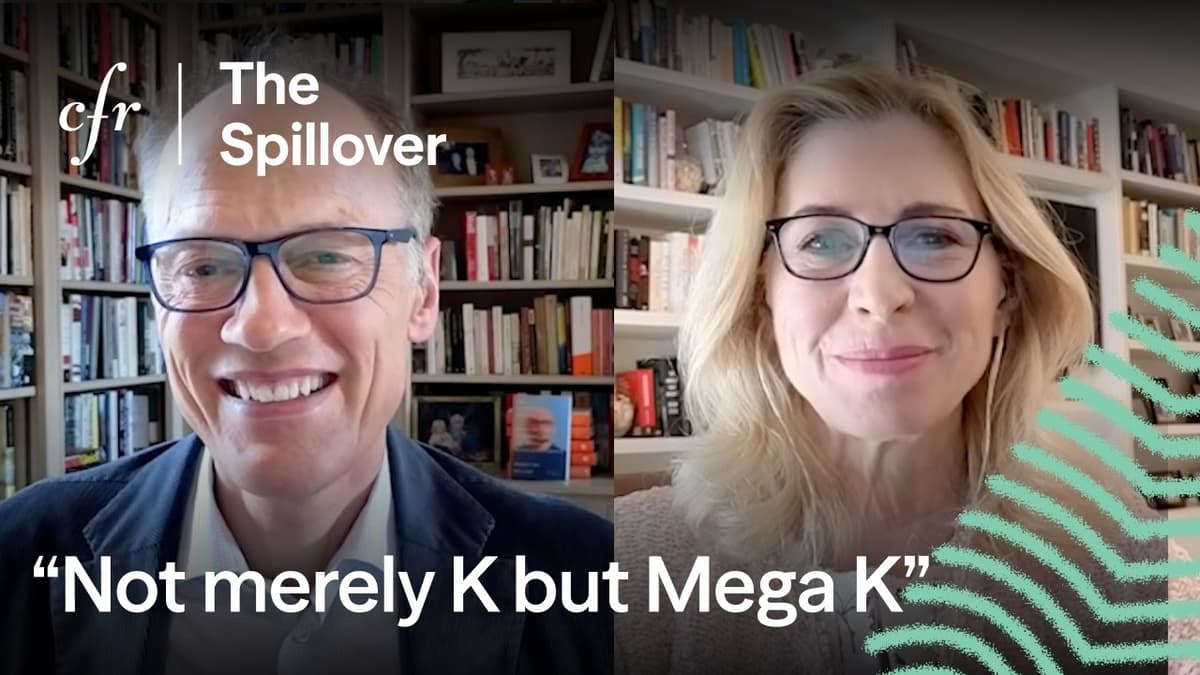
K-Shaped Everything + Affordability Crisis + Trump Vs. Mamdani Populism | The Spillover
The episode tackles the concept of a K‑shaped economy, arguing that the pandemic amplified a split between affluent households that saw asset values surge and lower‑income families that faced stagnant or declining real wages. Hosts Sebastian Malaby and Rebecca Patterson...

AI, Quantum, and the Future of American Science: A Conversation With Darío Gil
The Department of Energy’s Genesis mission, spearheaded by Undersecretary Dario Gill, is a federal effort to create a national AI engine that will transform how America conducts scientific research. Backed by $293 million, the program seeks to integrate the country’s 17 national...

U.S. Economic Security
The Council on Foreign Relations task force warned that U.S. economic security now hinges on maintaining leadership in three dual‑use technologies—artificial intelligence, quantum computing, and biotechnology—each projected to generate up to $29 trillion in market value by 2040. The report,...

Anthropic’s Mythos Model Raises Cybersecurity Concerns
Anthropic has launched Mythos, an advanced AI model designed to locate software vulnerabilities in operating systems, web browsers, and broader internet infrastructure. The announcement has sparked alarm among cybersecurity professionals who fear the technology could be repurposed for malicious exploitation....

State and Local Officials Webinar: Home Field Advantage: Sports Diplomacy and North America
The Council on Foreign Relations hosted a webinar examining how sports diplomacy can reinforce ties across the United States, Canada and Mexico. Edward Alden outlined the importance of coordinated infrastructure, security and immigration policies for state and municipal leaders. Lindsay...

The Hormuz Shock + Why the Fed Is “On Hold” | The Spillover
The podcast episode examines the emerging energy shock from the Strait of Hormuz and its ripple effects on global growth, inflation, and U.S. monetary policy. Host Rebecca Patterson and former New York Fed president Bill Dudley discuss how an estimated...

CFR and Berkley Center Webinar: The Future of Strategic Religious Engagement in U.S. Foreign Policy
The Council on Foreign Relations and Georgetown University's Berkeley Center hosted a webinar to assess the future of strategic religious engagement (SRE) in U.S. foreign policy, noting that recent administrative changes have stripped the government of dedicated capacity to work...

Autonomous Ukraine: The Rise of Civilian Intelligence | Why It Matters
An episode of the CFR’s “Why It Matters” examines how readily available technologies—drones, satellites, smartphones, and AI—are turning Ukrainian civilians and aid workers into frontline intelligence gatherers. Guests Anthony Vinci and Sam Vigersky discuss the creation of massive digital evidence...

After the Strikes: The Prospects in Iran
The video examines Iran’s strategic outlook following a series of recent airstrikes targeting its nuclear facilities and oil infrastructure. It outlines how the attacks have deepened economic pressure, intensified domestic unrest, and complicated Tehran’s diplomatic overtures with Europe and the...

Demis Hassabis: The DeepMind Founder at the Heart of the AI Moment
Demis Hassabis, the founder of DeepMind, has been shaping artificial intelligence since the 1990s, long before the current AI boom and Sam Altman's rise to prominence. His early work on deep reinforcement learning produced landmark systems such as AlphaGo and...