

Local Journalists Webinar: Community Responses to the Conflict with Iran
Ray Takeyh, senior fellow at the Council on Foreign Relations, discussed the U.S. and Israeli attacks on Iran and their broader regional implications. The webinar also examined how Iranian communities across the United States are responding to the conflict, with reporter Priscilla Rice sharing on‑the‑ground coverage from North Texas. Host Carla Anne Robbins facilitated a dialogue on best practices for local journalists reporting on diaspora reactions. The session underscored the need for nuanced, community‑focused reporting amid escalating tensions.

CFR 4/1 Global Affairs Expert Webinar: BRICS and Rising Power Alliances
The Council on Foreign Relations webinar featured MIT scholar Dr. Mihaela Papa discussing the evolution of BRICS from a loose negotiation platform in 2009 to a hybrid organization that now counts ten full members and a growing roster of partners. ...

Gulf States Under Fire, With Mina Al-Oraibi | The President’s Inbox
The President’s Inbox interview with Mina Al‑Oraibi, editor‑in‑chief of The National, focuses on the fifth week of Iran’s missile and drone barrage against the Gulf, detailing how the United Arab Emirates and neighboring states are coping with unprecedented attacks. Al‑Oraibi notes...

Does Japan Need the United States for Security?
In a recent episode of The President’s Inbox, Kristi Govella, senior adviser and Japan chair at CSIS, emphasized that the U.S.-Japan security alliance remains irreplaceable for Tokyo’s defense. She argued that no alternative partnership can match the depth of deterrence...

How Are Europeans Reacting to the War with Iran?
European leaders have publicly stated that the conflict with Iran is not their war and they will not join U.S. military efforts, a stance reiterated by Constanze Stelzenmüller of Brookings on The President’s Inbox podcast. The comment reflects a broader...

Autonomous Ukraine: One Woman's Path From a U.S. College to the Battlefield | Why It Matters
Catarina Buchatskiy left a U.S. college weeks after Russia’s invasion to join Ukraine’s frontline, embodying the diaspora’s rapid mobilization. She co‑founded the Snake Island Institute, which translates battlefield intelligence into policy advice for Western allies. Ukraine’s drone sector has exploded...

The World Food Prize at 40: Food Security in a Strategic Age
The World Food Prize marked its 40‑year anniversary, using the ceremony to spotlight the growing importance of food safety alongside traditional agricultural breakthroughs. This year’s laureate, Huub Lelieveld, was recognized for his work with the Global Harmonization Initiative, which builds...

U.S.-China AI Race + Chip Bans Aren’t Working + A Lesson From Nuclear Proliferation | The Spillover
The Council on Foreign Relations podcast examines the accelerating U.S.-China AI rivalry, noting that U.S. export controls on advanced chips have slowed but not halted China’s progress. Loopholes such as cloud‑based access, smuggling, and third‑party vendors keep Chinese developers within...

Inside the Situation Room the Night the U.S. Bombed Iran: Sebastian Gorka
Deputy Assistant to the President Sebastian Gorka claimed the United States secretly bombed Iranian nuclear facilities, dropping thirty 24,000‑pound bombs while remaining undetected. He said the operation was kept under tight operational security, known only to personnel inside the sites....

Trump’s Trade Goals for Xi Meeting Seem More Chinese than American
During a recent Council on Foreign Relations podcast, analysts examined President Donald Trump’s trade agenda ahead of his summit with Chinese President Xi Jinping. Trump’s proposals emphasize bilateral monitoring mechanisms that could effectively sideline the World Trade Organization, raising alarms...

China's Supply Chain Edge in the Iran War
The video examines how China has turned supply‑chain diversification into a geopolitical advantage, especially as the Iran‑Israel conflict strains global trade routes. Rather than retreating to self‑sufficiency, Beijing expands partnerships to ensure redundancy. Analysts note that China’s “friend‑shoring” strategy—building ties with...

Is the U.S. on the Brink of War with China?
The video warns that the United States is edging toward a potential armed clash with China, echoing Henry Kissinger’s late‑life concerns. It argues that the only viable path to avoid war is a dual strategy of robust deterrence—particularly around the first...

Iran War: Are Gulf Countries Thanking Israel?
Bloomberg’s Ethan Bronner asked whether Gulf states are quietly thanking Israel for curbing Iran’s regional threat. UAE diplomatic adviser Anwar Gargash rejected the notion, stressing that the Emirates do not want a war in the Middle East. He noted that Gulf leaders...

Why China Isn’t Panicking About Iran War Oil Shocks
China’s strategic petroleum reserve is roughly twelve times the size of South Korea’s, giving it a substantial buffer against supply shocks. Despite heavy reliance on Middle Eastern oil, Beijing appears untroubled by the Iran‑Israel conflict’s impact on global markets. Analyst...

A Conversation With Sebastian Gorka
Sebastian Gorka, former deputy assistant to the president for counterterrorism, defended the Trump administration’s handling of recent military actions and lashed out at National Counterterrorism Center director Joe Kent after his resignation, calling his letter dishonest and politically motivated. Gorka...

Will Trump Put Boots on the Ground in Iran?
Former President Donald Trump is reportedly considering deploying special‑operations forces inside Iran to secure an estimated 1,000 pounds of highly‑enriched uranium. CFR expert Max Boot warns that any substantial ground presence would likely result in significant U.S. casualties. The discussion, aired...

Chinese Tech, Iranian Missiles, EU Funding: How Allies Shape the Ukraine War | Why It Matters
The fifth year of the Ukraine war sees a stark dependence on external partners. Kyiv leans heavily on U.S., NATO, and EU financial and military assistance, while Moscow taps Chinese technology, Iranian missiles, and North Korean support. Both sides face...
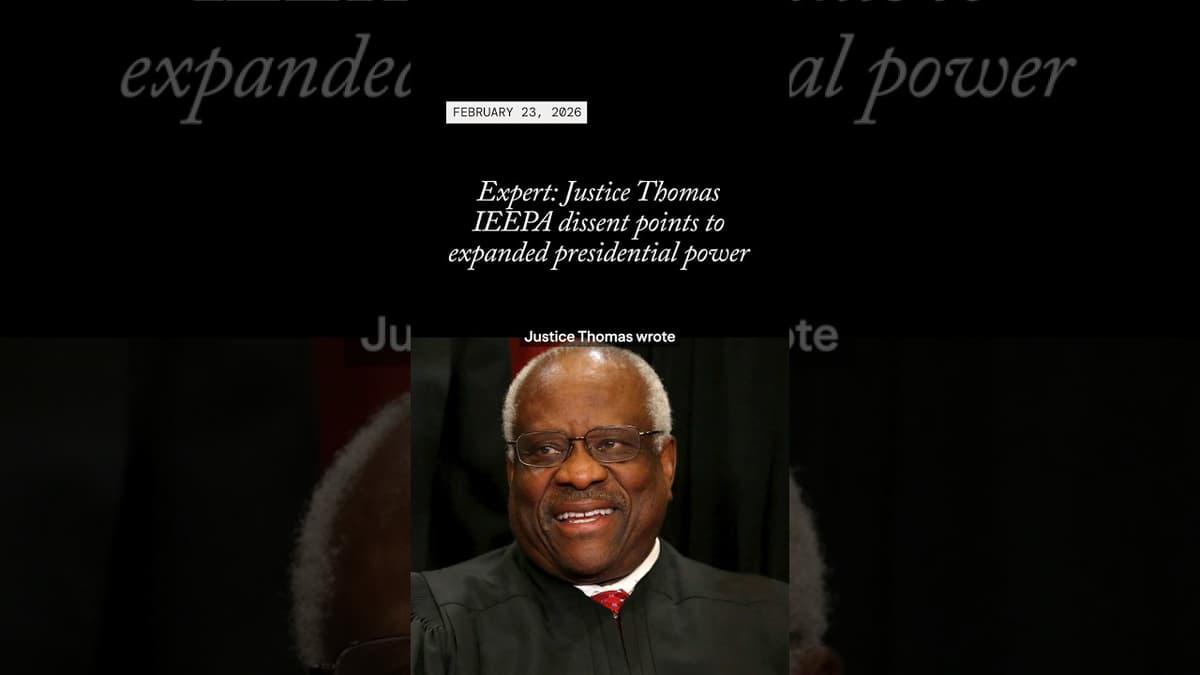
Expert: Justice Thomas IEEPA Dissent Points to Expanded Presidential Power
In a recent CFR interview, trade expert Jennifer Hillman highlighted Justice Samuel Thomas's dissent on the International Emergency Economic Powers Act (IEEPA). Thomas argued for a markedly broader scope of executive authority under the statute. Hillman described the dissent as...
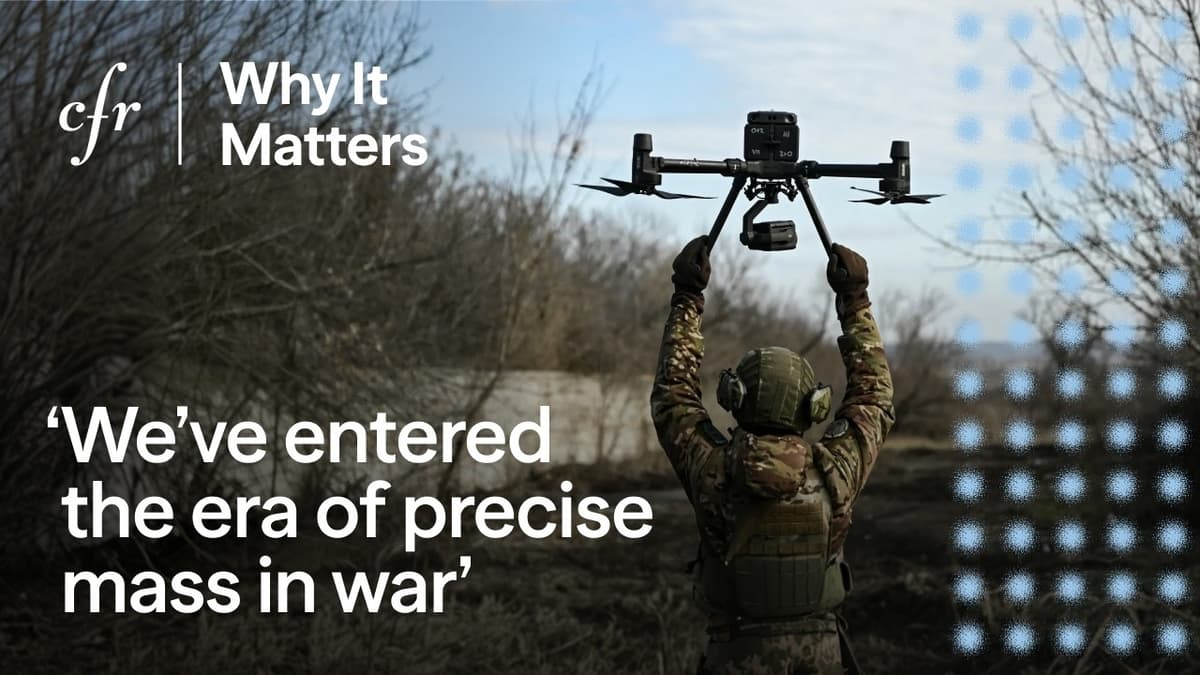
Autonomous Ukraine: We Are in a New Era of Warfare
Ukraine's ongoing war is accelerating a shift toward autonomous, low‑cost drone warfare, turning the battlefield into a fluid, swarming environment. Millions of inexpensive UAVs now conduct strike, surveillance, and electronic tasks, eroding the concept of a fixed front line. Experts...
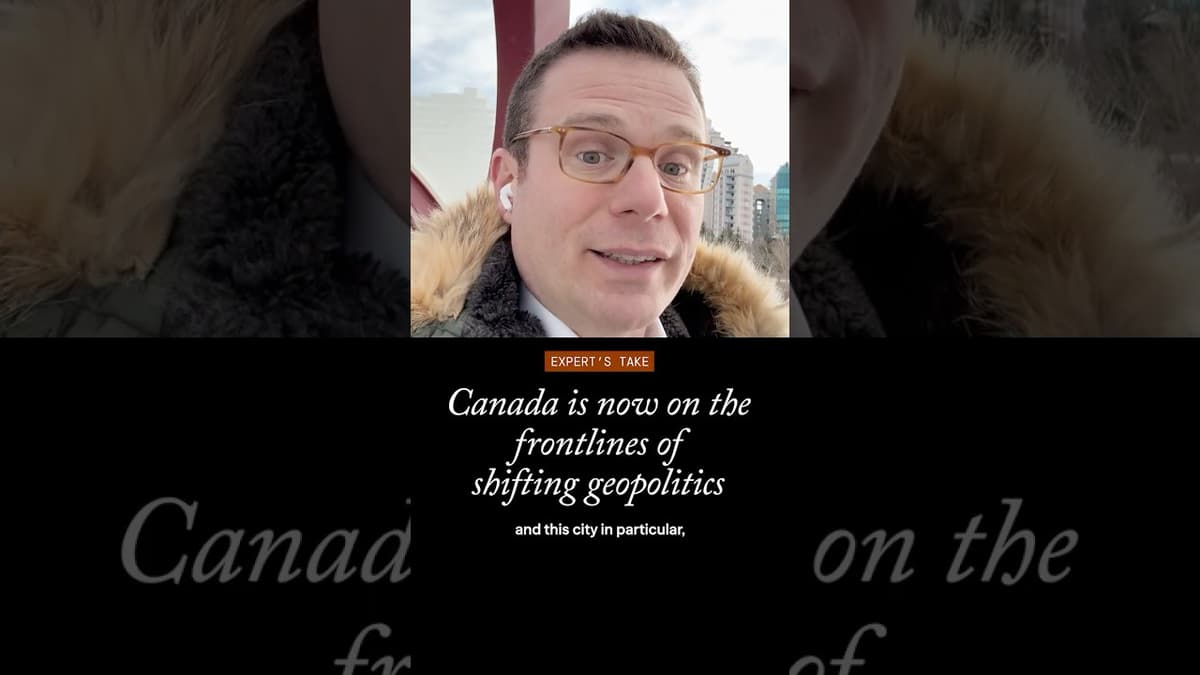
Canadian Export Markets Move to Center Stage
Canadian business, academic and political leaders are confronting an unprecedented central role in global geopolitics and geoeconomics, especially as economic warfare intensifies. Edward Fishman highlighted the rising importance of Canada’s energy exports during a Calgary speaking engagement. He outlined how...
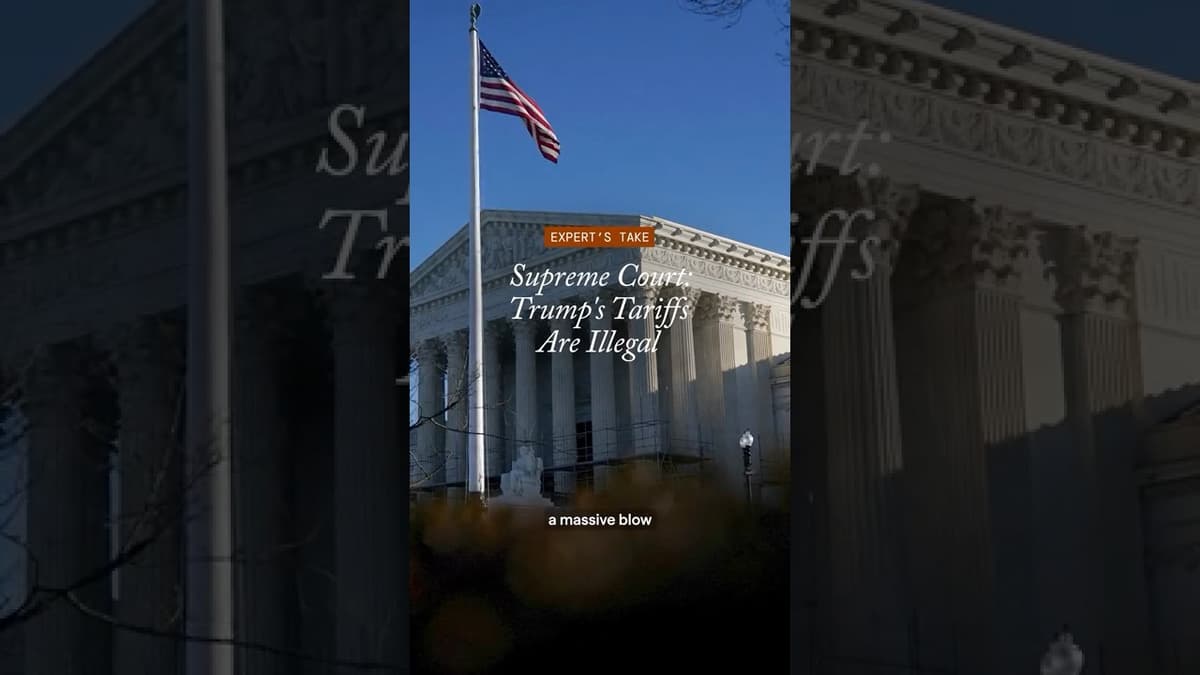
Supreme Court: Trump's Tariffs Are Illegal
The U.S. Supreme Court invalidated the tariffs President Donald Trump imposed under the International Emergency Economic Powers Act, ruling they exceeded statutory authority. The decision overturns the administration’s Section 122 tariff regime, which had already set a uniform 10 percent duty on...
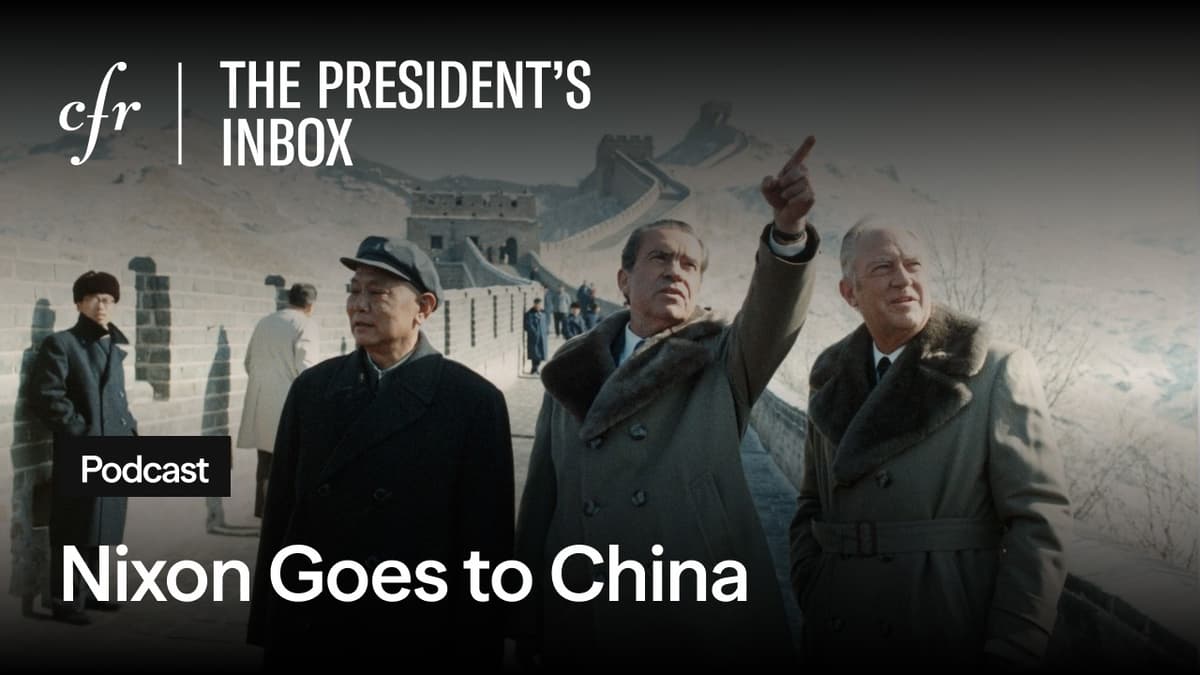
America at 250: Nixon Goes to China, With Jeremi Suri
The podcast episode examines President Richard Nixon’s historic February 1972 trip to the People’s Republic of China, a move that shattered more than two decades of mutual non‑recognition between the two superpowers. Hosted by Jim Lindsay of the Council on...
China's Critical Minerals Chokehold
In early February, the Trump administration convened an unprecedented critical‑minerals ministerial in Washington, drawing more than 55 nations to confront China’s near‑total control of rare‑earth elements and related supply chains. The summit marked the first large‑scale, multilateral U.S. effort to...

The “European Onion” + China, Brazil, and India Take On MAGA
The Spillover episode spotlights Europe at a crossroads, after Munich Security Conference and a Belgian summit, as the bloc wrestles with its strategic role amid US‑China rivalry and the war in Ukraine. Hosts note that while Europe’s macro picture is strained—aging...
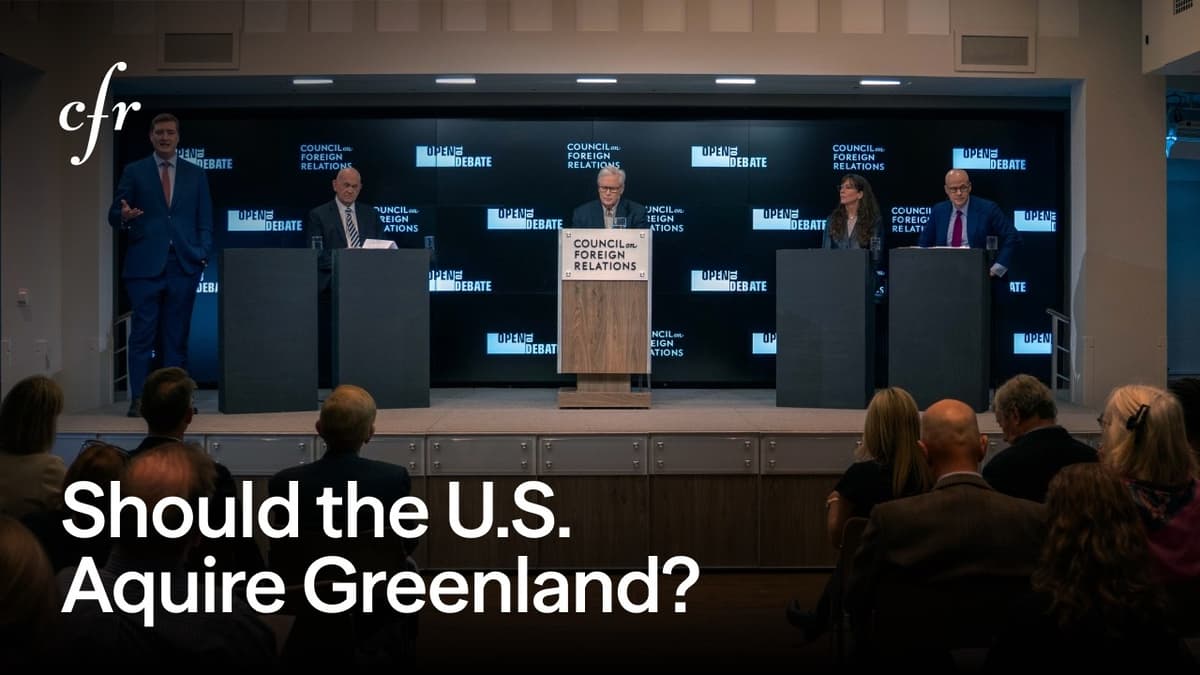
Open To Debate: Is U.S. Control of Limited Territory in Greenland a Strategic Necessity?
The Open to Debate episode convened at the Council on Foreign Relations to ask whether the United States should retain limited territorial control in Greenland. The question resurfaced after former President Donald Trump publicly floated a purchase, hinted at...

Can Italy Actually Make Money Hosting the Olympics?
The 2026 Winter Olympics in Milan‑Cortina have launched with a headline‑grabbing promise: a $6.2 billion budget that could actually turn a profit, a rarity in modern Games. Organizers plan to lean heavily on existing venues—more than 85% of facilities are already in...
Would Pakistan Extend Its Nuclear Umbrella to Saudi Arabia?
Washington is wrestling with rumors that Islamabad has pledged a nuclear umbrella to Riyadh if Tehran acquires a bomb. The chatter stems from a recently signed Saudi‑Pakistani military cooperation accord, but the agreement’s full text has never been published, leaving...