

Balancing Near Term ROI and Foundational AI Innovation
The panel examined whether an open‑source business model can thrive in pharma, weighing short‑term ROI against the need for foundational AI research. Participants debated contributions from insurers and employers, likening the model to IBM’s investment in Linux. Speakers highlighted that tools such as OpenFold and Boltz already deliver commercial value, creating healthy competition with proprietary solutions. However, deeper innovations—like the early‑stage drug‑discovery platforms discussed—remain too distant from immediate payoff, requiring upfront capital despite uncertain returns. A recurring theme was the surprise that Google, not a biotech firm, built a key AI tool, underscoring pharma’s missed opportunity. The discussion referenced AlphaFold 2’s evolution into AlphaFold 3 and RF Diffusion, illustrating how early breakthroughs can cascade into transformative applications. The consensus calls for mechanisms to surface nascent problems, rally industry attention, and fund pre‑payoff projects. Bridging this gap could accelerate AI‑driven drug discovery and generate long‑term competitive advantage for pharma companies.

AI-Powered Autonomous Labs Underrated?
The discussion centered on a recent poll asking which AI trend will most transform drug discovery in the next three to five years. Multimodal models that integrate sequencing, molecular structure, and chemistry data captured the largest share at 41%, while...

How Federated Learning Could Bridge Pharma’s Data Divide
The video examines how federated learning can close the data gap that separates pharmaceutical companies from public chemical repositories. Each firm’s historical medicinal‑chemistry records are unique, and the industry lacks negative toxicology and bioactivity data, making local predictive models unreliable...

Biosimilars And Complex Medicines For All With RNA Therapeutics' Sarfaraz Niazi, Ph.D.
The interview with Dr. Sarfaraz Niazi, CEO of RNA Therapeutics, explores his decades‑long journey from academia to industry and his pivotal role in shaping the biosimilar landscape. He recounts early work on biological drugs before the FDA had a formal...

Inside the Phased, Risk-Based Approach for CGT Materials
The video focuses on Bio4’s phased, risk‑based strategy for addressing particulate contamination in cell and gene therapy (CGT) raw and starting materials, a gap that has long plagued the industry. Bio4 is assembling a subgroup to draft best‑practice guidance, potentially...

Investing In Early-Stage Oncology With Yosemite's Dan McHugh
The Business of Biotech episode spotlights Dan McHugh, head of the investment team at Yosemite, a San Francisco‑based venture firm founded by Reed Jobs and Loren Powell Jobs. Yosemite’s mandate is to fund early‑stage cancer‑therapeutics developers, leveraging a mission‑driven capital pool that grew out of...

Commercializing CAR T Cell Therapy With Legend Biotech's Alan Bash
In a Business of Biotech interview, Legend Biotech’s President Alan Bash discusses the commercial trajectory of Carvykti, the J&J‑partnered CAR‑T therapy for multiple myeloma that received FDA approval in 2022 and now generates blockbuster revenues. Bash highlights the product’s Q4 2025...

Radiotherapeutics For CNS Cancers With Plus Therapeutics' Marc Hedrick, M.D.
In a recent Life Science Leader interview, Marc Hedrick, M.D., President and CEO of Plus Therapeutics, outlined the company’s strategic shift toward radiotherapeutics targeting central nervous system (CNS) malignancies. The discussion centered on the lead asset, Rayobic, a Re‑186 beta‑emitting...

Navigating Private Equity Ownership in the CDMO Space
The Outsourced Pharma Live segment dissected how pharmaceutical companies can evaluate a CDMO’s financial resilience when owned by private‑equity firms. Panelists Jana Spes and Christine Sheaffer outlined precise questions to uncover sponsors’ reinvestment intentions and to confirm that leadership remains...

The BioSecure Act & Unfiltered Supply Chain Realities
The Outsourced Pharma Live panel highlighted the urgent need for supplier‑level visibility of raw materials and packaging as geopolitical tensions threaten supply continuity. Speakers emphasized that transferring technology to established U.S. CDMOs is a capital‑intensive, time‑consuming process. Jana Spes and...

The "Bad News" Stress Test: How CDMOs Handle Escalation
The Outsourced Pharma Live segment highlighted a "bad news" stress test for evaluating CDMOs during due diligence. Panelists Jana Spes and Christine Sheaffer explained how to map escalation pathways by pinpointing key decision‑makers and probing the partner’s problem‑solving culture. They...

What Great CDMO Selection Looks Like In 2026
The Outsourced Pharma Live panel redefines what makes a great CDMO in 2026, shifting focus from raw capacity and technical capability to how partners execute under uncertainty. Christine Sheaffer emphasizes the importance of managing change without triggering contract disruptions, delivering...

The One Quality Metric That Actually Matters
During the Outsourced Pharma Live event, panelists Jana Spes and Christine Sheaffer highlighted three internal quality metrics that cut through marketing hype to reveal a CDMO’s true quality culture. They emphasized deviation closure times, batch record cycle times, and CAPA...

AI Meets Cell Therapy Manufacturing
Senti Biosciences executives Tim Lu and Claire Aldridge told Cell & Gene Live that artificial intelligence is reshaping cell‑therapy manufacturing by speeding up, not replacing, wet‑lab steps. They highlighted robust validation data that demonstrates AI‑driven processes are reliable. The speakers...

Unlocking AI's Potential in Cell Therapy Through Robust Data
In the closing session of Cell & Gene Live, Senti Biosciences executives Tim Lu and Claire Aldridge argued that a high‑quality, diverse data infrastructure is the cornerstone for applying AI and synthetic biology to cell and gene therapies. They stressed...

Why Programmable Logic-Gated Cell Therapies Matter
Senti Biosciences executives Tim Lu and Claire Aldridge argued that next‑generation cell and gene therapies must employ programmable, logic‑gated designs to address diseases where traditional small molecules and biologics fall short. By integrating AI‑driven design and synthetic biology, these therapies...

Safer, Smarter Cell Therapies with AI
In a Cell & Gene Live segment, Claire Aldridge, Ph.D., emphasized that AI and synthetic biology breakthroughs depend on proprietary, well‑annotated experimental data that continuously train models. Tim Lu, M.D., Ph.D. of Senti Biosciences explained how logic‑gated designs combined with...

AI-Designed Logic Circuits for Smarter Cancer Targeting
Senti Biosciences unveiled an AI‑guided workflow that designs paired activating and inhibitory chimeric antigen receptors (CARs) to create logic‑gated circuits for cell therapies. The system automatically optimizes CAR combinations, enabling more precise discrimination between cancerous and healthy cells and delivering...

The Tradeoffs Of Continuous Processing
The panel addressed a recurring audience query about whether continuous processing—specifically harvesting antibody‑producing bioreactors and loading directly onto Protein A chromatography—can be implemented under GMP conditions. The discussion framed the issue as a balance between upstream output and downstream handling, asking...
Making Biologics Orally Available With Vivtex's Thomas Von Erlach, Ph.D.
The interview with Thomas von Erlach, Ph.D., co‑founder and CEO of Vivex, focuses on the company’s breakthrough gastrointestinal‑on‑a‑chip platform that makes biologic drugs orally bioavailable, a stark contrast to traditional injections or IVs. Von Erlach outlines how the technology, conceived...
The Conjugation Conundrum: The Realities of Conjugated LNP Manufacturing
The discussion centers on the emerging complexities of conjugated lipid nanoparticle (LNP) manufacturing, a shift from standard platform processes toward targeted RNA delivery. Sujit explains that adding a biologic ligand to LNPs forces manufacturers to revisit every process parameter—viscosity, shear...
The “Art” Of the Linker: Complexity, Biodegradability, and Scale in Active LNP R&D
The panel examined the emerging “active” delivery paradigm for lipid nanoparticle (LNP) therapeutics, focusing on the added layers of complexity introduced by ligand‑modified formulations and the need for robust R&D pipelines. Participants contrasted passive LNPs with active, ligand‑decorated versions, highlighting...
The Challenges Novel Lipids Pose For mRNA-LNP Manufacturing
Novel lipid chemistries are accelerating mRNA‑LNP innovation, but they also upend established manufacturing platforms. According to CMC consultant Sujit Jain, each new lipid class forces a fresh round of process development, demanding new impurity profiling strategies and vendor qualification. The...
Novel Lipid Chemistries & Their Impact on Passive LNP Delivery
In a recent Advancing RNA Live session, Dominik Witzigmann of NanoVation and John Zuris of Stealth Co dissected emerging lipid chemistries that enhance passive lipid nanoparticle (LNP) delivery. They highlighted breakthroughs in ionizable lipids, helper lipids, and PEG‑lipids that improve...

How Microfluidics & QbD Are Maturing LNP Manufacturing
In a recent discussion, CMC consultant Sujit Jain and NanoVation CEO Dominik Witzigmann highlighted how microfluidic platforms combined with Quality‑by‑Design (QbD) principles are transforming lipid nanoparticle (LNP) production for mRNA therapeutics. They noted that continuous‑flow microfluidics now enable precise control...
Primates, Patents, & Progress: Advancements In Rational LNP Design
In a recent Advancing RNA Live segment, Dominik Witzigmann of NanoVation Therapeutics and John Zuris of Stealth Co discussed the latest scientific breakthroughs shaping lipid nanoparticle (LNP) design. They highlighted rational, data‑driven approaches that improve particle stability, targeting precision, and...
The Evolving CMC Landscape for mRNA-LNPs
In a recent Advancing RNA Live segment, CMC consultant Sujit Jain outlined the current maturity levels across process development, analytical methods, and supply‑chain logistics for mRNA‑LNP products. He highlighted that COVID‑19 vaccines and liver‑targeted therapeutics now operate on a reproducible,...
Knowing How Injection Volumes Impact Delivery Options
The panel discussed how the volume that can be self‑administered determines whether a therapy is delivered via a pre‑filled syringe (PFS), an autoinjector, or an infusion system. Speakers emphasized that the deciding factor is the drug’s pharmacokinetic profile. Antibodies that merely...
Relying On Human Factors Clinical Data For Regulatory Approvals
The discussion centered on the growing regulatory focus on human‑factors engineering in medical‑device submissions, especially within the FDA’s Center for Devices and Radiological Health. Participants noted that the agency’s human‑factors experts have become more visible over the past decade, and...
Preparing Early For Regulatory Marketing Submissions
The video addresses how companies should begin planning regulatory marketing submissions well before a product reaches the market, emphasizing patient‑centricity and the imperative of rapid access to therapies. It argues that early alignment of clinical trial design with the data...
Monitoring Patient Preferences And Post-Market Safety
The Drug Delivery Leader Live panel highlighted the growing emphasis on patient‑centric post‑market surveillance for injectable, infused, and implanted therapies. Shannon Hoste explained how manufacturers now track patient preferences and safety outcomes after product launch. Real‑world data and digital tools...
Selecting Injection Devices And Platforms
During the Drug Delivery Leader Live webcast, chief editor Tom von Gunden asked panelist Fran DeGrazio how dosing considerations drive the choice of injection devices and platforms. DeGrazio explained that dose volume, drug viscosity, and administration frequency are the primary...
Confirming Study Approaches For Clinical Bridging
During the Drug Delivery Leader Live event, Chief Editor Tom von Gunden prompted panelist Beate Bittner to discuss patient‑centric considerations as drug and delivery products transition to clinical trials. Bittner emphasized that leveraging established platforms and data from previous studies...
Determining Dosing For IV Or Subcutaneous Delivery
In a Drug Delivery Leader Live session, panelist Beate Bittner discussed early‑stage formulation decisions from a patient dosing perspective, comparing intravenous (IV) and subcutaneous (SC) routes. She highlighted how drug stability, bioavailability, administration frequency, and patient convenience shape the choice...
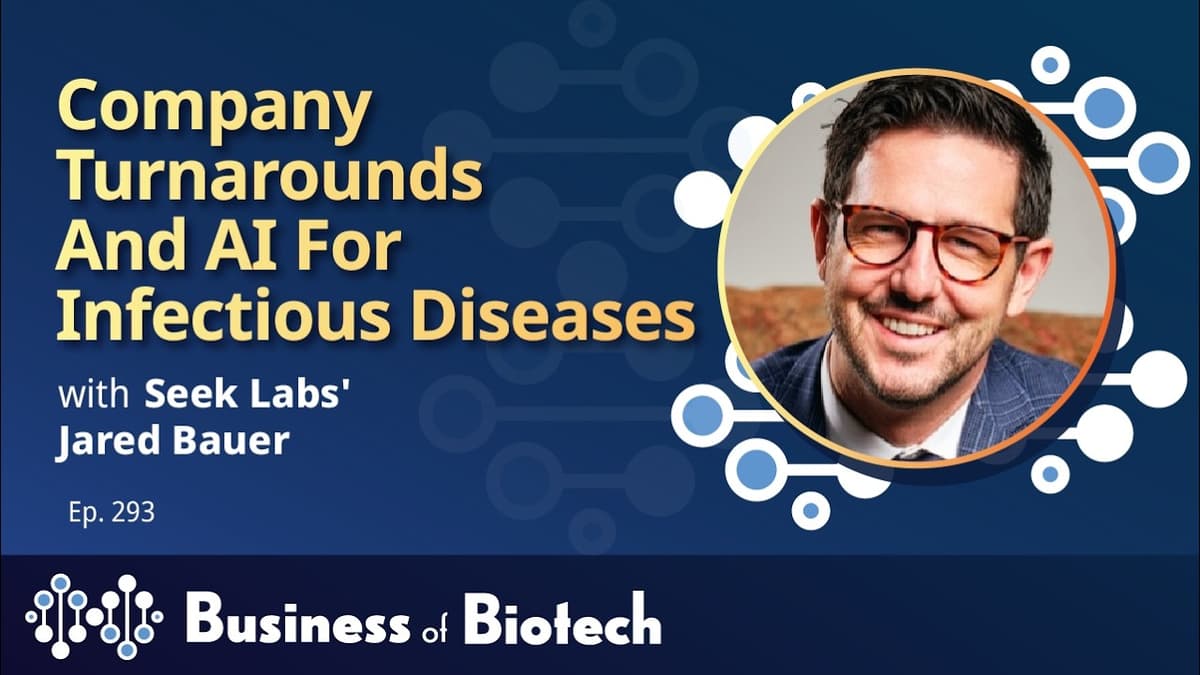
Company Turnarounds And AI For Infectious Diseases With Seek Labs' Jared Bauer
Jared Bauer, co‑founder and CEO of Seek Labs, detailed his experience turning around biotech firms and launching an integrated AI‑diagnostic and CRISPR‑therapeutics platform for infectious diseases. He highlighted a proof‑of‑concept study against African Swine Fever that markedly reduced viremia in...