
How Top Investors Identify Great Fund Managers
The video explains how leading investors systematically identify top‑tier fund managers, emphasizing a multi‑layered due‑diligence framework rather than relying on surface metrics. Their process begins with deep underwriting of the managers’ personal histories, education, and prior experience. They then assess whether the manager’s investment strategy aligns with enduring market opportunities and whether the targeted sectors remain relevant. Historical performance of earlier funds provides a concrete benchmark, while industry networking supplies reputational intelligence about the principals. As one investor notes, “We’re not a first‑fund investor, so we already have history to evaluate.” The speaker also highlights that reputation, built through long‑standing relationships, often reveals a manager’s true operating style before formal metrics surface. By integrating background checks, strategic fit, track record, and peer insights, investors aim to reduce selection risk and capture superior returns, setting a rigorous standard for fund‑manager selection across the industry.
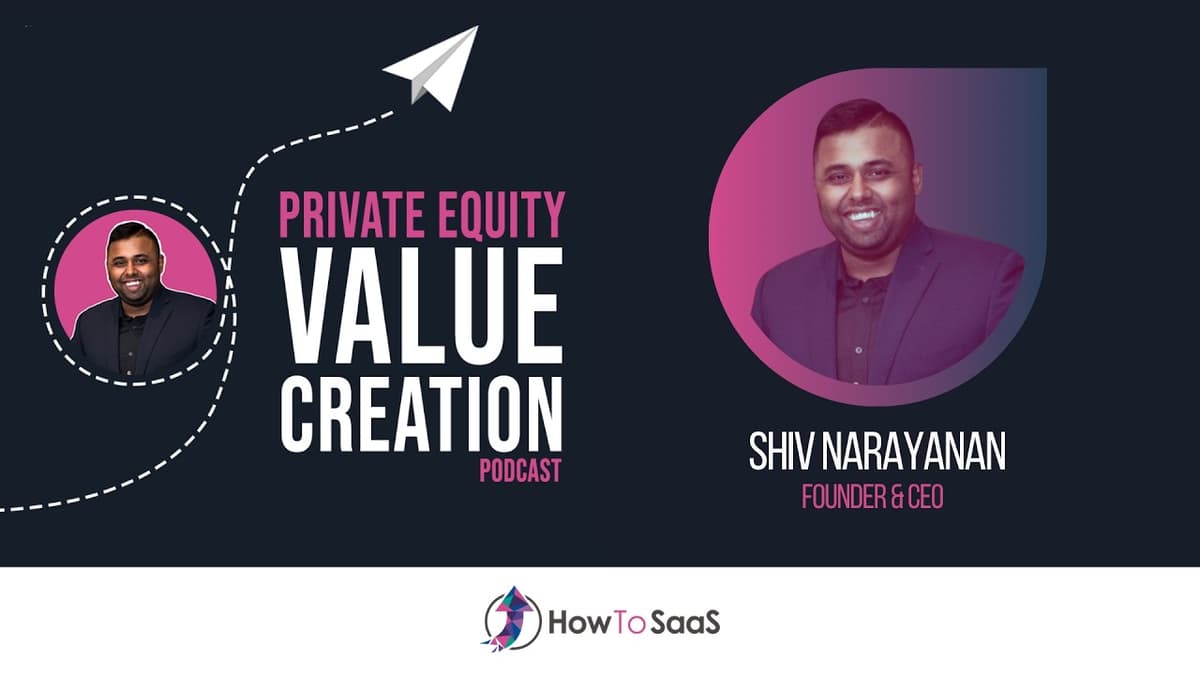
Ep.124: Shiv Narayanan of How To SaaS | The 7-Step AI Marketing Blueprint
In this episode Shiv Narayanan introduces his new bestseller, the AI Marketing Blueprint, and explains why traditional demand‑generation channels such as paid search and SEO are losing effectiveness. Buyers are increasingly turning to large‑language‑model platforms—ChatGPT, Gemini, Claude—to self‑educate, conduct research,...

Why Most Private Equity Firms Fail to Stand Out
The video examines why most private‑equity firms fail to stand out, especially as competition for GP‑stakes among upper‑market players intensifies. It questions the need for another middle‑market firm and stresses that differentiation is no longer optional. Key insights include the inadequacy...

How Private Equity Firms Can Create Value From Day One
The video outlines how a private‑equity firm embeds a dedicated “hub” team into every transaction, aiming to generate value from day one rather than after the deal closes. During the due‑diligence phase the hub’s value‑creation specialists work side‑by‑side with the deal...

How Data Predicts Investment Success Before You Commit
The video explains how a data‑analytics platform helps private‑equity and corporate‑investment teams forecast the likelihood of a deal’s success before committing capital. By mining a proprietary database of past transactions, the service matches a prospective investment against historical analogs that share...

Why Private Equity Secondaries Are Exploding Right Now
The video explains why the private‑equity secondary market is booming, focusing on institutional investors' shifting strategies. As private‑equity funds mature, large investors such as pension plans, university endowments and sovereign wealth funds have built sophisticated portfolio‑management capabilities. They increasingly sell portions...

How Investors Find Deal Flow in Secondary Markets
The video explains how investors locate deal flow in secondary markets, emphasizing relationship‑driven sourcing. Prospective investors are routinely asked, “How do you find the deals?” and the answer centers on business‑development work that connects with other general partners (GPs) to...

Where Your Fund Fits in an LP Portfolio (And Why Specialization Isn’t for Everyone)
The discussion centers on how limited partners (LPs) should evaluate where a fund sits within their broader investment portfolio, weighing the appeal of sector‑specialized managers against the need for diversification. It highlights a market bias toward niche strategies while warning...

How Private Equity Firms Manage Complexity Across Diverse Investments
The video explains how private‑equity firms tackle the inherent complexity of holding a portfolio that spans multiple industries. By structuring their organizations around dedicated deal teams, operating partners, and a central hub, they create a repeatable framework that guides each...

Why Some SaaS Founders Choose Debt Instead of Venture Capital
The video explains why a growing number of SaaS founders are turning to debt financing instead of traditional venture capital, highlighting the launch of Rack—a lender built to serve companies that have outgrown bootstrapping but aren’t ready for a large...

How Top Private Equity Firms Scale European Software Companies
The video explains how leading private‑equity firms partner with European software companies to accelerate growth and create enterprise value. Their strategy begins with a continent‑wide search for best‑in‑class niche software businesses, followed by an initial listening session to understand the...

How Private Equity Firms Can Generate More Deal Flow in Competitive Markets
The video discusses how private‑equity firms can boost deal flow in competitive or slow markets by leveraging sister‑fund structures and a long‑term partnership narrative. It argues that having multiple funds—one focused on debt, another on equity—creates flexibility to engage companies...

How Private Equity Firms Can Drive Value Through SaaS Retention and Pricing
The video explains how private‑equity firms can unlock hidden value in SaaS businesses by tightening customer‑success metrics and pricing structures. It emphasizes that retention metrics such as gross and net revenue retention are critical levers for boosting exit multiples, and...

How AI Will Disrupt Legacy Software Companies
The video examines how artificial intelligence is poised to upend established software vendors, contrasting AI‑native startups with legacy firms that built their products before the AI boom. It argues that AI can be a powerful catalyst if incumbents adapt, but...

Ep. 119: Bob Brown, Motive Partners | Investing, Operating and Innovating Model
Bob Brown, founding partner of Motive Partners, outlines the firm’s IOI (Investing, Operating, Innovating) model on the Private Equity Value Creation podcast, positioning it as a new framework for value creation. The model combines classic PE capital allocation with a sizable...
How AI Is Solving the Talent Bottleneck in High-Touch Businesses
The video discusses how AI is addressing talent bottlenecks in high‑touch businesses, where personal interaction is core. Companies have opened centers in Lithuania, Ireland, Malta, Cyprus, India, and the Philippines to source talent, yet hiring limits growth; AI allows them to...
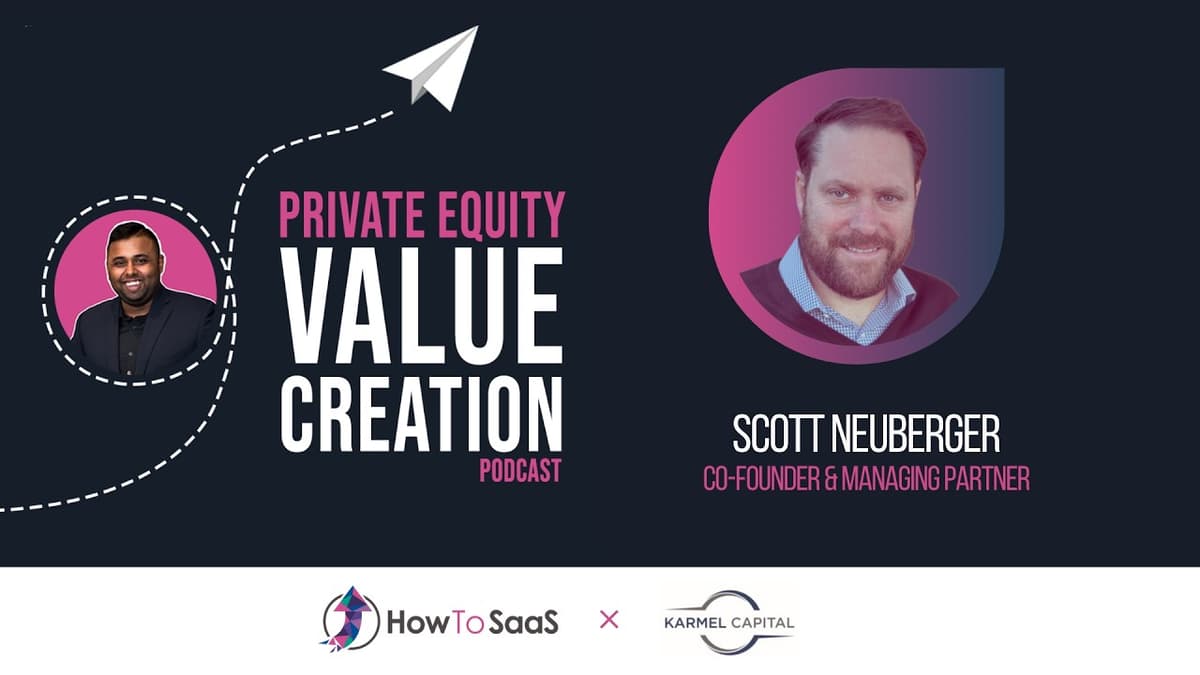
Ep. 117: Scott Neuberger, Karmel Capital | Data-Driven Secondaries in Software and AI
The episode features Scott Neuberger, managing partner of Karmel Capital, discussing the firm’s data‑driven approach to secondary market investing in later‑stage enterprise software and AI infrastructure. He explains how Karmel raises committed capital from institutions and family offices, then deploys...
Ep. 116: Allen Mask of WestCap | Driving Portfolio Value Through Operating Equity
The episode introduces Westcap’s "operating equity" model, a hybrid of capital and in‑house expertise designed to boost the enterprise value of its portfolio companies. Partner Alan Mask explains that Westcap deliberately invests a 2:1 ratio of operating resources to traditional...
Venture Capital, Private Equity or Debt?
The discussion centers on how early‑stage investors help founders decide between venture capital, private equity, or debt financing. While seed rounds of $1‑5 million receive minimal coaching, the firm’s support intensifies once a company hits the $2‑5 million annual recurring revenue (ARR)...
Ep. 114: Bill Dupee, Aprio | Using Diligence to De-Risk Deals and Improve Outcomes
The episode features Bill Dupee, partner of Transaction Advisory Services at Apprio, outlining the firm’s comprehensive approach to M&A diligence. Apprio goes beyond traditional quality‑of‑earnings work, delivering financial, tax, HR, technology, and post‑merger integration services across a wide range of...
Ep. 106: John Messer, Copilot Capital | Scaling Software Without Losing Focus
In this episode of the Private Equity Value Creation podcast, host Shivarinan interviews John Messer, managing partner of Copilot Capital, a London‑based B2B software investor. Messer outlines the firm’s distinctive “co‑pilot” philosophy and explains how they partner with portfolio companies...
C-Level Marketing Module 4: Product Marketing
The instructor frames the C-level marketing course as strategic, not tactical, and pivots into product marketing as the critical growth lever that precedes demand generation. He argues product marketing—rooted in customer analysis, positioning, and messaging—sets the table for the whole...
C-Level Marketing Module 10: M&A
The session frames mergers-and-acquisitions as a primary inorganic growth lever—alongside pricing—used by private equity to rapidly scale companies, often outpacing organic demand-generation efforts. In practice investors build a platform investment and pursue add-on acquisitions to expand capabilities or geographies; industry...
C-Level Marketing Module 3: TAM & Segmentation
The session reframes TAM/SAM analysis by emphasizing customer value and winnability rather than raw market size, arguing companies should target the intersection of valuable and winnable customers. The presenter urges deep segmentation and cohort analysis—by vertical, account size and conversion...
C-Level Marketing Module 6: Content
The session framed content as a core C-level marketing pillar tightly linked to product marketing and demand generation, arguing that great messaging and assets drive a repeatable growth flywheel. The instructor emphasized that content appears across all customer touchpoints—not just...
C-Level Marketing Module 11: Team & Budget
The session links marketing team structure and budgeting to board-level communication and enterprise value, arguing that resource allocation should follow strategy and measurement work completed earlier in the program. The instructor warns that marketers often lose credibility in boardrooms by...
C-Level Marketing Module 8: Strategic Growth
The session reframes marketing as a subset of strategic growth, urging senior marketers to adopt a bird’s-eye view and contribute to company-level decisions beyond tactical execution. The speaker defines growth as maximizing total customer value through three core levers—acquire more...
C-Level Marketing Module 5: Demand Generation
The session reframes demand generation for SaaS leaders as a strategic, enterprise-value exercise rather than just top-of-funnel lead capture. The presenter argues most teams misallocate budget and effort to discovery and early funnel stages, and uses a case study of...
C-Level Marketing Module 2: Uncovering CEO & Board Expectations
The session explains why marketing leaders must proactively uncover CEO and board expectations to align priorities and drive enterprise value. It highlights a common mismatch where CMOs focus on tactics while CEOs and boards are preoccupied with cash flow, fundraising,...
C-Level Marketing Module 7: Sales Alignment
Week seven’s C-Level marketing session focused on Sales Alignment, arguing that senior marketers must deeply understand sales to truly be accountable for revenue. The presenter urged a cultural shift from a handoff model to joint ownership of the buyer journey,...

How AI Really Impacts Portfolio Companies and Product Strategy
The video tackles the pervasive buzz around artificial intelligence in private equity, emphasizing how fund managers must evaluate AI both as an operational lever and a product differentiator for their portfolio companies. The speaker notes that AI has become a...

Investors Are Done Funding Inefficient Growth
The video addresses a growing shift among investors who are no longer willing to fund companies that prioritize rapid, capital‑intensive growth over profitability. The speaker emphasizes that businesses raising more capital than they generate in revenue are deemed “capital inefficient,”...
The 30 to 50 Criteria Behind GTM Evaluation
The video outlines a comprehensive go‑to‑market (GTM) assessment framework that can involve anywhere from 30 to 50 distinct criteria. It emphasizes that firms must systematically score each area to gauge the health and scalability of their GTM model, ranging...
Ep. 101: Vik Thapar, Cypress Growth Capital | Non-Dilutive Funding with Royalty-Based Capital
The episode centers on Cypress Growth Capital’s royalty‑based, non‑dilutive financing model, explained by managing director Vic Thapar. Cypress targets founder‑owned B2B SaaS firms that have moved beyond the early‑stage bootstrap phase—typically generating $3‑6 million in annual revenue—and are looking for growth...

Ep. 97: Rita Ferrandino, Arc Capital Development | The Downturn Playbook
Rita Ferrandino, co-founder of Arc Capital Development, outlines a practical “downturn playbook” for private-equity-backed companies, arguing firms must do disciplined operational work rather than treating AI as a quick fix. Drawing on two decades advising education and workforce-training businesses, she...

Your Best Growth Channel Might Be Your Existing Customers
The speaker argues that companies often overlook expansion within their existing customer base in favor of chasing new logos, and that tapping current clients can be a prime growth channel. They describe a consulting approach that maps customer ‘white space’...
Ep. 95: Ed Bryne, Scaleworks | Scaling SaaS with Sustainable Growth Through Venture Equity
Ed Byrne, partner at Scaleworks, outlines the firm’s “venture equity” approach to scaling SaaS: buy or invest in revenue-generating software companies, emphasize profitability and cash flow over rapid fundraising, and grow them via an in-house operating team based in San...
The 120-Day Foundation Plan
The speaker outlines a standardized playbook used to create value in lower middle-market acquisitions, centered on a five-part framework. The initial phase, dubbed "Fortify the Foundation," is a 120-day plan that follows a 10-day "hot list" of immediate post-closing tasks...
The CEO's Clock: Balancing Daily Ops and Long-Term
A leadership coach urges CEOs to treat time as their most important technology, warning that defaulting to constant firefighting leaves them trapped in daily operations. He recommends consciously allocating hours across three perspectives: the microscope for day-to-day execution, the binoculars...
SaaS Marketing That Scales: How to Drive Growth, Pipeline & Valuation
The presenter, a former SaaS CM who sold his company to private equity, argues that many B2B firms underinvest in marketing despite strong operational metrics, leaving pipeline generation and enterprise value on the table. He maps company maturity on marketing...