
AI in Healthcare Series: Inside the Rise of AI in Healthcare, Open Evidence and Cyber Risks
The Stanford Healthcare AI podcast episode explores the rapid rise of artificial intelligence in health care, focusing on cybersecurity vulnerabilities, the emergence of open‑evidence tools, and the policy challenges surrounding critical infrastructure. Guests highlight that despite a $30 billion federal push to digitize records, AI benefits have largely favored payers and systems rather than patients. Hospitals remain under‑protected, with nation‑state actors like Iran and North Korea poised to exploit “dumb” AI models. Fragmented oversight among the Secret Service, FBI, DHS/CISA, and DOJ leaves no clear owner of health‑sector cyber defenses. DJ notes that open‑evidence platforms now serve roughly two‑thirds of clinicians, while new GPT‑for‑clinicians tools enforce NPI verification, signaling a market shift toward hybrid consumer‑enterprise AI. Real‑world examples such as Project Glasswing and the $3 billion AI investment by UnitedHealth illustrate both the threat landscape and the drive for efficiency in prior‑auth and patient engagement. The discussion underscores the urgency of designating health care as national critical infrastructure, fostering inter‑agency collaboration, and balancing AI‑driven patient empowerment with safety safeguards. Failure to act could amplify cyber‑risk, while coordinated policy and technology adoption promise improved outcomes and more resilient health systems.
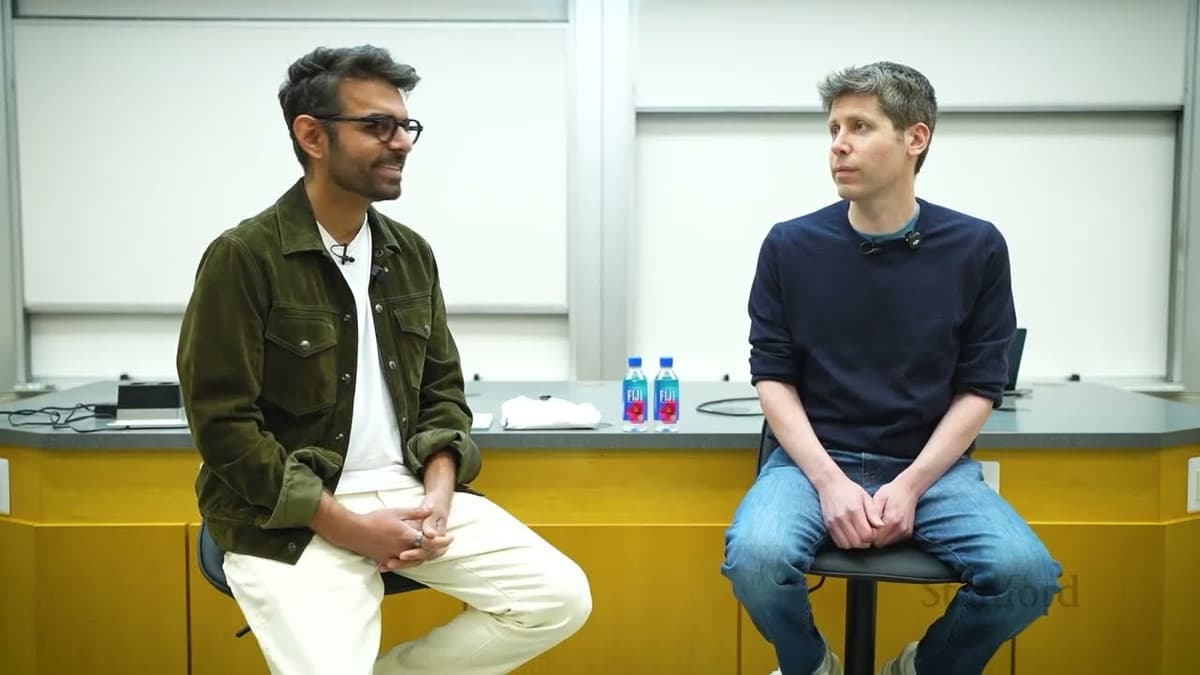
Stanford CS153 Frontier Systems | Scale, AGI, and the Future of Everything
In a Stanford CS153 Frontier Systems session, Sam Altman reflected on a decade of building OpenAI, contrasting the traditional startup trajectory with the lab‑first approach his company took. He argued that the rapid drop in token costs now lets a...
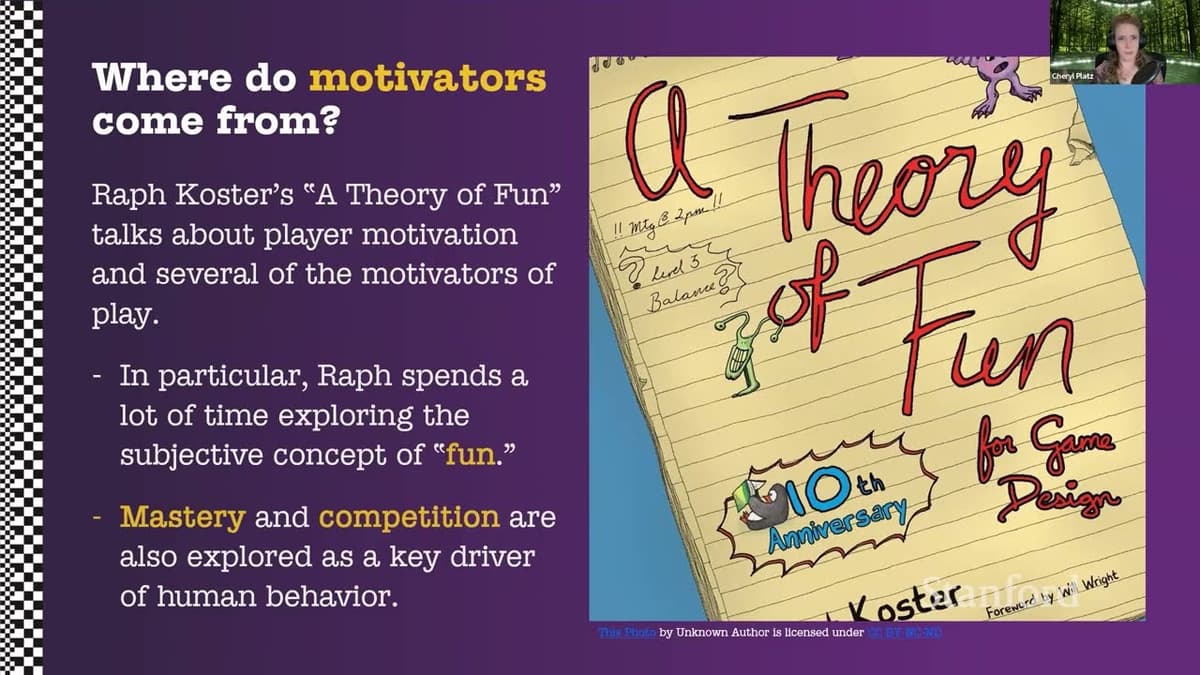
Stanford CS547 HCI Seminar | Spring 2026 | The Modern Motivators of Play
The Stanford HCI seminar examined how today’s games must start with a deep understanding of why players play, rather than jumping straight to monetization or feature roadmaps. Professor [Name] argued that outdated assumptions about player desires—especially the belief that competition...
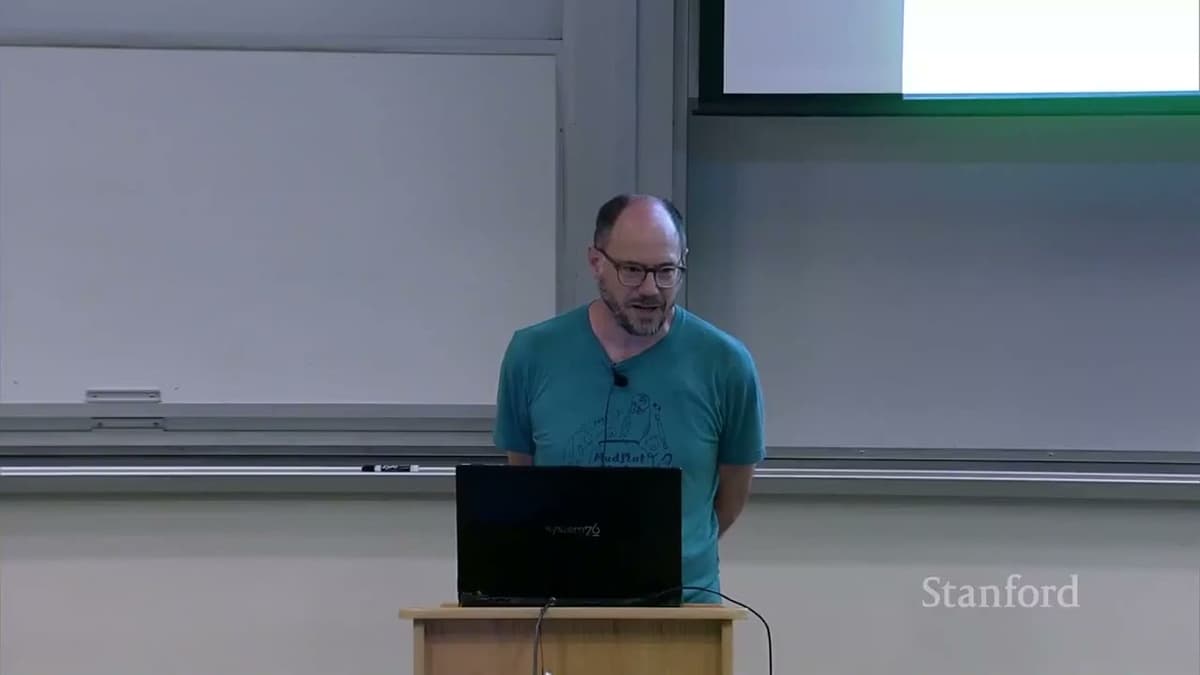
Stanford Robotics Seminar ENGR319 | Spring 2026 | Leveraging Geometry in Robot Learning
The seminar examined the growing divide between traditional hand‑coded geometric models and modern vision‑language models (VLMs) in robotics. While classic approaches rely on precise, physics‑based priors that enable one‑shot tasks, they falter when reality deviates from assumptions. Conversely, today’s VLMs...
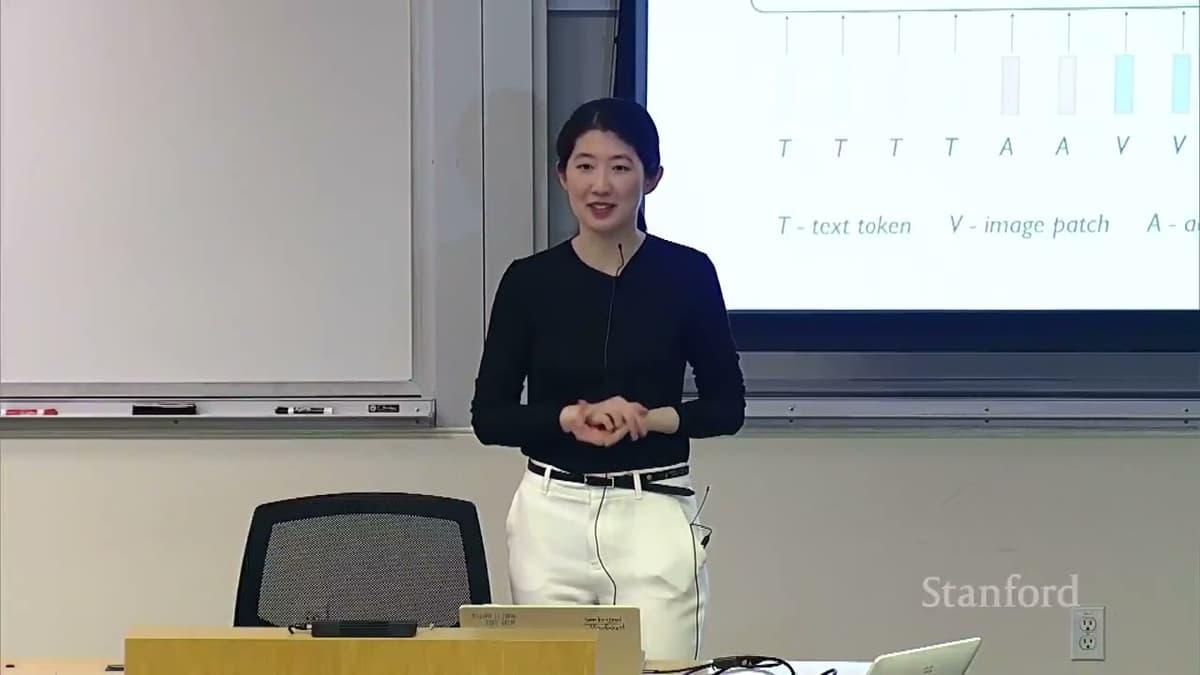
Stanford CS25: Transformers United V6 I From Language Models to Native Multimodal Intelligence
The Stanford CS25 talk introduced native multimodal intelligence, highlighting how large language models (LLMs) have become ubiquitous but remain limited to symbolic token prediction. Victoria Lynn explained that real‑world applications demand models that ingest and generate across visual, auditory, and...
Stanford CS25: Transformers United V6 I Serving Transformers: Lessons From the Trenches
The lecture focuses on moving beyond model training to the practical challenges of serving large language models in production. Charles explains that while training generates the intellectual asset, inference is the revenue engine that turns model weights into usable products,...
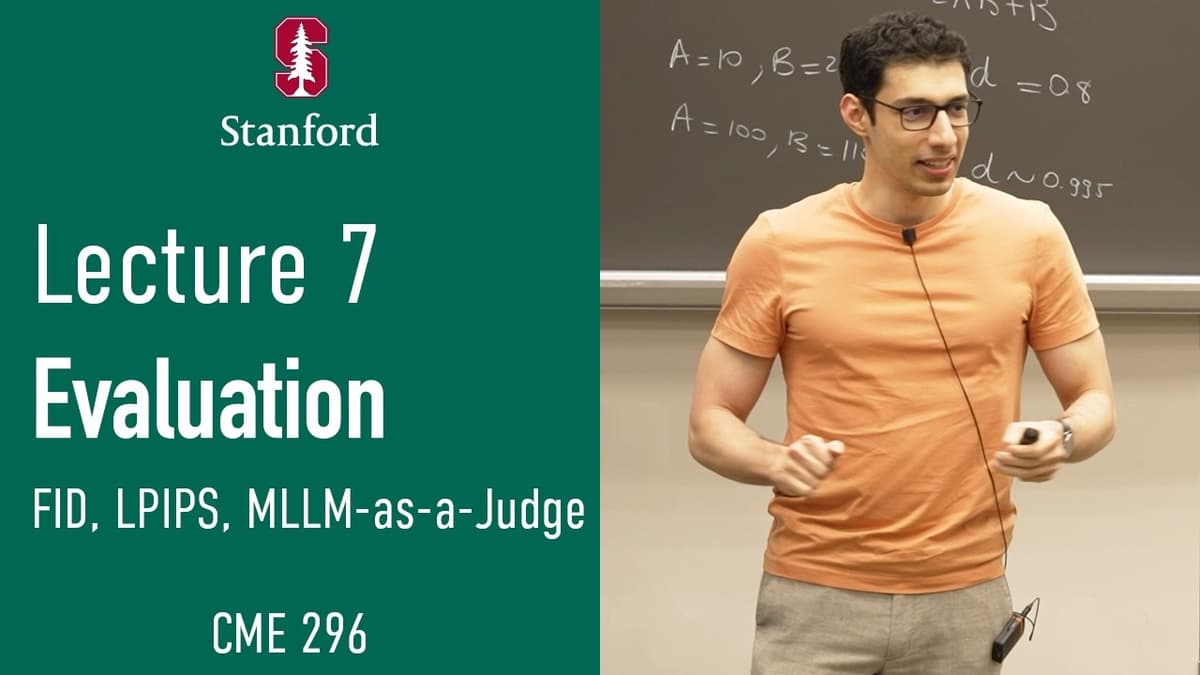
Stanford CME296 Diffusion & Large Vision Models | Spring 2026 | Lecture 7 - Evaluation
Lecture 7 of Stanford’s CME‑296 course turns to evaluating text‑to‑image generators, arguing that you can’t improve what you can’t measure. The professor breaks evaluation into two primary axes—visual aesthetics and prompt adherence—and walks through three human‑rating schemes: a 1‑to‑5 Likert scale,...
Stanford CS153 Frontier Systems | The Road Ahead: Resilience Required
The talk chronicles a veteran security executive’s journey from a 1990s DOJ internet gatekeeper to leading security at eBay, Facebook, Uber and Cloudflare, emphasizing the evolving nexus of government, tech, and resilience. He highlights how he repeatedly started with three...
Stanford CS336 Language Modeling From Scratch | Spring 2026 | Lecture 16: Post-Training - RLVR
The lecture introduces Reinforcement Learning from Verifiable Rewards (RLVR) as the next frontier beyond instruction tuning and RLHF, focusing on tasks such as mathematics and code where outcomes can be objectively verified. It highlights recent OpenAI announcements that a thinking...

Stanford Robotics Seminar ENGR319 | Spring 2026 | Interactive Autonomy
The Stanford Robotics Seminar focused on interactive autonomy, emphasizing the need for robots to interact safely and intelligently with humans and other agents across domains such as warehouses, manufacturing, and drones. The speaker highlighted that successful interaction requires joint prediction...
Stanford CS25: Transformers United V6 I Distinct Modes of Generalization From Parameters and Context
The talk by Andrew Lampinen explores how large language models (LLMs) generalize knowledge differently when it is stored in model parameters versus when it is supplied in the prompt context. By replicating the "reversal curse"—where fine‑tuned models struggle to answer...

Stanford CS153 Frontier Systems | The AI Native Company: How One Founder Becomes a 1000x Engineer
The Stanford CS153 lecture featured Garry Tan and Diana Hu of Y Combinator discussing how frontier systems and AI are reshaping startup creation. They traced the evolution from early Stanford courses to YC’s SAFE agreement, which standardized seed‑stage financing and removed...
Stanford CS547 HCI Seminar | Spring 2026 | HCI and Human-Centered AI for Digital Health
The seminar introduced a human‑centered AI approach for digital health, emphasizing personalized machine‑learning models built on multimodal wearable streams. Rather than a single, population‑wide diagnostic model, each user receives an AI that learns from their own biosignals to predict repeat...

Stanford CS153 Frontier Systems | Jensen Huang From NVIDIA on the Compute Behind Intelligence
NVIDIA CEO Jensen Huang told Stanford students that computing is undergoing its most radical transformation in six decades as AI, and especially generative models like GPT, shift systems from pre-recorded to real‑time, contextually generated intelligence. He argued this transition requires...

Stanford CS153 Frontier Systems | Scott Nolan From General Matter on Energy Bottlenecks
The Stanford CS153 lecture featured Scott Nolan, CEO of General Matter, discussing how electricity—not just raw compute—has become the primary bottleneck in scaling artificial‑intelligence systems. While recent breakthroughs like ChatGPT and Claude have driven explosive demand for model training and...