

Set Strict Guardrails to Protect Your Investments
I’ve lost a lot of money over the course of my life. Here are some guardrails so that you can avoid that: - never invest in an asset that isn’t backed by cashflow - consult 3-5 people you trust before making an investment that constitutes more than 10% of your net worth - never give a loan that isn’t backed by *sellable* (within 3 months) collateral - never put more than 10% of your net worth into assets you don’t personally control (“personally control” means you have decision-making-rights and bank account access) - if losing the amount of money you’re investing would materially change your life, scale back the investment - set a firm limit on how much money you’re setting aside for a particular investment. Once that limit is hit, put $0 more in, regardless of any change in circumstances. Be willing to lose everything up to that limit but nothing more - if you can’t easily explain the investment and how it works, you don’t know enough to put your money in. This doesn’t mean that you “sort of” know. It means you *actually* know. Have a friend quiz you on the investment. If you answer “I don’t know” to anything, you’re not allowed to put a dollar in until you do know - your default position should be “in cash”, not fully invested. If you’re ever between the two, stick to holding the cash - investing in new assets should actually be your last option with your capital. First should be investing in yourself, second should be starting a business/reinvesting into your business - anytime you get an investment opportunity, ask yourself how many people said “no” before you. Why are you so blessed to be getting this opportunity? Write down why you think they said no. Just because other people said no doesn’t mean you shouldn’t invest, but it does mean that you need to figure out why they said no and make sure that reason is an acceptable risk - when you have a core competency in investing that you consistently make money with (real estate, small businesses, whatever), your threshold for investing in something outside of that competency should be insanely high. Almost never makes sense. You have a proven system, stick with it - no single opportunity or deal is ever that important. If you feel pressured into making a quick decision, pass. They’ll always be another deal Finally - if something does pass all of these tests, you diligence it and have extremely high conviction, don’t be afraid to size up. Those type of opportunities don’t come along often and they’re usually multi-baggers

Remote Real Estate Works, But Never Buy Sight‑Unseen
I've gotten a lot of questions recently on how to operate a remote deal so I'm going to dive into the several methods you can use and the benefits and drawbacks of each strategy. First off, buying properties remote is 100%...

Master Real Estate Debt: DSCR, LTV, and Debt Yield
There are 3 main debt metrics in real estate: 1. Debt Service Coverage Ratio (DSCR) 2. Loan to Value (LTV) 3. Debt Yield Here’s how to view each from both a buyer’s perspective & a lender’s perspective: 1. DSCR Definition: The DSCR is the...

Quick 5‑Minute Deal Check: Yield > Cap Rate Wins
How to analyze a real estate deal in 5 minutes: Basically what you’ll be doing is 1. Multiplying market rents by the property’s unit count 2. Applying a vacancy factor to get total revenue 3. Multiplying the total revenue by the market NOI...
Leverage Near‑Zero Vacancy to Spot Mispriced Deals
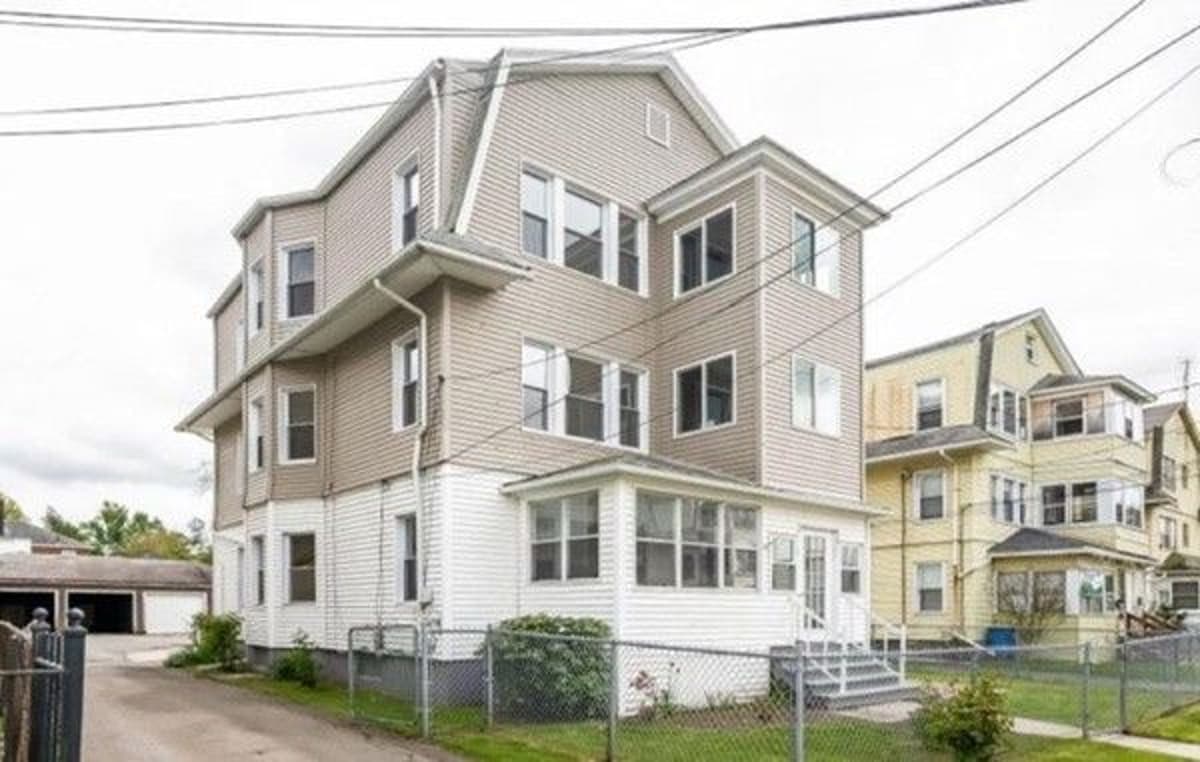
My first deal was tiny. A 3-unit multifamily deal. Bought it for just $200k I had been researching the market for a few months and was having trouble finding a good property to buy until I noticed a strong supply-demand imbalance...

Calculate Return on Cost Correctly to Ensure Renovations Add Value
Return on cost seems like it should be a pretty simple concept but a lot of people actually calculate it wrong and it ends up costing them a lot of money For those of you who don't know, return on cost...

Small Occupancy Gains Scale to Millions in Large Portfolios
People really underestimate how powerful compounding is within a business Increasing occ on 1 building 5% doesn't do much But on a 500-unit portfolio with avg rents of $1,300: 500 * 5% = 25 units (25 units * $1,300 rents * 12 months) /...

Real Estate Private Equity Generates Perpetual Income Streams
Why Real Estate Private Equity is the Perfect Perpetual Income Machine You want to be in a business where the sale you made 5 years ago still pays you today. Real estate private equity is the perfect example of this Here’s how...

Stabilized Yield Links Cap Rate to Renovation Returns
What's the relationship between cap rate, return on cost, and stabilized yield? This is arguably the most important relationship in real estate and most people don’t understand it at all It’s actually really simple Let’s start with the basics: - The cap rate is...

Stop Waiting—Great Deals Exist at One‑third Price
People on this site are somehow still “waiting for the market to drop” meanwhile I’m about to submit an offer on a deal at 1/3rd the 2022 sale price If you’re not seeing deals right now, you have a problem
Spotting 5 Green Flags in a 68‑Unit Deal
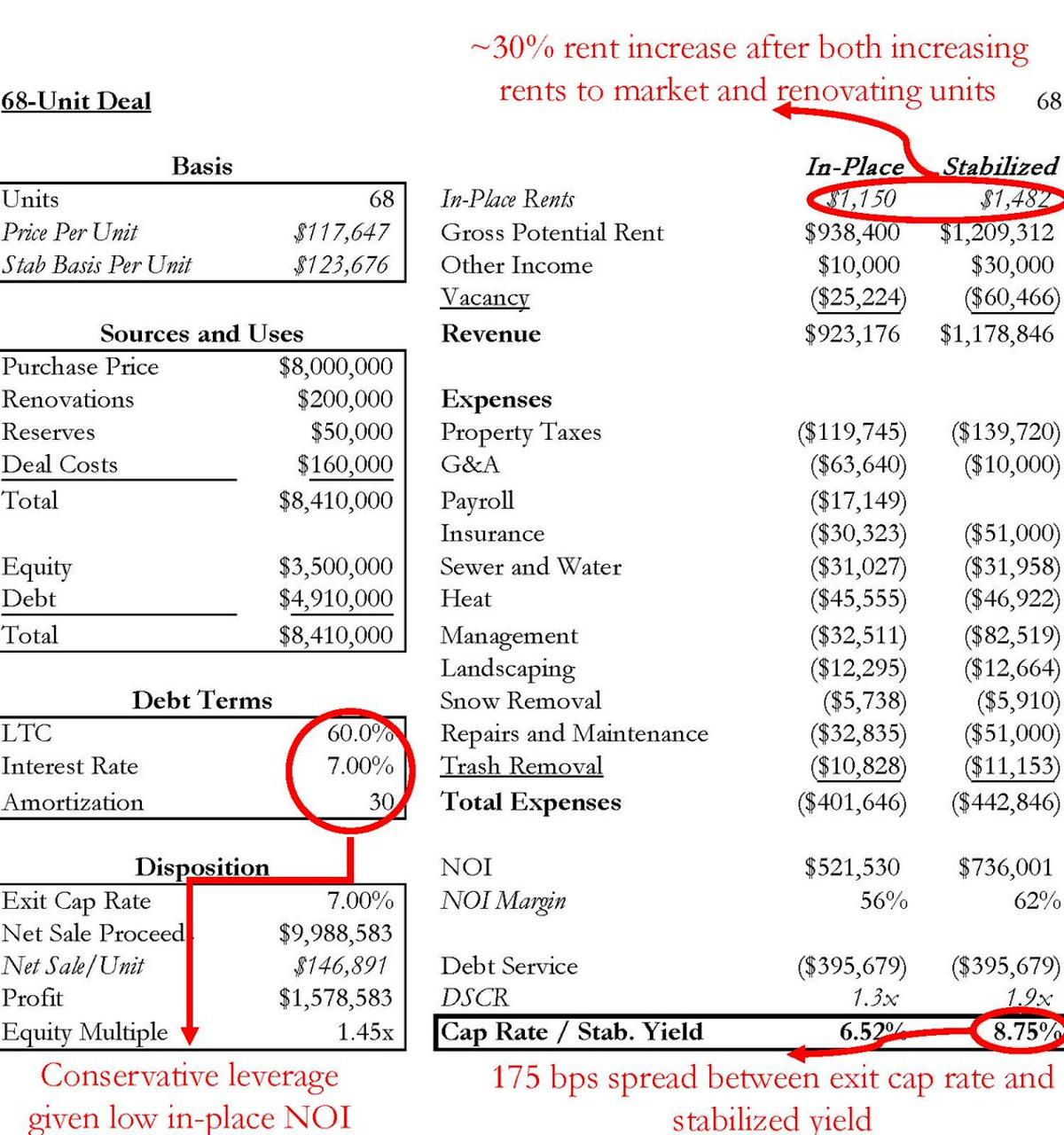
Here’s exactly how I analyze a real estate deal: This deal is a perfect example of clear signs you can look out for This 68-unit deal arrived in my inbox a while ago with 5 massive green flags: https://t.co/sQrmJOFdgR

Quick 5‑Minute Deal Analysis: Yield >150 Bp Spread Wins
“How do I analyze a deal in 5 minutes?” BOE’s are extremely easy Basically what you’ll be doing is: 1. Multiplying market rents by the property’s unit count 2. Applying a vacancy factor to get total revenue 3. Multiplying the total revenue by...

Purchase Price Drives Yield More than Value‑add Returns
Majority of your yield is locked in at acquisition, which is why buying well is so important Even an accretive, high return-on-cost value-add action only represents a fraction of the purchase price - which is why having great deal flow (good...

Turn $0 Into $1M in 5 Years via Three Deals
Probably the most common question I get from younger guys is “How would you do it all again if you were my age?” I’ll do you one better. Here’s an extremely realistic gameplan to get from ~$0 to $1MM in 5...

Deals Hinge on Stabilized Yield, Not Current Income
There are generally two main myths that you hear about how real estate deals are sold. The first is that properties are sold based on their in-place income. The second is that properties are sold based on the market cap rate. These...