
Retail‑Fueled ETF Hits $1B, Proving Passive Market Impact
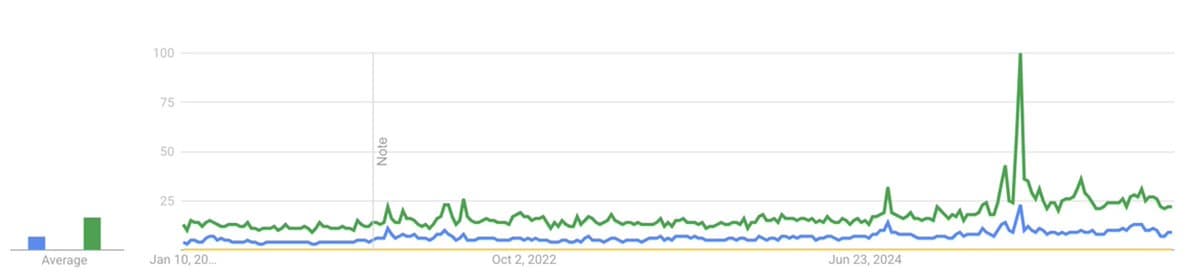
WSJ: "The Roundhill Memory ETF launched on April 2 with little fanfare and no major seed investors. The fund has gathered more than $1 billion in assets in less than two weeks, rare for any ETF and an unprecedented feat for such a small money manager...Much of the demand is coming from individual investors...The fund has gained traction with individual traders on social-media platforms like Reddit and X." As I wrote in my February report on "Price Discovery" (https://t.co/kEx5Z4BJH7): "It's hard to believe the rise of passive hasn’t altered price discovery for one very basic reason: passive ETFs aren’t actually passive participants in markets; they actively buy and sell equities based on inflows and outflows." First, there's the inflow-driven trading volume, which can at times drive 80% of daily trading volume, according to Simplify’s Michael Green. To quote Mike: "Passive is assuming that they’re not having any influence on that next price but they have to be because they are transacting." Second, there's the price distorting influence of ETF formation and selection. To quote the report: "ETF formation is not passive—it’s motivated by marketability. Neither is ETF selection by some investors—it’s motivated by expectations of future performance. Passive flows are not just defined by the 'buy and hold until retirement' mantra that often gets associated with the passive revolution. The low fee, click-to-buy nature of ETFs has made them a go-to vehicle for idiosyncratic short- and long-term investment conviction expression as well. This was on fully display last year as AI enthusiasm progressed. As Blackrock noted: 'Sector allocations accounted for nearly 10% of all equity ETF flows [in 2025], more than double 2024’s 4% share.' Meanwhile, the internet has redefined how retail investors (and most investors) form convictions and express them. As European researchers found: 'In 2023, almost 80% of American millennial and Gen Z investors relied on investment advice from social media outlets.' Meme stock behavior—the GameStop short-squeeze being the preeminent example—is often held up as evidence of “coordinated mob” behavior. It’s clear that that behavior extends to ETF selection. Just consider Google search data. The chart below shows the extreme discrepancy between S&P 500 searches (green line) versus QQQ searches (blue line) versus Russell 2000 searches (the flat yellow line on the bottom) over the past five years." How should investors alter equity assumptions given the dramatic shift in market participation over the past two decades? It's a question I answer in the report. Learn more about Sage Road here: https://t.co/Wgwz2xnvR6. Interested in subscribing? Message me. WSJ link: https://t.co/8KMfXOWrp3
Private Credit Drowning in Bad AI‑Focused Loans
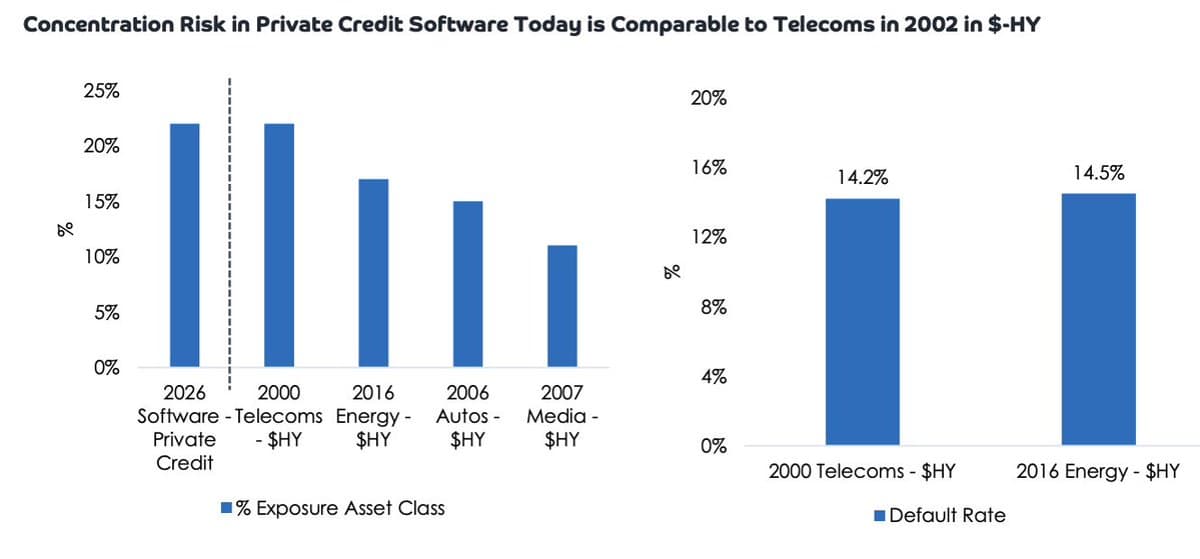
FT summing up a recent Sona report: "Private credit is full of cruddy loans issued by companies that couldn’t get financed anywhere else, and assembled haphazardly into rattlebags, rather than carefully constructed portfolios, by dealmakers (cosplaying as managers) who get...

Rising Auto Repair Costs Signal Consumer Risk Amid Credit Strain
Wolf Street: "The CPI for motor vehicle maintenance and repairs jumped by 1.25% in March from February and by 6.1% year-over-year, according to data from the Bureau of Labor Statistics. Since January 2020, those prices exploded by 50%." As I've travelled over...

Rising Power Bills From AI Data Centers Fuel Election Backlash
Bloomberg: "Across the country, soaring electricity costs are burdening consumers and stirring voter anger. The rapid build-out of artificial intelligence data centers, along with tariffs and upgrades to an aging grid, has raised power prices at rates unseen in decades....

China Leads State‑Sponsored Cyberattacks on U.S.,
"The United States is China’s #1 target for Cyberattacks. From 2000-2023, China was responsible for 240 statesponsored or state-affiliated cyberattacks, followed by Russia at 158 and Iran at 102." Great note from the always brilliant Michael Cembalest on the economic...

AI Compute Shortage Threatens Growth Amid Rising Demand
WSJ: "The artificial intelligence gold rush is rapidly drying up the supply of the one resource that AI developers can’t do without: computing power...Points to a classic problem that has popped up in technology booms throughout history, from the 19th-century...
Secondaries Boom Masks Private Equity’s Looming Reckoning
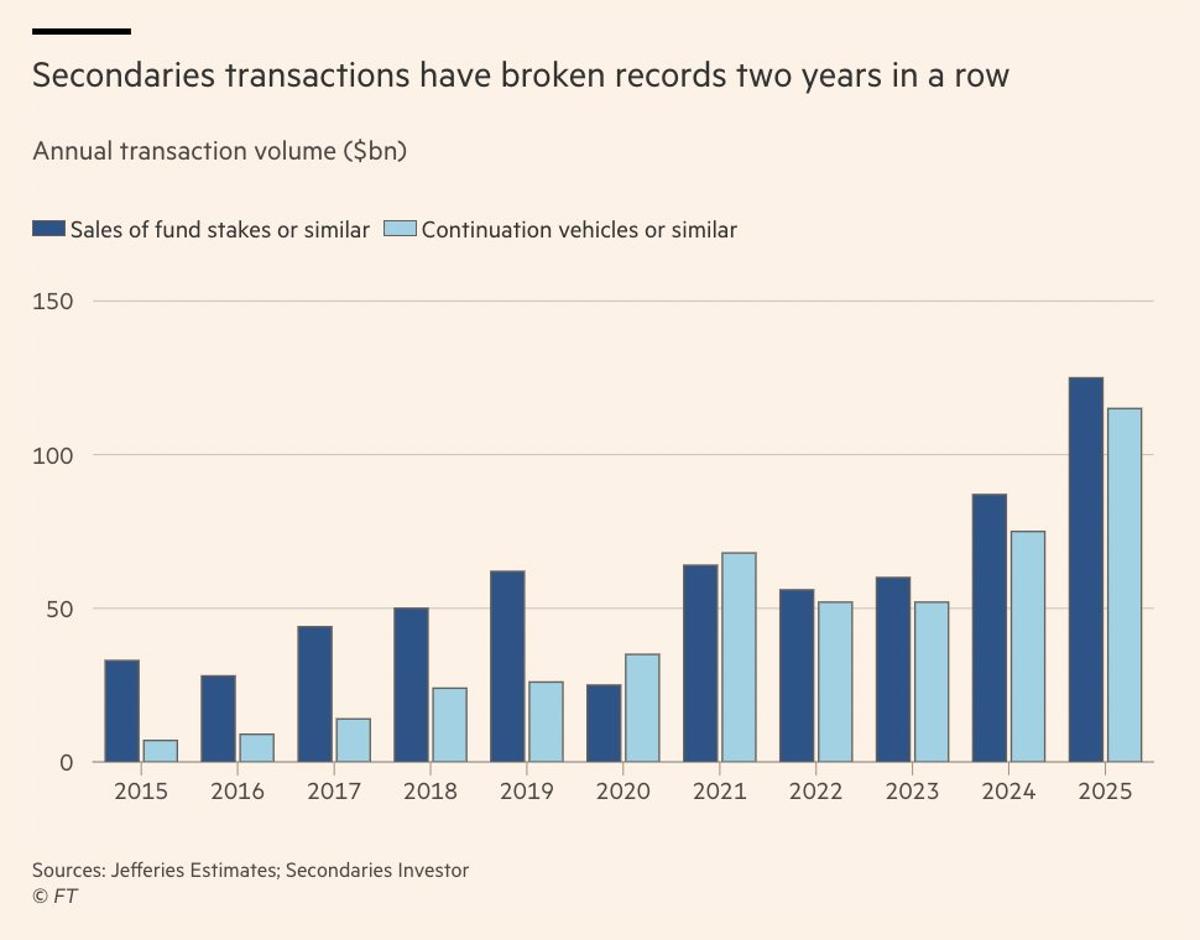
FT: "The private equity industry has been smashing records lately. Private equity firms are sitting on an all-time high of nearly $4tn in unsold investments. They sold assets to themselves at an unprecedented rate last year...Last year, so-called secondaries funds...
Small‑cap Growth Outpaces Large Caps, Defying Value Expectations
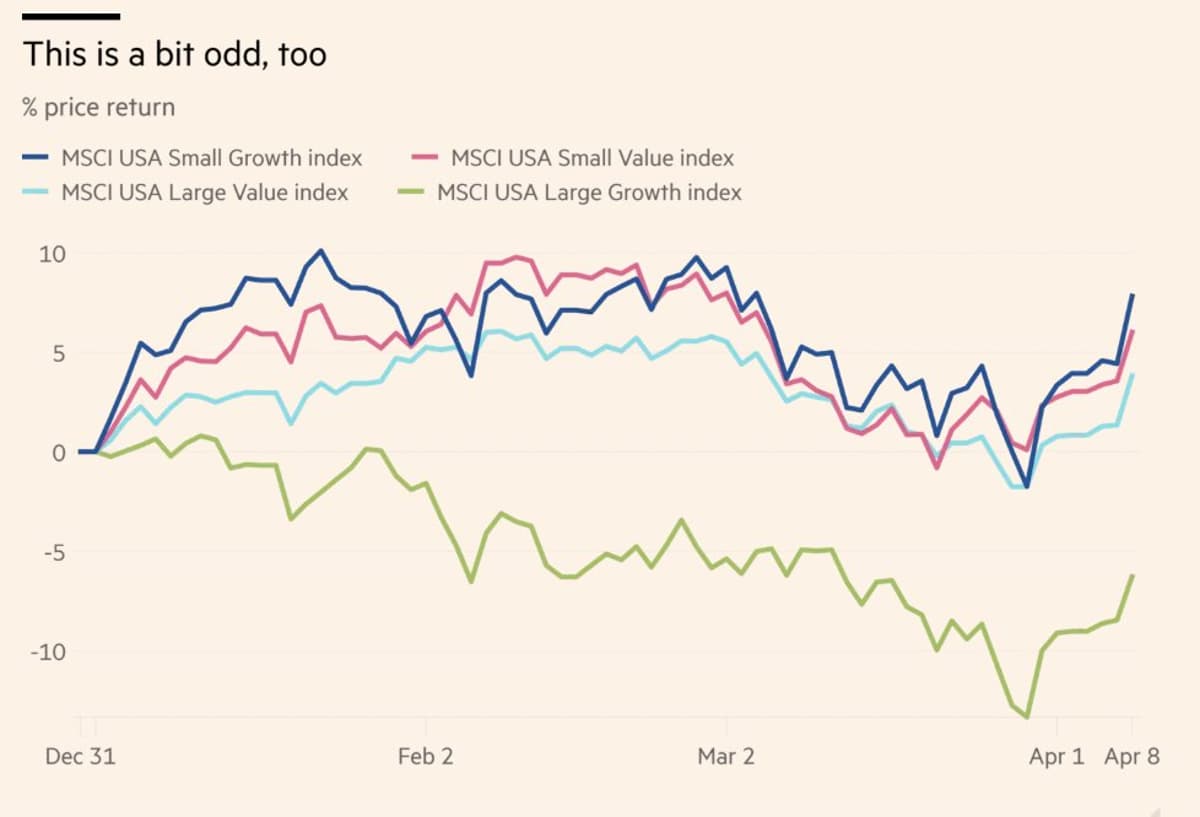
FT: "US small caps are outperforming big caps by a whopping 8.5% YTD. That’s a lot, especially given the chronic underperformance of small stocks over the past six years or so...Given the environment we are in (energy up, software down,...

Deep‑tech Startups Raise Similar Capital, Graduate Faster, IPO More
Some eye-opening stats that undergird rising defense innovation enthusiasm from my new report on the subject (https://t.co/rRtYxEUlOB: "Deep tech startup investment was long held back by the misconception of far greater capital intensity relative to software startups. In reality, looking...
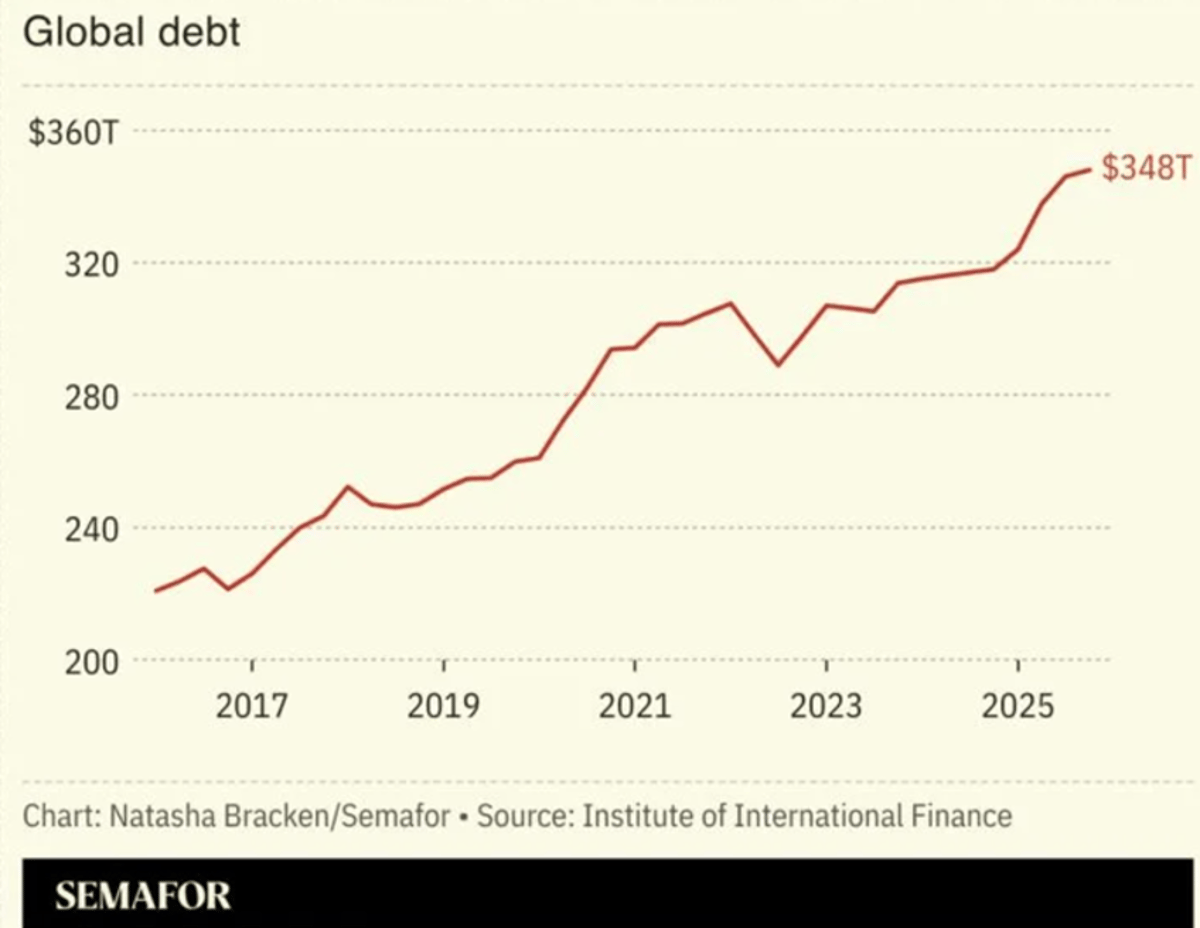
Rising Global Debt Threatens Growth, Sparks Inflation Risks
Jamie Dimon: "Global deficits are significantly elevated, particularly during what has been a relatively healthy global economy and, until recently, a time of peace—the deficit globally is at an extremely high 5%, while global sovereign debt is at all-time highs....

Defense Spending Soars to $2.7T, Still Below
Global defense spending has now increased for 10 consecutive years. In 2024, global defense spending hit $2.7 trillion, a 9% jump from 2023, “the steepest increase since the Cold War,” according to the Stockholm International Peace Research Institute. Every region...

AI Tools Often Slow Developers, Study Finds
I think about this study frequently (quoting from my report on "GenAI & Productivity" https://t.co/kEx5Z4BJH7): In results released in July, non-profit Model Evaluation & Threat Research (METR) had a troubling finding. Sixteen experienced developers participated in the study. They were...

Private Credit Strain Could Spike Borrowing Costs, Stall Tech Boom
The Economist: "As private-credit funds’ woes intensify, they will raise the cost of borrowing for firms across the economy, at a time when the Iran war is weighing on companies’ margins. The cost of debt in public markets has already...

Short‑Term Losses Mask Long‑Term Defense Innovation Gains
Given reports this week that Pete Hegseth tried to buy defense stocks prior to launching the Iran war, much attention has been paid to the failure of that trade. The index he attempted to buy, IDEF, has fallen ~13% over...

Drones Reveal AI-Driven, Accelerating Defense Innovation Cycle
As much attention is now being paid to Iran's drone capabilities, I still think it's lost on most market participants the broader implications of that capability. It's something I dissect in depth in my new report on "Defense Innovation" (https://t.co/rRtYxEUTE9)....

US Defense Relies Heavily on Chinese Supply Chains
The chart below is one of the most striking I came across researching my new report on "Defense Innovation" (https://t.co/rRtYxEUTE9). It illustrates the deep dependence of current US air-launched armament supply chains on China. In a world increasingly defined by...

Defense Spending Surge Fuels Unseen Innovation Arms Race
I'm proud to launch Sage Road's sixth report, which focuses on "Defense Innovation" (read the Executive Summary here: https://t.co/rRtYxEUTE9). Accelerating global defense spending is poised to run headlong into accelerating innovation with market participants underestimating the breadth of implications to...

AI “Efficiency” Excuses Mask Minimal Real Job Cuts
Callum Borchers, WSJ: "'It’s a wonderful way of looking like a genius when job cuts are something you might have to do for other operational reasons,” Peter Bell says. “It’s great smoke cover if you just need to goose your...

Private Markets Igniting: Misconceptions Mask Looming Liquidity Risk
Lloyd Blankfein to Bloomberg about "fire" risk in private markets: "At some point there needs to be a forcing function or a reckoning that causes you to come to grips with what your balance sheet really is worth...The analogy I...

Passive Inflows Lock Markets as Ultra‑wealth Drives Equity Demand
WSJ: "There are about 430,000 U.S. households worth $30 million or more, according to an analysis of Federal Reserve data by Zidar. Within that, there are about 74,000 worth $100 million or more. Over the past few decades, the growth...

AI Hallucinations Top Public Anxiety Despite Expected Improvements
"Around 27% of respondents said they were most anxious about mistakes made by AI, known as hallucinations, followed by 22% concerned about job displacement and the impact on human autonomy. About 16% of users were worried about the technology’s impact...

AI Commands Over Half of VC Deals, Sparking Froth Concerns
"AI and machine learning have helped prop up venture capital as funding for other sectors cooled. AI accounted for 52% of global VC deal value in Q4 2025." As I research and write my report on "Defense Innovation", I'm struck by...

Private‑Equity Returns Overstated; Accurate Marking Essential
Apollo's John Zito on private equity: "I literally think all the marks are wrong...This next cycle is going to be a big moment in time for the private markets because people are way smarter than I think private-market participants, particularly...

Private Credit Risks Echo 2008 as Oil Spikes
Multiple headlines today about the parallels between now and the run-up to the GFC. From Bloomberg: "BofA’s Hartnett Warns Markets Starting to Look Like 2008." From the FT: "Should investors worry about a 2008-style shock?" The key concern: oil prices...

Rising Global Debt Fuels Record Defense Spending Surge
As I research and write my upcoming report on "Defense Innovation", global debt levels have been top of mind. Total global debt surged by $28.8 trillion last year, hitting a record $348 trillion. It was the biggest rise in the...

AI Boosts Workload, Not Reduces It
WSJ: "One of the great hopes for AI—at least, among workers—is that it will ease workloads, freeing people up for more high-level, creative pursuits. So far, the opposite is happening, new data show...AI is increasing the speed, density and complexity...
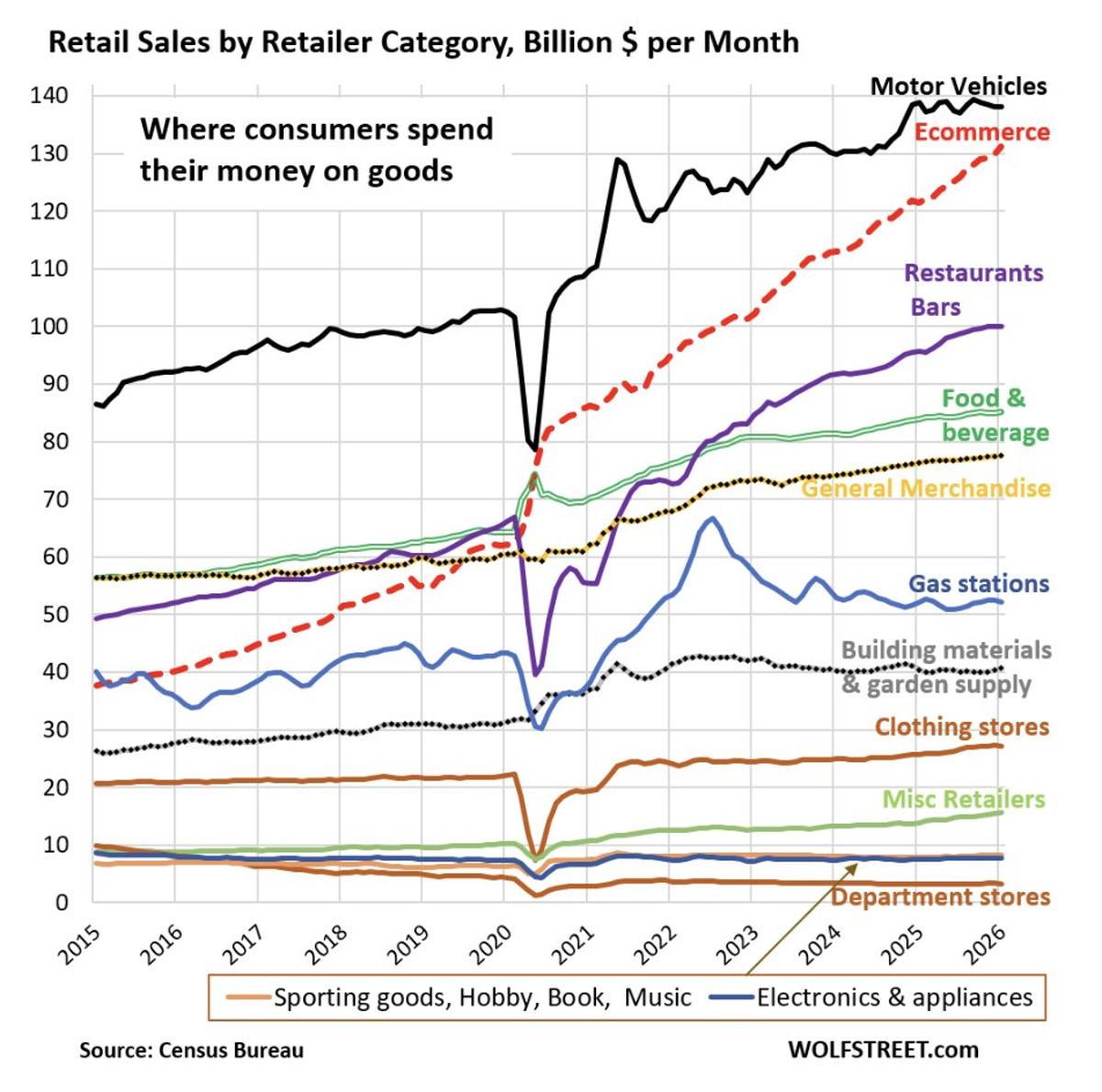
Investors Overlook E‑Commerce’s Long‑Term Disruption
I've seen this so often throughout my time in the industry: short-termism and news-cycle reflexivity leading investors to fixate on the new shiny object and lose sight of the durability and therefore, cumulative disruptive impact of long-term structural trends, especially...