
The Deluge, the Paper Cup, and Washington’s Lack of Urgency on Guam
Former Guam lieutenant governor Michael Cruz warns that the island’s strategic value in the Indo‑Pacific is outpacing U.S. defensive investments. While Guam anchors air, naval and logistics operations essential for power projection, China and North Korea view it as a likely early‑war target. Recent congressional action in the FY 2026 NDAA provides modest civilian support but strips more than $1 billion in submarine‑related funding, highlighting a mismatch between threat growth and resource allocation. The omission of Guam from the 2026 National Defense Strategy further clouds its long‑term role.

A Proxy Without a Purpose: Hizballah and the Iran Crisis
The United States and Israel’s escalating attacks on Iran have revived questions about Hezbollah’s strategic value as Tehran’s premier proxy. After a costly 2024 war with Israel, Hezbollah’s long‑range strike capability and leadership have been severely degraded, while the Lebanese...

The Arsenal Beneath the Arsenal
Assistant Secretary of Defense Michael Cadenazzi joined a live event with Ryan Evans to assess the current state of the U.S. defense industrial base. The dialogue covered a surge of venture‑capital‑backed startups, the dominance of legacy primes, and the urgent...

All Too Quiet on the Western Neuroenhancement Front
The article argues that the United States must accelerate research on non‑invasive transcranial brain stimulation to keep pace with China’s rapidly advancing neuro‑technology programs. It reviews existing U.S. military trials—such as Halo Sport and DARPA’s Targeted Neuroplasticity Training—that show modest...

Why Trump’s Criticism of Maliki Strengthens Him in Iraq
President Trump publicly rejected Nouri al‑Maliki’s nomination as Iraq’s prime minister, a move that back‑fired by rallying Shiite factions around the banner of national sovereignty. The episode exposes Iraq’s elite‑driven, communal power‑sharing system, where prime‑minister selection occurs outside parliament and...

AI Is Being Misunderstood as a Breakthrough in Planning. It’s Not.
The article argues that artificial intelligence is not a breakthrough that simplifies military campaign planning, but a tool that compresses routine cognitive work while masking the need for human judgment. AI excels at synthesizing guidance and producing coherent drafts, creating...
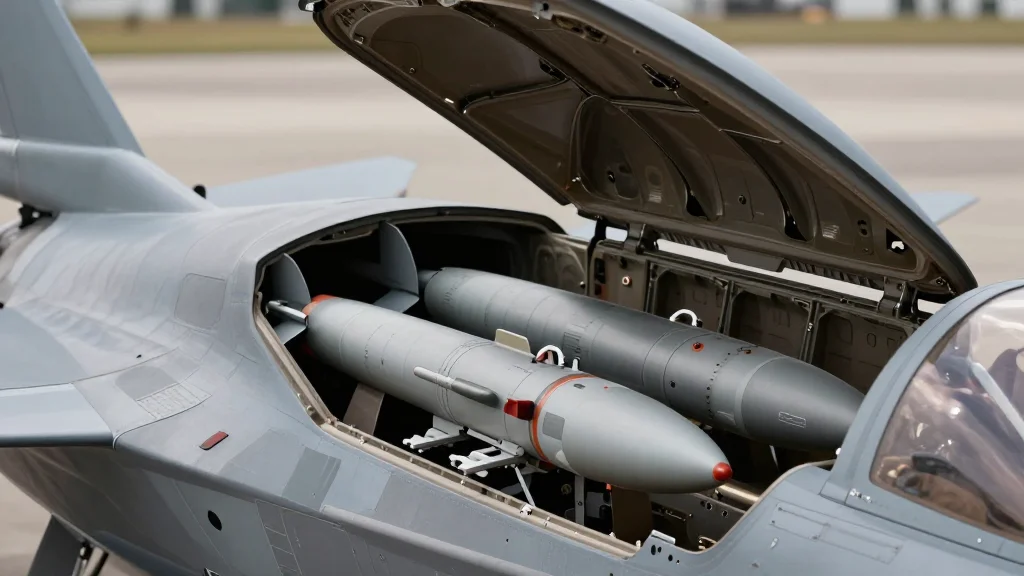
The U.S. Military Must Save Itself Before Saving Others
Jennifer Kavanaugh revisits her 2023 argument that U.S. military aid creates a trade‑off between Israel and Taiwan, noting the calculus has shifted. She now warns that the United States’ own depleted air‑defense munitions and other materiel are the primary constraint,...

Arctic Hot Takes Need a Cold Reality Check
The author argues that extreme cold in the Arctic is a decisive constraint, not a manageable condition, and that U.S. military strategies overstate persistent presence while underestimating equipment degradation and human limits. Recent Defense Department Arctic strategies acknowledge harshness but...

Ukraine as a European Nation
Military analyst Dmytro Snegiryov backs Defense Minister Mykhailo Fedorov’s proposal for a comprehensive audit of Ukraine’s armed forces, urging genuine reforms rather than symbolic gestures. The Ukrainian military currently fields roughly 880,000 personnel, with only about 300,000 assigned to combat...

Agentic AI and the Pentagon’s Integration Challenge
Agentic AI is transitioning from proof‑of‑concept demos to active deployments within the Department of Defense. Executives from Legion Intelligence, Latent AI, and Lumbra AI explain that the real hurdle is embedding autonomous agents into hardened military networks, not just building...

Economic Statecraft and the Federal Institutional Architecture
The United States’ economic statecraft is dispersed across more than 1,400 offices in 13 departments, organized around a "four P" framework—Promote, Protect, Prevent, and Punish. Treasury, Defense, Commerce, and State serve as the primary agencies wielding sanctions, export controls, and...

Talks, Plans, and Prison Breaks
The episode examines the latest round of U.S.-Iran nuclear negotiations in Geneva, noting modest progress on nuclear issues but stark disagreement over missiles and regional proxies, while the U.S. escalates its Middle East military presence with an additional aircraft carrier....

Iran and the Gulf: Why Hedging Is No Longer Enough
The episode examines how Gulf states are moving beyond a hedging strategy toward Iran, recognizing that Iran’s internal turmoil now directly threatens their security and economic interests. It argues that reliance on crisis avoidance and U.S. guarantees is insufficient, and...
Power, Paranoia, and the People’s Liberation Army
The episode examines the recent high‑level purges within China’s People’s Liberation Army, focusing on the removal of veteran commander Zhang Youxia and what it reveals about Xi Jinping’s consolidation of power. Analysts discuss how these moves reflect deepening paranoia, potential...

BONUS In Brief: Vibes Out of Munich
The episode dissects the 62nd Munich Security Conference, highlighting Europe’s push for strategic autonomy, lingering reliance on the U.S., and a shared sense that the post‑World War II liberal order is eroding. Guests note France’s view that autonomy is a strategic...

A Worrying Military Build-Up in the Western Balkans?
In this episode Blerim Vela examines the accelerating military modernisation across the Western Balkans, highlighting Serbia’s post‑2015 procurement surge and its ripple effects on neighbours. He explains how NATO members such as Albania, Croatia, Montenegro and North Macedonia are upgrading...

Lessons From Past Israeli-Palestinian Talks for Trump’s Negotiators
The episode examines how lessons from historic Israeli‑Palestinian negotiations can inform President Trump’s ongoing cease‑fire talks following his October 2025 20‑point plan. Former State Department negotiator Aaron David Miller stresses that Trump’s personal, high‑level pressure on Netanyahu was crucial to Phase One’s...

How Are Iran’s Proxies Doing Amidst a Weakened Regime?
In this episode Farzin Zandi revisits his 2025 analysis of Iran’s gray‑zone strategy, assessing how the regime’s weakened state after the 12‑day war has eroded the morale, funding, and deterrence of its proxy network. He explains that proxy financing remains...

China Now Finds Itself in Al-Qaeda’s Crosshairs
In this episode Colin Clarke and Lucas Webber examine al‑Qaeda in the Arabian Peninsula’s recent propaganda that explicitly threatens China over its treatment of Uyghur Muslims, marking a shift from peripheral to central antagonism. They trace the evolution of jihadist...

The Greatest Threat to Acquisition Transformation Is Fear
In this episode, Bonnie Evangelista argues that the biggest obstacle to transforming the Department of Defense’s acquisition system is not policy or oversight but an entrenched culture of fear that rewards compliance and penalizes risk. She illustrates how this fear‑based incentive...

Recalibrating U.S. Intelligence Strategy for an Uncertain Global Order
In this episode Alexander Bick and Philip Potter argue that U.S. intelligence must adapt to a more contested global order by (1) treating leaders' public statements as credible indicators of intent, (2) systematically mapping elite and non‑state ecosystems, (3) emphasizing...

Will These Four Defense Innovation Reforms Improve Industry’s Lot?
In this episode Madeline Field examines four 2026 Pentagon reforms—a defense‑innovation memo, an AI memo, an executive order on industry standards, and a pilot commercial‑license program—assessing how they reshape the innovation ecosystem and procurement. While the memos aim to streamline...
Gilded Capability: Overinvestment and the Survivability Paradox
The episode examines how overinvestment in elite capabilities—whether elite pilots in WWII Japan or modern high‑cost platforms—creates a survivability paradox that undermines long‑term combat effectiveness. By concentrating resources on a few "gilded" assets, militaries must boost survivability, driving up costs,...
Pauses Without Peace: What Last Year’s Ceasefires Reveal About Global Conflict Management
In this episode Gopi Krishna Bhamidipati examines how the Trump administration’s diplomatic interventions in 2025‑2026 produced ceasefires across Gaza, the Israel‑Iran clash, India‑Pakistan tensions, the Thailand‑Cambodia border dispute, and Ukraine‑Russia, but stopped short of achieving lasting political settlements. The host...
Sweet Nothings: Rutte’s Trump-Whispering Is Counterproductive
In this episode Leonard A. Schütte critiques NATO Secretary‑General Mark Rutte’s overt flattery of President Donald Trump, arguing that while it has temporarily eased tensions—such as the Greenland dispute—it ultimately undermines NATO’s needed Europeanization. He contrasts Rutte’s approach with that...
Does Guaranteeing Israel’s Qualitative Military Edge Still Serve U.S. Interests?
In this episode Rob Geist Pinfold examines whether the United States should continue guaranteeing Israel’s qualitative military edge (QME) amid shifting regional dynamics and Netanyahu’s surprising call to cut U.S. aid. He traces the historical evolution of U.S. military assistance—from Cold‑War...
Biodefense Blind Spot: Why Washington Confuses Pandemics with Bioweapons
In this episode Junaid Nabi explains how the convergence of generative AI and synthetic biology is creating a new class of biological threats that evade traditional pandemic‑focused defenses. Recent AI models such as Evo 2, Claude Opus 4, and OpenAI’s o3 can design...
Deterrence Won’t Fail in the Taiwan Strait — It Will Be Bypassed
In this episode J. William DeMarco argues that recent Chinese military activities around Taiwan are less about rehearsing an invasion and more about a strategy of paralysis—using encirclement, law‑enforcement vessels, and limited rocket fire to create economic and political pressure...