Google May 2026 Core Update Analysis: Intent, Market Fit and Source Type Drove the Biggest Visibility Shifts
Key Takeaways
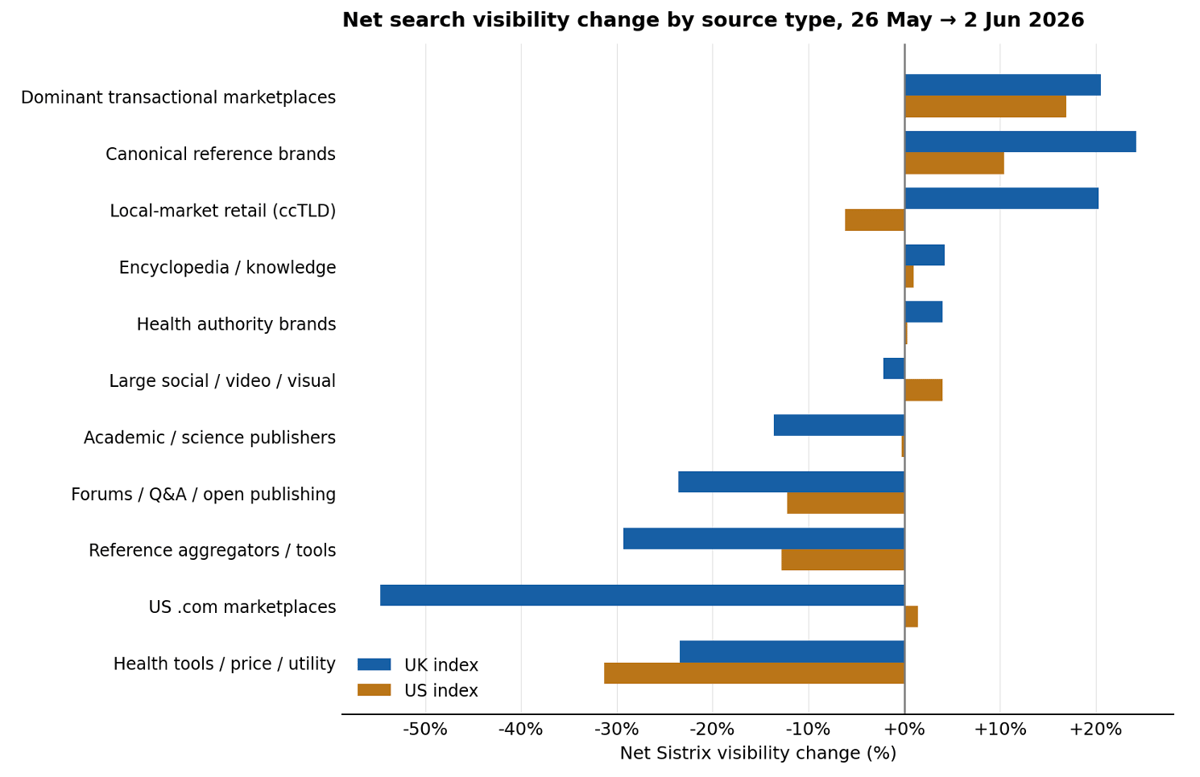
- •Canonical reference sites +20%+, pronunciation tools -30%+
- •UK .com marketplaces down ~55%; local ccTLD retailers up ~20-25%
- •Forums and Q&A lost 20-30%; social/video platforms flat to +4%
- •Jobs and travel marketplaces gained 40-80% visibility
- •Health YMYL split: trusted sites up, utility tools down sharply
Pulse Analysis
The May 2026 Core Update introduced what analysts call an "intent‑destination reset." Google appears to be rewarding pages that serve as the most natural endpoint for a user’s query—whether that’s a definitive reference, a local product page, or a transactional marketplace—rather than simply the most authoritative domain. This shift explains why heavyweight sites like nytimes.com or nature.com lost ground while niche reference brands such as cambridge.org and merriam‑webster.com saw double‑digit lifts. SEOs should audit their target keyword clusters to identify the exact result type Google now favors and restructure content to fulfill that role, whether that means delivering a full‑task solution, a concise explainer, or a localized storefront.
International SEO practitioners face a clear signal: the UK index now prefers local ccTLD ecommerce entities over global .com domains. Amazon.co.uk, eBay.co.uk and Screwfix.com each posted 20‑25% visibility gains, while their .com counterparts plunged over 50% in the same market. This underscores the importance of precise hreflang annotations, canonical consistency, and market‑specific signals such as local pricing, currency, and shipping details. Brands operating across borders should audit their site architecture to ensure the correct regional version is indexed for each audience, and consider creating dedicated local landing pages that satisfy both user intent and Google’s market‑fit algorithm.
Sector‑specific outcomes also highlight new tactical priorities. Forum and Q&A platforms like Reddit, Quora and StackExchange suffered notable drops, suggesting Google is de‑emphasizing thin, user‑generated content in favor of richer formats such as video, visual feeds, or official sources. Health YMYL pages experienced a split: trusted sites (WebMD, Cleveland Clinic) held or rose, while utility tools (GoodRx) fell dramatically, reinforcing that E‑E‑A‑T alone is insufficient without the right content type. Meanwhile, job boards and travel marketplaces (Indeed, ZipRecruiter, Trip.com) surged, confirming that Google now privileges primary task‑completion destinations. To adapt, publishers should align their format with the dominant SERP expectation—transforming aggregator layers into unique, task‑oriented experiences or partnering with the leading destination to retain relevance.
Google May 2026 Core Update Analysis: Intent, Market Fit and Source Type Drove the Biggest Visibility Shifts
Comments
Want to join the conversation?