Google Ads Updates Target-Based Bidding for Budget-Limited Campaigns
Companies Mentioned
Why It Matters
The update forces advertisers to actively manage bid targets, otherwise cost‑per‑conversion could increase and efficiency may drop, reshaping spend optimization across the digital ad ecosystem.
Key Takeaways
- •New Bid Target Adjustment Tool launches July 6.
- •Target CPA/ROAS will align with set goals under budget limits.
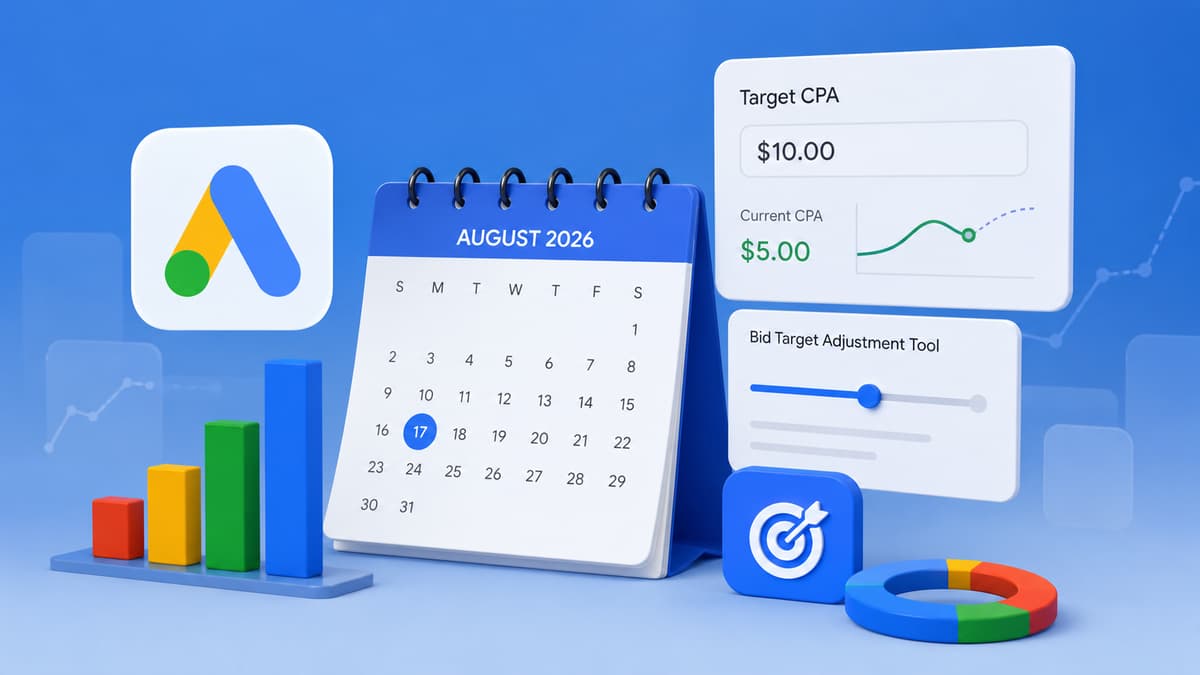
- •Overperforming campaigns may see higher CPA after Aug 17.
- •Advertisers must review and adjust targets before rollout.
- •Tool notifies affected campaigns in Google Ads UI.
Pulse Analysis
Google’s latest tweak to its target‑based bidding algorithms reflects a broader industry push for greater predictability in paid search. By tying budget‑constrained campaigns directly to the advertiser‑specified CPA or ROAS, Google aims to smooth out the performance spikes that often occur when spend is increased or decreased. The Bid Target Adjustment Tool, rolling out on July 6, gives marketers a sandbox to see how the new enforcement will reshape their metrics before the August 17 deadline, reducing surprise and aligning platform behavior with business objectives.
For advertisers who have consistently beaten their targets—say a $5 CPA on a $10 goal—the change could translate into higher costs per conversion as the system nudges results toward the declared benchmark. This shift is especially salient for agencies managing large portfolios, where even a modest CPA increase can erode margin across dozens of accounts. Likewise, ROAS‑focused campaigns may see revenue efficiency dip if the platform enforces tighter return expectations. The net effect is a trade‑off: reduced volatility and clearer budget‑performance correlation at the expense of historical overperformance.
To mitigate risk, marketers should audit all campaigns using Target CPA, Target ROAS, or similar strategies and adjust targets to reflect current market conditions. Leveraging the new tool, they can simulate outcomes, lower targets where necessary, or reallocate budget to preserve profitability. Ongoing target governance—quarterly reviews, alignment with sales pipelines, and integration of first‑party data—will become a best practice as Google tightens the feedback loop between spend and performance. Early adopters who fine‑tune their goals now are likely to maintain competitive cost structures once the update is enforced.
Google Ads updates target-based bidding for budget-limited campaigns
Comments
Want to join the conversation?
Loading comments...