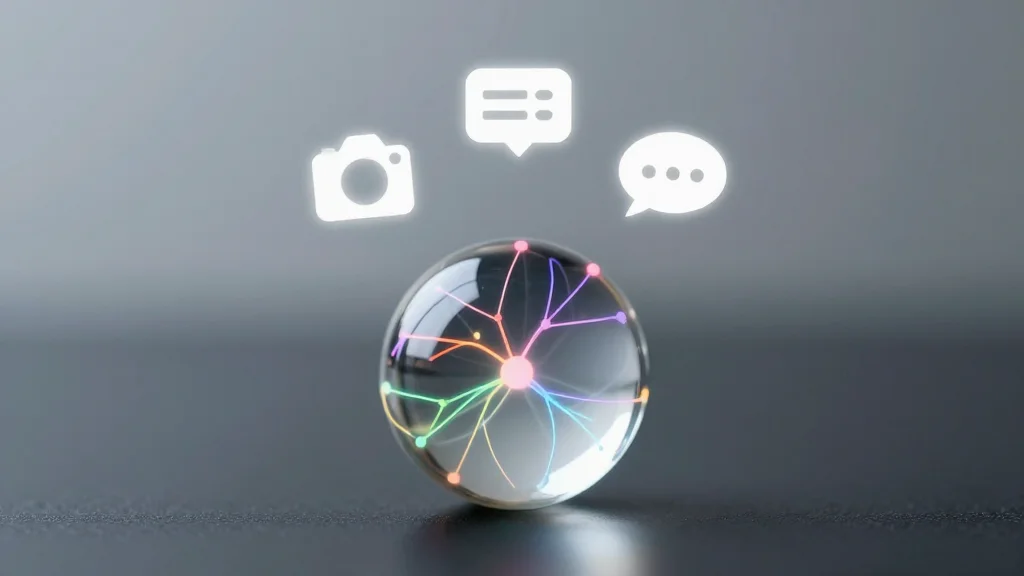
Meta Launches Muse Spark AI Model to Elevate Personalisation in Digital Marketing

Companies Mentioned

Why It Matters
Muse Spark represents a watershed moment for social‑media advertising, merging generative AI with the massive data reservoirs of Meta’s platforms. By automating creative production and deepening personalization, the model could shift budget allocations toward AI‑enhanced campaigns, pressuring rivals to accelerate their own AI roadmaps. At the same time, the rollout spotlights the tension between innovation and data‑privacy regulation, forcing marketers to navigate new compliance landscapes while seeking competitive advantage. If Muse Spark delivers on its promise, it could redefine the economics of digital marketing: lower creative costs, faster iteration cycles, and higher ROI on ad spend. Conversely, any misstep in privacy handling could trigger regulatory backlash, eroding user trust and prompting advertisers to reconsider reliance on platform‑owned AI solutions. The balance Meta strikes will influence broader industry standards for responsible AI use in advertising.
Key Takeaways
- •Meta introduced Muse Spark, a multimodal AI model for Instagram, Facebook and WhatsApp
- •Model processes text, images and contextual data to enable personalized ad creative
- •Rollout begins later this quarter with a developer preview in early summer
- •Launch occurs amid heightened EU and Japan scrutiny of AI data practices
- •Potential to cut creative production time and boost ad performance for marketers
Pulse Analysis
Muse Spark arrives at a juncture where generative AI is moving from experimental labs to core business functions. Meta’s advantage lies in its unrivaled user data pool, which can feed the model with real‑time behavioral signals that smaller competitors lack. Historically, platform‑owned AI tools have given incumbents a pricing edge—Google’s Performance Max and TikTok’s AI‑driven creative suite are early examples. By embedding Muse Spark directly into its ad‑creation workflow, Meta could lock advertisers into a tighter feedback loop, making it harder for brands to shift spend to rival networks.
However, the model’s success hinges on two variables: performance and compliance. From a performance standpoint, marketers will demand measurable lifts in CTR, conversion rates, and cost‑per‑acquisition. Early adopters will likely run A/B tests against existing creative pipelines to validate ROI. On the compliance side, the EU’s AI Act and Japan’s APPI amendments are tightening rules around personal data use in AI training. Meta’s public commitment to privacy safeguards may satisfy regulators, but any perceived overreach could invite fines or forced feature rollbacks. The company’s ability to balance personalization with transparent data handling will set a benchmark for the industry.
Looking ahead, Muse Spark could catalyze a broader shift toward AI‑first marketing strategies. If advertisers see clear efficiency gains, we may see a reallocation of budgets toward AI‑enhanced media buying, prompting agencies to upskill their teams in prompt engineering and model oversight. Competitors will likely accelerate their own multimodal offerings, sparking a rapid innovation race that could benefit brands through richer, more relevant consumer experiences—but also raise the bar for data governance across the digital advertising ecosystem.
Meta Launches Muse Spark AI Model to Elevate Personalisation in Digital Marketing
Comments
Want to join the conversation?
Loading comments...