Banks and Insurers Eye De‑Dollarisation as Middle East Tensions Spur New Payment Routes

Why It Matters
The accelerating move away from the US dollar reshapes the financial architecture of emerging markets, where banks and insurers are key conduits for trade and investment. A reduced dollar share in reserves weakens the United States' ability to finance deficits through safe‑asset demand, potentially raising global borrowing costs. For emerging economies, diversifying into yuan, crypto and gold offers a hedge against policy‑driven volatility, but also introduces new operational complexities and market‑depth risks. The Strait of Hormuz experiment serves as a litmus test for how quickly alternative settlement mechanisms can be institutionalised in a sector historically anchored to the dollar. If de‑dollarisation gains momentum, it could spur the development of new pricing benchmarks, derivative products and risk‑management tools tailored to multi‑currency oil trades. This would create opportunities for fintech firms and regional banks to capture market share, while also compelling regulators to craft frameworks that balance innovation with financial stability. The outcome will influence capital flows, sovereign debt dynamics, and the broader trajectory of global monetary power.
Key Takeaways
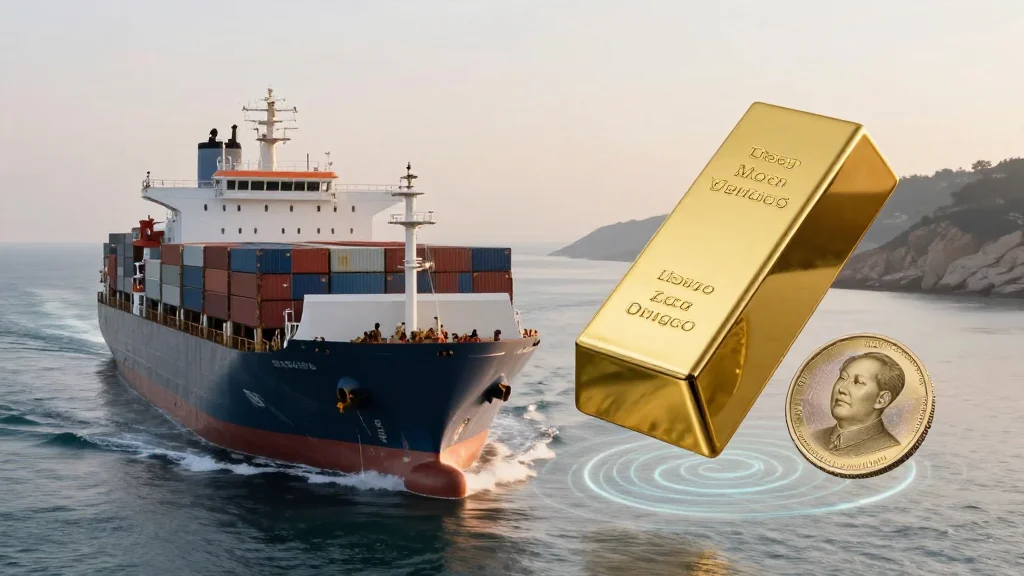
- •Iran introduced a $2 million toll payable in Chinese yuan or cryptocurrency for ships transiting the Strait of Hormuz.
- •Dollar holdings in global foreign‑exchange reserves fell to 56.7% in 2026, down from 72% in 2001.
- •India’s US Treasury holdings dropped 26% from a peak of $247 billion to a five‑year low.
- •Central banks are buying roughly 1,000 tonnes of gold per year, now the largest reserve asset.
- •France repatriated over 129 tonnes of gold from New York to Paris, signaling a broader shift.
Pulse Analysis
The de‑dollarisation trend reflects a strategic recalibration rather than a sudden rupture. Historically, the dollar’s dominance was cemented by the 1974 Saudi‑US pact, which linked oil sales to the greenback in exchange for security guarantees. Today, the same logic is being repurposed by countries seeking to insulate themselves from what they perceive as erratic US monetary policy and geopolitical coercion. The Strait of Hormuz payment experiment is less about immediate revenue and more about signaling intent; it tests the operational feasibility of bypassing the dollar in a high‑stakes trade corridor.
For emerging‑market banks, the shift forces a reassessment of credit risk models that have long assumed dollar‑denominated cash flows. Insurers, too, must grapple with pricing volatility when premiums and claims could be settled in multiple currencies. The upside is a potential reduction in exposure to dollar‑driven inflation spikes, which have historically eroded real returns on emerging‑market debt. However, the downside includes fragmented liquidity, heightened compliance burdens, and the risk that alternative currencies—especially crypto—may not achieve the stability required for large‑scale trade finance.
Looking ahead, the pace of de‑dollarisation will hinge on three variables: geopolitical stability in the Gulf, the depth of yuan and crypto markets for oil transactions, and the willingness of major central banks to continue diversifying reserves. If the Gulf remains volatile, the incentive to adopt non‑dollar payment routes will intensify, prompting banks and insurers to develop new infrastructure. Conversely, a diplomatic thaw could restore confidence in the dollar, slowing the transition. Investors should monitor policy statements from the US Treasury, the People's Bank of China, and emerging‑market central banks for clues on the next phase of this structural shift.
Banks and Insurers Eye De‑Dollarisation as Middle East Tensions Spur New Payment Routes
Comments
Want to join the conversation?
Loading comments...