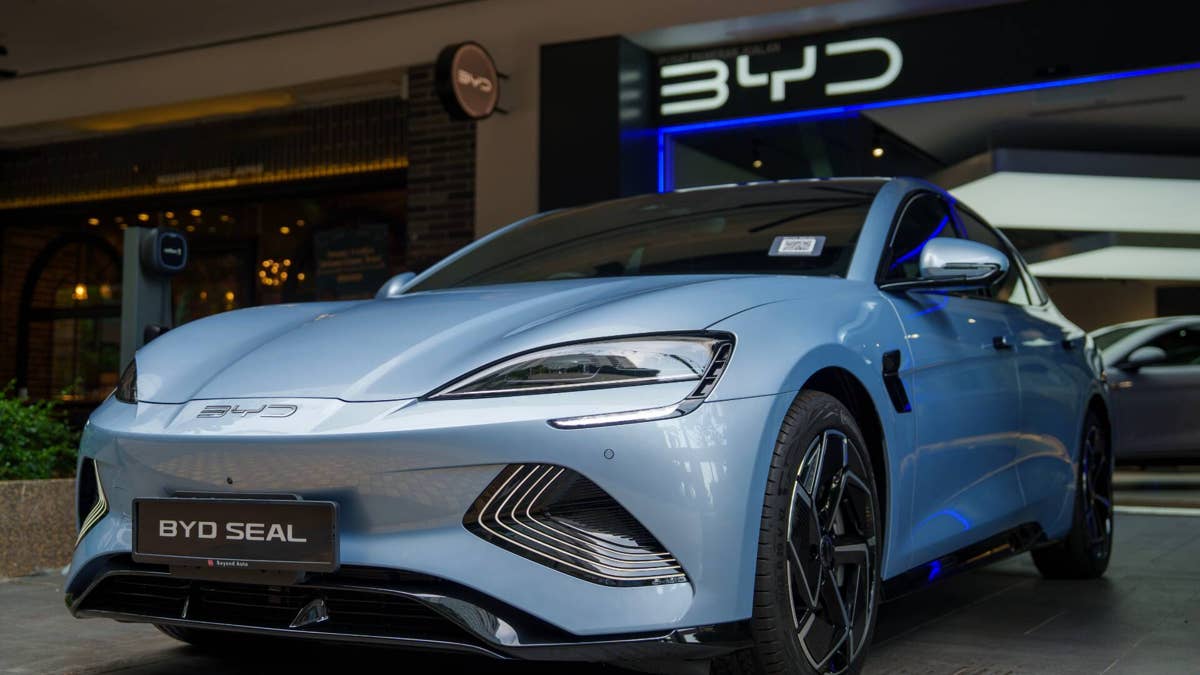
Chinese EV Giant Sends a Bold Message Straight to the US
Companies Mentioned
Why It Matters
BYD’s aggressive global push reshapes the EV landscape, forcing U.S. automakers to confront a low‑cost, battery‑integrated competitor that bypasses the American market.
Key Takeaways
- •BYD expects 1.5 million overseas EV deliveries in 2026
- •Flash‑charging stations: 20,000 in China, 6,000 abroad planned
- •BYD projected 15.7% global EV share in 2025, edging Tesla
- •Vertical battery‑to‑car integration cuts costs, pressures US margins
- •US tariffs block BYD, yet global sales erode Detroit’s demand
Pulse Analysis
BYD’s ascent from a Shenzhen battery startup to the world’s top electric‑vehicle seller illustrates the power of vertical integration. By manufacturing its own cells, motors and semiconductors, BYD can undercut competitors on price while delivering rapid‑charge capabilities that add hundreds of kilometers in minutes. This strategy has propelled the company to a projected 15.7% share of global EV sales in 2025, nudging Tesla aside and fueling a 270% jump in European deliveries. The firm’s aggressive overseas roadmap—aiming for 1.5 million units sold outside China by 2026 and a network of 26,000 flash‑charging stations—signals that its growth is no longer contingent on the U.S. market, which remains blocked by tariffs.
For American manufacturers, BYD’s model presents a two‑fold challenge. First, the price advantage forces legacy brands like Ford and GM to accelerate low‑cost EV programs, as evidenced by Ford’s pivot toward BYD‑style affordability for its next‑generation models. Second, Tesla’s focus on premium segments and autonomous‑driving revenue streams may leave it vulnerable in the mass‑market arena where BYD excels. The competitive pressure could compress margins across the Detroit Big Three, prompting a strategic reassessment of pricing, platform sharing, and battery sourcing.
Investors should monitor three key dynamics: BYD’s ability to meet its 1.5 million overseas sales target, the evolution of European anti‑dumping duties that have already prompted production shifts to Hungary and Turkey, and the U.S. industry’s response—whether through partnerships, domestic battery investments, or policy adjustments. As BYD’s supply chain embeds itself globally, the long‑term composition of EVs on American roads may increasingly reflect Chinese technology, a factor that is not yet fully priced into market valuations.
Chinese EV giant sends a bold message straight to the US
Comments
Want to join the conversation?
Loading comments...