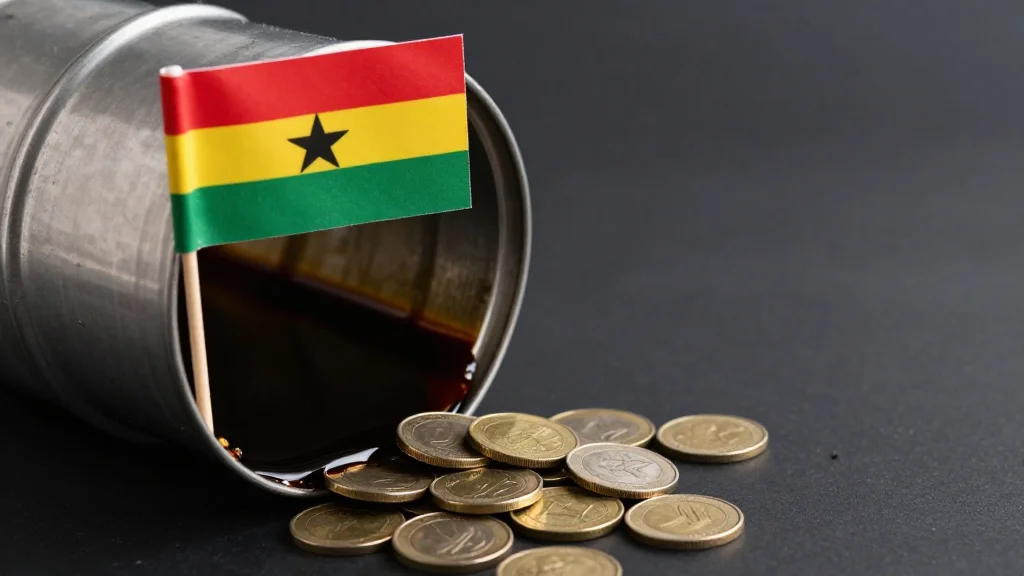
Ghana Braces for Oil‑Price Shock Amid Stronger Macro Foundations

Companies Mentioned
Why It Matters
Ghana’s ability to weather a new oil‑price shock without derailing its macro‑policy framework could set a precedent for other emerging markets that are heavily dependent on imported energy. A successful navigation would demonstrate that disciplined fiscal reforms, credible monetary policy and robust reserve accumulation can insulate economies from volatile commodity cycles, encouraging investors to allocate more capital to the region. Conversely, a failure could revive fears of debt distress and currency instability, prompting a reassessment of risk premiums for West African sovereigns and potentially tightening financing conditions across the broader emerging‑market landscape. The episode also highlights the shifting nature of external risks—from pandemic‑driven demand collapses to geopolitically induced supply constraints—and the need for policymakers to adapt their shock‑absorption strategies accordingly. Ghana’s experience may inform IMF program designs and regional policy coordination, emphasizing the value of pre‑emptive macro‑economic strengthening rather than reactive crisis management.
Key Takeaways
- •Policy rate at 14.0% and Treasury bill rate below 5% as of March 2026
- •Inflation has slipped below the lower bound of the central bank’s target range
- •Gross international reserves have risen, supported by gold exports and remittances
- •Middle East tensions pose a supply‑side oil price shock similar to the Russia‑Ukraine war
- •Stronger macro buffers could prevent the inflation‑currency‑debt spiral seen in 2022
Pulse Analysis
Ghana’s current stance illustrates a textbook case of building macro resilience before a shock arrives. The country’s policymakers have leveraged the IMF program to tighten fiscal deficits, improve revenue collection and diversify reserve assets, creating a buffer that many peers lack. This pre‑emptive approach reduces the probability that a supply‑side shock will cascade into a broader financial crisis, a pattern observed in several emerging markets during the 2020‑2022 period.
Historically, commodity‑importing economies in Africa have suffered when external price spikes coincided with weak balance‑sheet positions. Ghana’s experience suggests that a disciplined monetary policy—evidenced by a policy rate that, while high, is transparent and anchored—combined with a credible exchange‑rate regime can temper inflation expectations even when oil prices rise. The cedi’s relative stability, after a sharp appreciation, indicates that the central bank’s interventions are effective, but the real test will be whether these gains hold under sustained price pressure.
Looking ahead, Ghana’s trajectory will likely influence regional financing costs. If the shock remains contained, rating agencies may view West African sovereigns more favorably, potentially lowering borrowing spreads. However, any slip in reserves or a resurgence of inflation could reignite concerns about debt sustainability, especially given the region’s exposure to external financing and the lingering effects of the pandemic. Investors and policymakers should monitor inflation data, reserve trends and fiscal compliance closely, as these will dictate whether Ghana’s macro‑policy framework can serve as a model for resilience or become a cautionary tale.
Ghana Braces for Oil‑Price Shock Amid Stronger Macro Foundations
Comments
Want to join the conversation?
Loading comments...