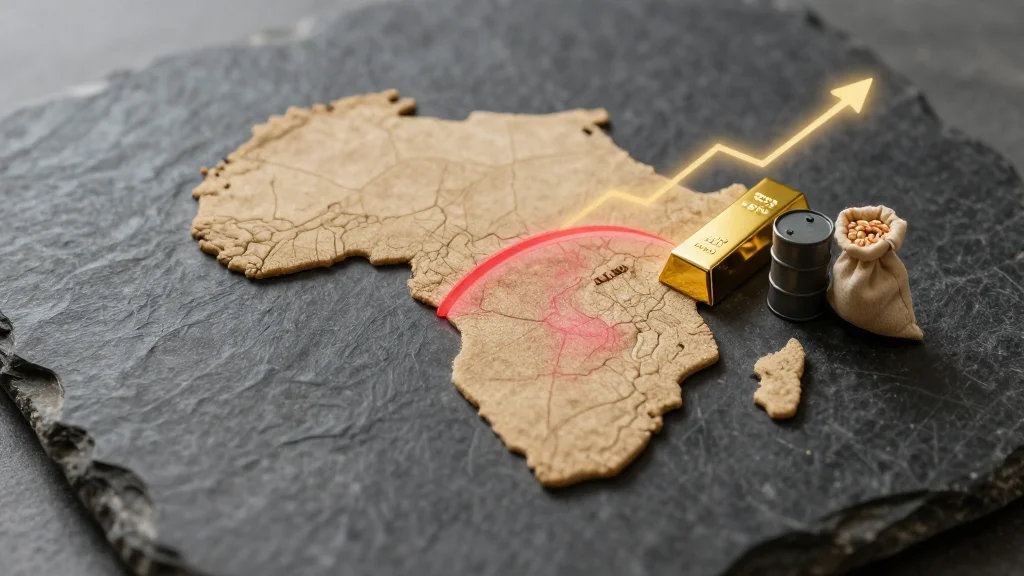
IMF Warns Iran War Could Trim Africa’s Growth to 4.3% and Spark Inflation Surge

Companies Mentioned
Why It Matters
The IMF’s downgrade of African growth and its inflation warning highlight how a regional war can quickly become a global macroeconomic stress test. Emerging markets that rely on commodity exports face tighter financing conditions, while import‑dependent economies grapple with rising food and energy bills that can ignite social unrest. Investors and policymakers must reassess exposure to countries where external shocks could amplify fiscal vulnerabilities. Furthermore, the conflict underscores the interconnectedness of geopolitical risk and financial stability. As the Strait of Hormuz remains a chokepoint, any disruption reverberates through oil‑dependent economies, prompting a re‑evaluation of supply‑chain diversification and sovereign debt strategies across the emerging‑market spectrum.
Key Takeaways
- •IMF cuts 2026 sub‑Saharan Africa growth forecast to 4.3%, down 0.3 points.
- •Median inflation in the region projected at 5% by year‑end, up from 3.4% in 2025.
- •Current‑account deficits for non‑commodity exporters could widen by 1.4% of GDP.
- •29 African currencies have weakened against the dollar; South African rand fell up to 5%.
- •Aid cuts of 16%‑28% expected in 2025, adding fiscal pressure to vulnerable economies.
Pulse Analysis
The IMF’s latest outlook is a stark reminder that emerging markets are no longer insulated from Middle‑East flashpoints. Historically, oil shocks have forced a re‑pricing of risk, but the current Iran war adds a layer of supply‑chain uncertainty that is harder to hedge. For African economies, the dual hit of higher import bills and weaker capital inflows creates a classic stagflation scenario, where growth stalls while price pressures rise. This environment is likely to accelerate a shift toward domestic financing, prompting governments to explore sovereign green bonds and regional development banks as alternatives to volatile private capital.
From an investment perspective, the warning should trigger a re‑balancing of portfolios that overweight commodity‑linked assets. Hedge funds and sovereign wealth funds may increase exposure to defensive sectors—telecommunications, consumer staples, and health care—that are less sensitive to oil price swings. At the same time, the heightened geopolitical risk could revive interest in “safe‑haven” emerging markets such as Vietnam or Indonesia, where exposure to Middle‑East energy dynamics is limited.
Looking ahead, the IMF’s forecast hinges on the trajectory of the conflict. A de‑escalation that restores normal flows through the Strait of Hormuz could quickly reverse some of the inflationary pressure, but a protracted blockade would embed higher energy costs into the global pricing structure. Policymakers in Africa must therefore prioritize macro‑prudential tools—such as foreign‑exchange interventions and targeted subsidies—to cushion households while preserving fiscal space for growth‑enhancing investments. The coming months will test the resilience of emerging‑market economies to geopolitical turbulence, and the IMF’s warning serves as both a diagnostic and a call to action.
IMF Warns Iran War Could Trim Africa’s Growth to 4.3% and Spark Inflation Surge
Comments
Want to join the conversation?
Loading comments...