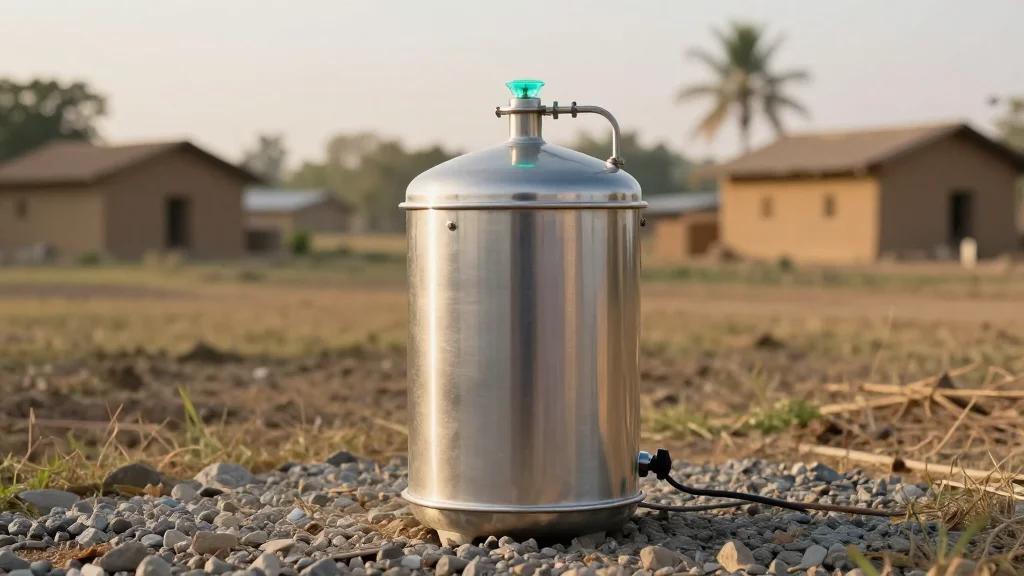
India’s Village Biotech Hub Unveils First Indigenous Bioreactor, Boosting Rural Innovation

Companies Mentioned
Why It Matters
The launch of an indigenous bioreactor in a village setting challenges the conventional concentration of biotech R&D in urban centers, opening pathways for inclusive growth in emerging economies. By leveraging local agricultural waste, the technology not only reduces dependence on imported equipment but also creates new revenue streams for farmers, potentially narrowing the rural‑urban income gap. If the model proves scalable, it could position India as a net exporter of biotech hardware, strengthening its trade balance and enhancing its strategic autonomy in vaccine production—a sector that gained heightened importance during the COVID‑19 pandemic. The development also signals to investors that deep‑tech innovation can thrive outside traditional hubs, encouraging capital flows into secondary cities and rural clusters across Asia, Africa, and Latin America.
Key Takeaways
- •Dyna Biotech unveiled India's first domestically designed bioreactor in Phursungi village near Pune.
- •The waste‑to‑energy system claims nearly five‑times higher gas output than conventional digesters.
- •Quality Control Officer Shivani Borkar noted that the reactors are already being exported for global vaccine production.
- •Hyundai Motor India reported a 22.2% profit decline to Rs 1,255.63 crore (≈ $151 million) in Q4 2026.
- •IRB Infrastructure Developers' toll revenue rose 24% YoY to Rs 793.5 crore (≈ $96 million) in April 2026.
Pulse Analysis
The Phursungi bioreactor marks a strategic inflection point for India’s biotech sector. Historically, high‑cost equipment imports have constrained domestic vaccine capacity, forcing reliance on foreign suppliers. By internalizing core hardware, Dyna Biotech not only cuts costs but also builds a domestic supply chain that can be insulated from geopolitical shocks. This mirrors a broader trend in emerging markets where governments and firms are seeking to localize critical technologies—seen in China’s semiconductor push and Brazil’s biofuel initiatives.
From an investment perspective, the convergence of deep‑tech biotech and agritech creates a hybrid asset class that appeals to both life‑science and sustainability funds. The reported five‑fold efficiency gain, if substantiated through third‑party testing, could dramatically lower the levelized cost of bio‑energy, making rural projects financially viable without heavy subsidies. Moreover, the export potential adds a revenue cushion that can attract foreign direct investment, especially from vaccine manufacturers looking to diversify their supply base.
However, scaling will test Dyna Biotech’s operational capabilities. The company must navigate India’s complex regulatory environment for medical devices, secure consistent feedstock supply, and demonstrate long‑term reliability of its reactors. Success could catalyze a cascade of similar rural innovation hubs across the Global South, reshaping the geography of high‑value manufacturing and offering a template for inclusive industrial policy.
India’s Village Biotech Hub Unveils First Indigenous Bioreactor, Boosting Rural Innovation
Comments
Want to join the conversation?
Loading comments...