Iran War Spurs Extreme Bear Scenarios for Asia Currencies, Bonds
Why It Matters
Sharp currency depreciation and rising yields could erode corporate earnings and increase debt servicing burdens, prompting investors to reassess exposure to Asian markets. The stress test highlights how geopolitical shocks can quickly translate into macro‑financial instability in the region.
Key Takeaways
- •Rupee could hit 100 per dollar under extreme scenario
- •Rupiah may slide to 18,000 per dollar
- •Peso could weaken to 65 per dollar as energy costs rise
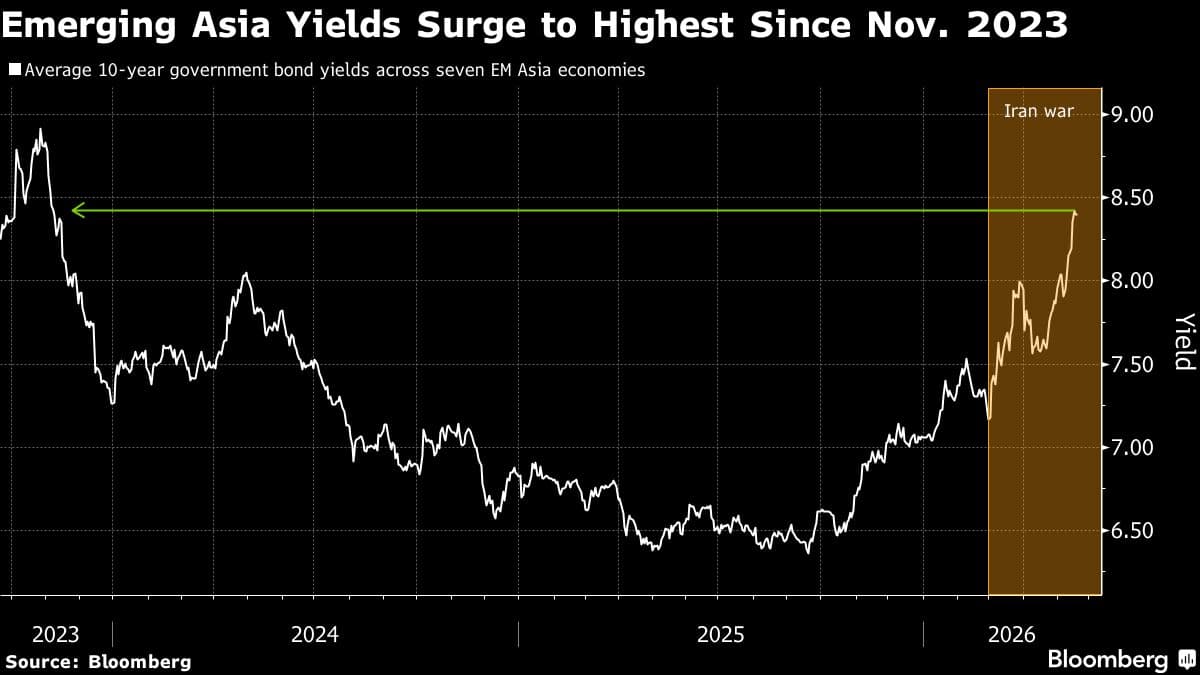
- •Asian bond yields rise amid inflationary pressure from higher oil prices
Pulse Analysis
The Iran war has reignited concerns about supply‑side shocks in the global energy market. With Iranian oil output curtailed and sanctions tightening, crude prices have surged, feeding through to higher gasoline and diesel costs worldwide. Asian economies, which import a sizable share of their energy, feel the impact immediately. The resulting balance‑of‑payments strain amplifies existing vulnerabilities in countries that already grapple with modest foreign‑exchange reserves and sizable current‑account deficits.
Currency markets are reacting sharply. The Indian rupee, traditionally resilient due to a diversified export base, is projected to breach the 100‑per‑dollar threshold in worst‑case models. Indonesia’s rupiah and the Philippine peso face similar downward pressure, reflecting their heavy reliance on imported oil and food. Higher import bills feed domestic inflation, limiting central banks' ability to cut rates without jeopardizing price stability. Consequently, investors demand higher yields on sovereign bonds, pushing yields toward historic highs and widening spreads.
For investors and corporate treasurers, the emerging picture calls for heightened risk management. Portfolio allocations to Asian equities may need hedging against currency volatility, while fixed‑income positions should account for rising yields and potential credit downgrades. Policymakers in the region are likely to consider strategic reserves releases or bilateral energy agreements to cushion the shock. Monitoring the geopolitical trajectory of the Iran conflict will be essential, as any escalation could accelerate the bearish scenarios outlined, reshaping the risk‑return landscape across Asian markets.
Iran War Spurs Extreme Bear Scenarios for Asia Currencies, Bonds
Comments
Want to join the conversation?
Loading comments...