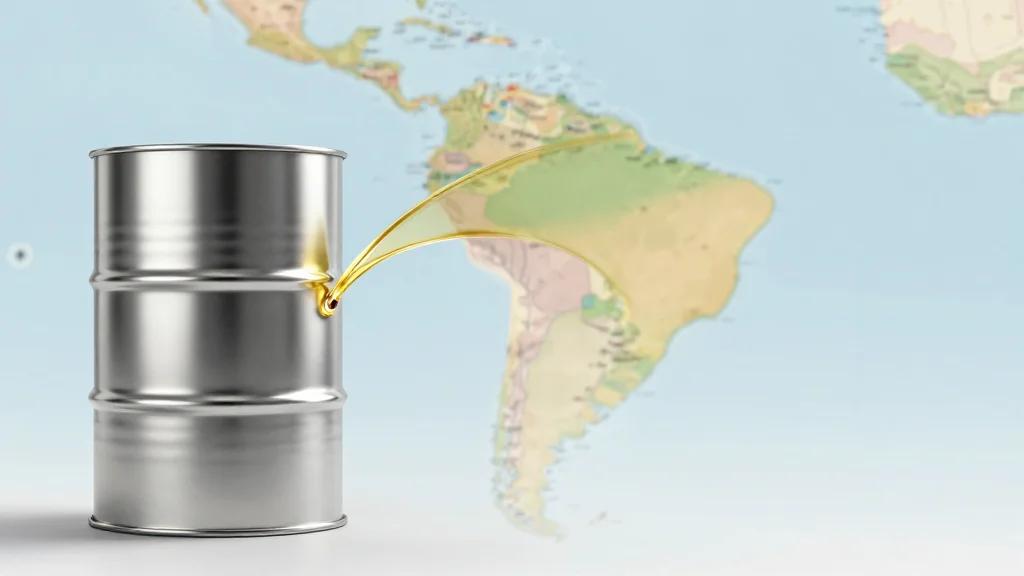
Oil Breaches $100 a Barrel, Sending Latin American Currencies Tumbling

Why It Matters
The oil price breach underscores the vulnerability of Latin American economies to external commodity shocks. Countries that import most of their energy face higher inflation and tighter monetary conditions, which can stall growth and strain public finances. Conversely, oil exporters enjoy a temporary windfall that can boost fiscal balances but also risk over‑reliance on volatile commodity revenues. The episode highlights the importance of diversified economic structures and prudent debt management for emerging markets facing a volatile global energy landscape. For investors, the episode reinforces the need to monitor currency exposure and sector rotation within emerging‑market portfolios. A sustained high‑oil environment could widen performance gaps between commodity‑linked stocks and consumer‑oriented firms, reshaping asset allocation strategies across the region.
Key Takeaways
- •Crude oil rose above $100 per barrel, up ~6% after U.S.–Iran talks collapsed
- •Brazil's real fell ~1.2% and Mexico's peso slipped ~1.5% versus the dollar
- •Colombia's peso depreciated less than 0.3%, showing resilience as an oil exporter
- •Higher oil imports raise inflation risk and limit central‑bank rate‑cut space
- •Energy producers gain, while consumer and transport firms face margin pressure
Pulse Analysis
The recent oil surge is a textbook reminder that emerging markets remain highly exposed to geopolitical risk transmitted through commodity prices. Latin America, with its mix of oil importers and exporters, offers a micro‑cosm of this dynamic. Brazil and Mexico, both heavily dependent on imported fuel, saw their currencies weaken sharply, a move that will likely feed through to higher consumer prices and could force their central banks to adopt a more hawkish stance. In contrast, Colombia’s modest currency move illustrates how export‑linked economies can temporarily offset external shocks, but such gains are fleeting if oil prices become erratic.
Historically, oil price spikes have precipitated currency crises in the region, most notably during the 2008‑2009 period when the peso and real both suffered steep declines. The current episode differs in that the U.S. dollar’s strength amplifies the impact, creating a two‑pronged pressure on debt‑laden corporates. Investors should therefore reassess exposure to high‑leverage firms in import‑heavy economies, while also recognizing that commodity exporters may see short‑term earnings lifts that could mask underlying structural vulnerabilities.
Going forward, the trajectory of U.S.–Iran relations will be a key catalyst. A de‑escalation could quickly erode the supply‑risk premium, pulling oil back below $100 and allowing currencies to recover. Conversely, a protracted standoff would keep inflationary pressures alive, potentially prompting a divergence in monetary policy across the region. Portfolio managers with emerging‑market mandates should therefore maintain flexibility, favoring assets with strong balance sheets and limited foreign‑currency debt, while staying alert to sector rotation between energy exporters and consumer‑driven companies.
Oil Breaches $100 a Barrel, Sending Latin American Currencies Tumbling
Comments
Want to join the conversation?
Loading comments...