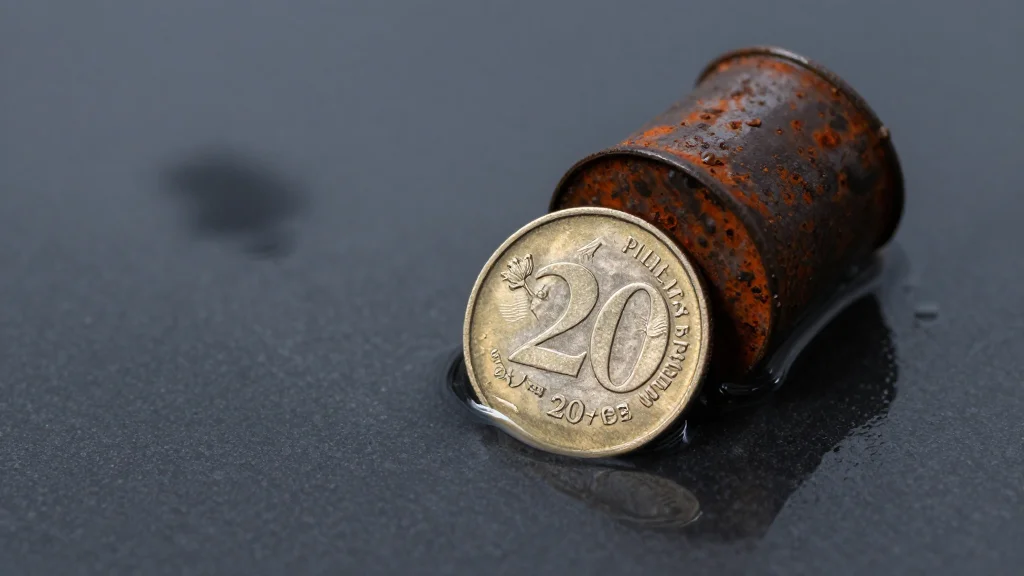
Philippine Business Confidence Plummets to 25‑Year Low as Fuel Prices Surge

Why It Matters
A confidence index at a 25‑year low signals that Philippine firms expect weaker consumer demand, tighter financing and higher input costs. As the Philippines is the second‑largest economy in Southeast Asia, a slowdown could dampen regional growth forecasts, especially for trade‑dependent neighbors like Vietnam and Malaysia. Moreover, the peso’s anticipated depreciation adds foreign‑exchange risk for investors holding emerging‑market assets, potentially prompting capital outflows. The broader implication is a test of resilience for emerging markets that rely heavily on imported energy. Persistent fuel‑price volatility could force policymakers across the region to balance inflation‑targeting with growth support, influencing monetary‑policy cycles and sovereign‑bond yields for months to come.
Key Takeaways
- •Business confidence index fell to -24.3% in March, the weakest since 2001.
- •Three‑month‑ahead CI dropped to -17.3% from 37.4% in February.
- •Credit‑access index turned negative to -7.1% after a 4% positive reading.
- •Firms expect the peso to average P60 per dollar (~$1.07) over the next year.
- •Inflation expectations rose to 3.3% for the next 12 months.
Pulse Analysis
The March confidence shock underscores how external geopolitical shocks can quickly translate into domestic economic stress for import‑dependent emerging markets. The Philippines’ reliance on oil imports makes it especially vulnerable to supply disruptions in the Middle East, a risk that has now manifested in both consumer‑spending and business‑investment sentiment. Historically, the country has weathered oil price spikes by leveraging remittances and a relatively young labor force, but the current confluence of higher interest rates, a weakening peso and rising inflation erodes those buffers.
From a market perspective, the deteriorating confidence index is likely to pressure the Philippine peso further, widening the yield spread on its sovereign bonds relative to regional peers. Investors may demand higher risk premiums, especially if the BSP is forced to tighten policy to curb inflation, which could exacerbate the credit‑access squeeze highlighted in the survey. Conversely, if the central bank opts for a dovish stance, it may stabilize the peso but risk entrenching inflation expectations.
Looking ahead, the key variables will be the trajectory of global oil prices and the pace of the Middle East conflict. A de‑escalation could quickly restore fuel‑price stability, allowing confidence to rebound. In the meantime, firms that have already committed to expansion may become early beneficiaries of any recovery, while those still on the fence could delay investment, deepening the slowdown. Stakeholders should monitor the BSP’s policy response, peso movements, and regional trade data for early signals of whether the Philippines can avert a broader emerging‑market slowdown.
Philippine Business Confidence Plummets to 25‑Year Low as Fuel Prices Surge
Comments
Want to join the conversation?
Loading comments...