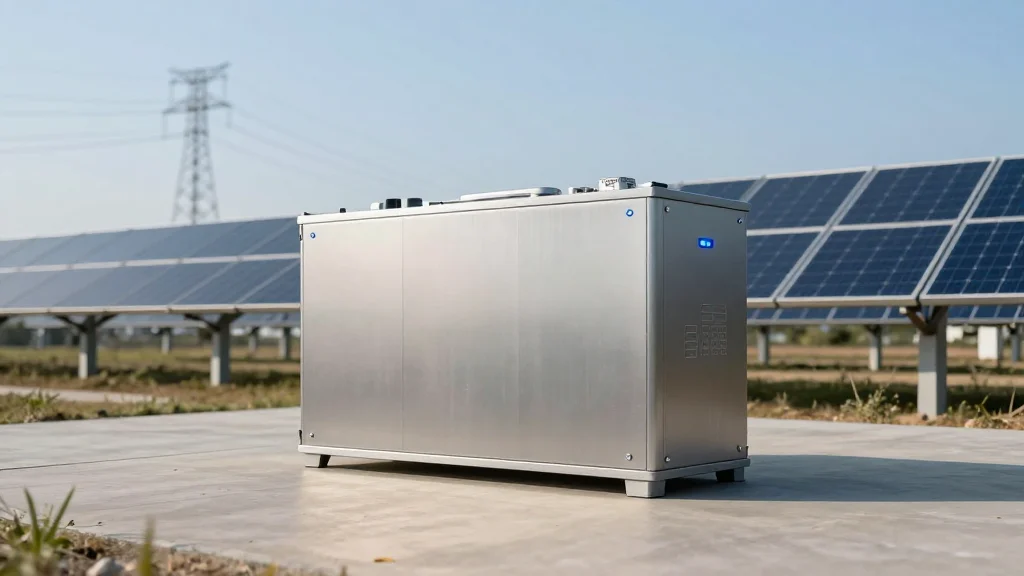
Schneider Electric Unveils Next‑Gen Battery Storage System in India

Companies Mentioned
Why It Matters
The introduction of a finance‑ready, integrated battery storage solution addresses a critical bottleneck in India's renewable energy roadmap: the lack of reliable, revenue‑generating storage. As the country aims to reach 500 GW of renewable capacity by 2030, grid stability and curtailment mitigation become decisive factors for investors. Schneider Electric's BESS could unlock private capital, reduce the need for costly grid reinforcement, and accelerate the displacement of coal‑based peaking plants, thereby contributing to India's climate commitments and energy security. Beyond India, the platform offers a template for other emerging economies grappling with similar integration challenges. By packaging storage as a bankable asset with built‑in digital intelligence, Schneider reduces project risk and shortens the path to commercial operation, potentially reshaping financing models for clean‑energy infrastructure across the Global South.
Key Takeaways
- •Schneider Electric launched a cell‑to‑grid BESS at its India Innovation Summit on May 15, 2026.
- •The solution is battery‑agnostic, PCS‑forward and includes EMS, DERMS and microgrid control software.
- •India is the world's fourth‑largest renewable energy producer, driving urgent demand for grid‑scale storage.
- •Deepak Sharma and Udai Singh highlighted the platform's finance‑ready design and revenue‑generating potential.
- •The BESS aims to attract private investment, reduce curtailment and support India's target of 500 GW renewable capacity by 2030.
Pulse Analysis
Schneider Electric's BESS launch arrives at a strategic inflection point for India's power sector. The country has added over 70 GW of solar and wind capacity in the past two years, yet grid operators still report double‑digit curtailment rates during peak generation periods. Traditional storage projects have struggled to secure financing because of uncertain revenue streams and complex integration requirements. By bundling hardware, software and FEED services into a single, bankable package, Schneider is effectively creating a new asset class that aligns with the risk appetites of sovereign wealth funds, pension schemes and green‑bond investors.
Historically, storage adoption in emerging markets has lagged behind developed economies due to higher capital costs and fragmented supply chains. Schneider's battery‑agnostic approach mitigates dependence on any single cell manufacturer, a lesson learned from recent lithium‑ion shortages that have inflated project costs globally. Moreover, the integrated EMS leverages real‑time market data to optimize dispatch, turning storage from a cost center into a profit‑center. If early pilots demonstrate the promised returns, we could see a cascade effect: utilities will prioritize storage in expansion plans, regulators may formalize capacity market mechanisms, and competing vendors will be forced to offer similarly comprehensive solutions.
The broader geopolitical context also matters. As the U.S. and China navigate a fragile trade relationship, Western technology firms are keen to deepen footholds in non‑aligned markets. Schneider's established footprint in Indian power infrastructure gives it a competitive advantage over newer entrants. However, success will depend on policy certainty—particularly around tariffs, ancillary service compensation and grid interconnection standards. Should the Indian government codify supportive storage policies, Schneider's BESS could become the de‑facto standard, shaping the trajectory of renewable integration not only in India but across other high‑growth, resource‑rich economies.
Schneider Electric Unveils Next‑Gen Battery Storage System in India
Comments
Want to join the conversation?
Loading comments...