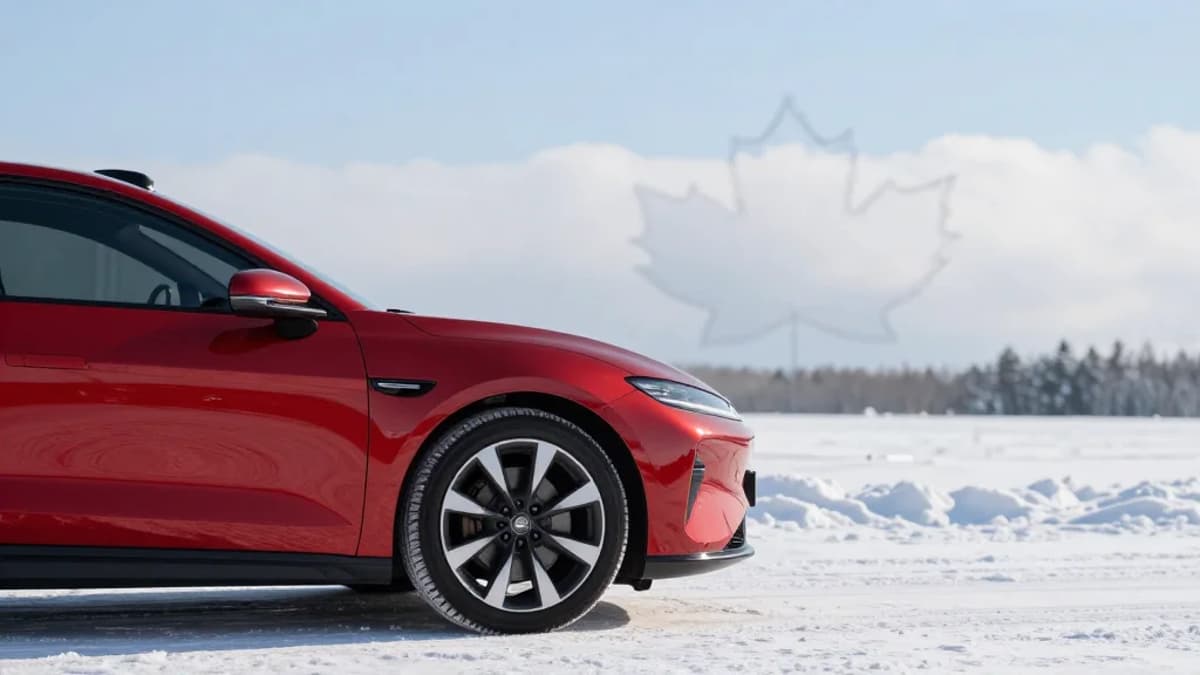
Which of the 132 Chinese EV Automakers Will Enter Canada?
Companies Mentioned
Why It Matters
Canada serves as a low‑risk testing ground for Chinese EVs, shaping how they may later challenge the broader North American market and influence trade and regulatory policies.
Key Takeaways
- •Canada allocated 49,000 Chinese EVs annually (~3.8% market)
- •BYD expected to claim ~30% of quota
- •SAIC (MG) projected largest share at ~20%
- •Geely, Chery, Great Wall also slated for modest volumes
- •Success hinges on regulatory compliance and cold‑weather performance
Pulse Analysis
Canada’s relatively flexible safety and emissions framework, combined with a consumer base eager for electrification, makes it an attractive entry point for Chinese EV manufacturers. The 49,000‑unit annual cap translates to a modest 3.8% of total vehicle sales, yet it provides a controlled environment for firms to validate performance in harsh winter conditions and navigate the Canada Motor Vehicle Safety Standards. This measured approach reduces political friction while allowing manufacturers to gather real‑world data before scaling up.
Among the 132 Chinese automakers, a handful possess the institutional depth to thrive under these constraints. BYD’s vertical integration—spanning battery cells, power electronics, and vehicle assembly—offers a reliable supply chain and pricing power, justifying its projected 30% share of the quota. SAIC’s MG brand brings decades of joint‑venture experience with Western OEMs, granting it a compliance edge that supports a 20% allocation. Geely leverages its global platforms through Volvo and Polestar, earning a 15% slice, while Chery, Great Wall, and GAC secure smaller but strategically significant portions based on export track records and brand positioning. These firms prioritize regulatory competence and cold‑weather durability over sheer volume, aligning with Canadian consumer expectations.
The broader implication for North America is a gradual, market‑driven infiltration of Chinese EVs that could reshape competitive dynamics. If Chinese models prove reliable and affordable in Canada, they may pressure U.S. manufacturers to accelerate cost reductions and technology adoption. Policymakers will likely monitor the pilot closely, balancing consumer benefits against domestic industry concerns. Ultimately, Canada’s experiment could set the template for a wider North American rollout, signaling which Chinese players have the operational resilience to compete on a continent‑wide stage.
Which of the 132 Chinese EV Automakers Will Enter Canada?


Comments
Want to join the conversation?
Loading comments...