Is It Still Windowing if We Never Stream? Or Is It a Strike?
Key Takeaways
- •Artists demand transparent royalty calculations.
- •AI-generated tracks challenge traditional licensing.
- •#DitchSpotify strike gains global attention.
- •Regulators examine potential price-fixing.
- •Windowing debates intensify without streaming.
Summary
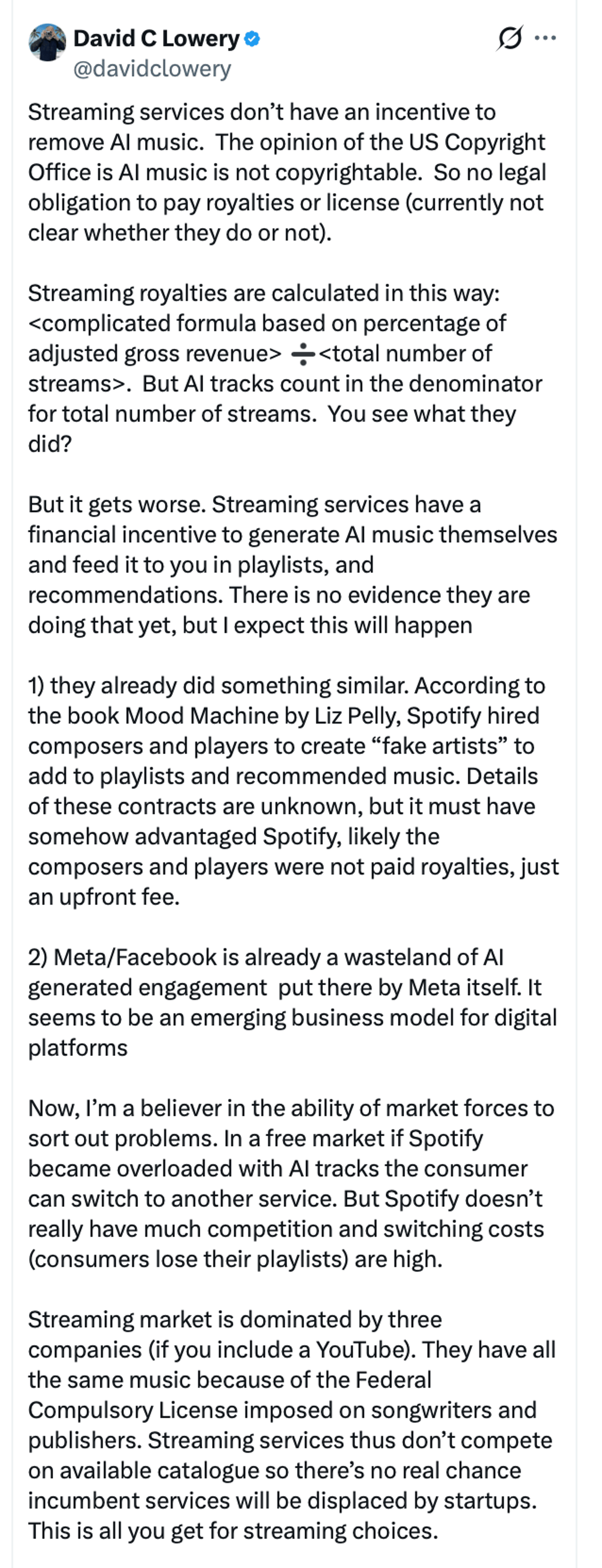
An emerging debate questions whether the traditional "windowing" model applies when music is never streamed, as artists and unions push back against streaming platforms' royalty structures. Dr. David C. Lowery highlights growing concerns over AI‑generated music, opaque royalty calculations, and alleged price‑fixing among competing services. The #DitchSpotify movement has escalated into a coordinated strike, demanding transparent compensation and fair licensing terms. Industry regulators are now scrutinizing these practices amid calls for reform.
Pulse Analysis
The concept of "windowing"—staggered release windows across media—has long guided how record labels monetize new recordings. With the rise of AI‑generated compositions and a growing segment of music that never reaches traditional streaming services, industry leaders are questioning whether the model still holds relevance. Dr. Lowery points out that AI tracks often bypass existing licensing frameworks, leaving creators uncertain about royalty entitlements. At the same time, streaming giants have been accused of colluding on pricing, further muddying the financial landscape for both legacy and emerging artists.
The #DitchSpotify campaign, now organized as a coordinated strike, reflects mounting frustration among musicians who claim streaming platforms underpay and obscure royalty calculations. Protestors argue that without transparent reporting, the traditional windowing approach becomes meaningless, as revenue streams are diverted to opaque digital intermediaries. The strike has attracted global attention, prompting other services to face similar scrutiny and forcing unions to negotiate new collective bargaining agreements. By leveraging social media and public demonstrations, the movement aims to pressure platforms into adopting clearer, fair‑pay structures.
Regulators in the United States and Europe are beginning to investigate alleged price‑fixing and anti‑competitive behavior among streaming services, a development that could trigger legislative reforms. If authorities impose stricter licensing standards, the industry may see a shift back toward hybrid distribution models that combine limited streaming windows with direct‑to‑consumer sales. Such changes would benefit artists seeking predictable income while preserving consumer access to digital music. Stakeholders are watching closely, as the outcome will likely define the next era of music monetization and the role of AI in the creative pipeline.


Comments
Want to join the conversation?