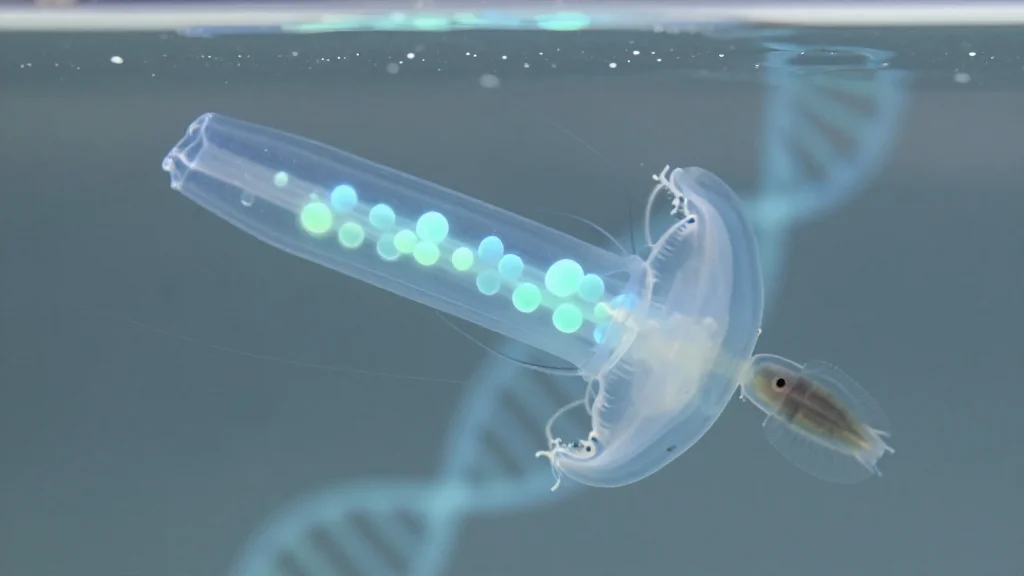
Can Hydra Biology Inform Strategies to Extend Life in Other Species?

Key Takeaways
- •Hydra exhibits negligible senescence via continuous stem cell renewal.
- •Researchers propose transferring Hydra gene expression to rotifers to test lifespan extension.
- •Success would validate conserved anti‑aging mechanisms across invertebrates.
- •Rotifer model offers faster, cheaper proof‑of‑concept than mammalian studies.
- •Findings could guide identification of geroprotective targets for mammals.
Pulse Analysis
Hydra’s remarkable ability to avoid aging stems from a dynamic reservoir of pluripotent stem cells that continuously self‑renew, keeping mortality rates flat over the organism’s lifespan. Unlike most animals, Hydra does not accumulate senescent cells, making it a living model of negligible senescence. Scientists are now dissecting the molecular circuitry behind this resilience—particularly gene networks that suppress typical aging pathways—and asking whether those circuits can be transplanted into other organisms.
The proposed experiment moves Hydra’s anti‑aging gene signatures into the tiny freshwater rotifer Brachionus manjavacas, a species that matures in days and dies within weeks. Rotifers provide an ideal test bed: they reproduce rapidly, are inexpensive to culture, and their short lifespan allows researchers to observe lifespan alterations within a single experimental cycle. Prior work, such as inserting naked‑mole‑rat DNA repair genes into mice, shows that cross‑species gene transfer can reveal conserved longevity mechanisms. If Hydra‑derived genes lengthen rotifer healthspan, it would prove that key anti‑aging pathways are shared across distant invertebrate lineages.
A positive outcome would reshape aging research by highlighting a new set of molecular targets that are more relevant to mammals than those discovered in traditional models like fruit flies or worms. While translating findings from rotifers to humans remains a long road, the proof‑of‑concept could streamline target validation, reduce reliance on costly vertebrate studies, and inspire biotech ventures focused on geroprotectors. Future work will likely explore how to integrate Hydra‑inspired pathways with mammalian physiology, assess safety, and eventually test efficacy in higher organisms, bringing the dream of extending healthy human life a step closer.
Can Hydra Biology Inform Strategies to Extend Life in Other Species?
Comments
Want to join the conversation?