Can't Exercise? Sulforaphane From Broccoli Sprouts Reverses Frailty in Aging Mice
Key Takeaways
- •Mouse study used 2 mg/kg IP sulforaphane three times weekly.
- •Human‑equivalent dose estimated at ~25–30 mg bioavailable sulforaphane daily.
- •Effective dose validated only for glucose control in obese diabetics, not muscle.
- •Myrosinase co‑presence critical; glucoraphanin‑only supplements may underdeliver.
- •No clinical data yet confirm muscle‑mass benefits in humans.
Pulse Analysis
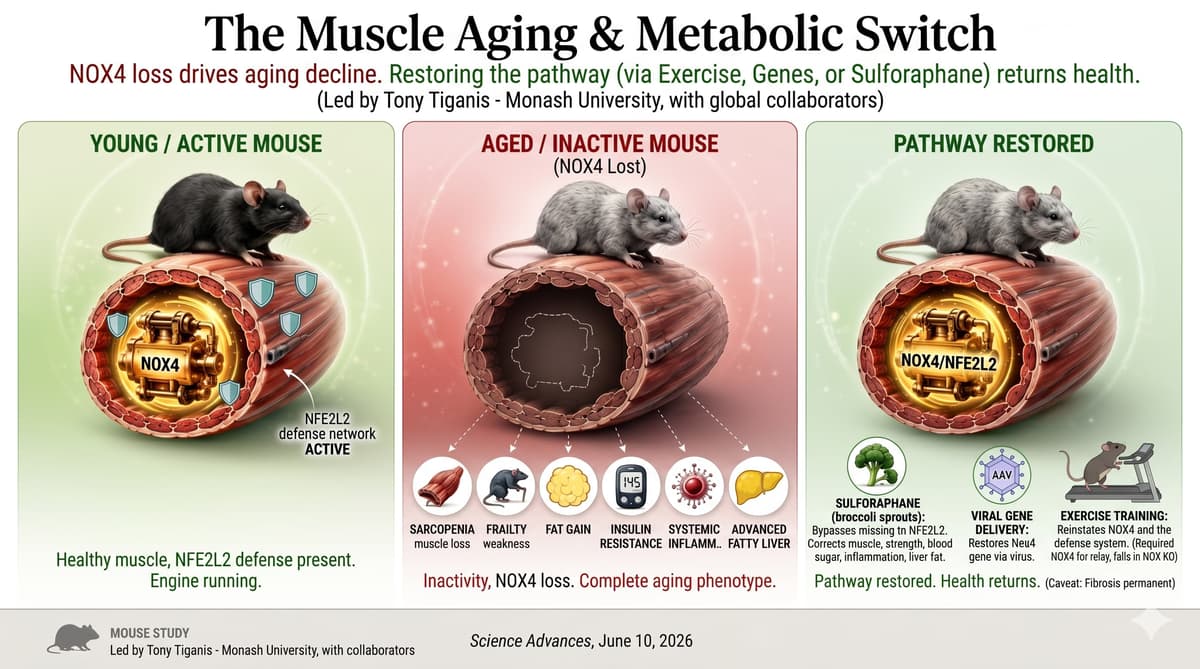
Sulforaphane, the isothiocyanate derived from glucoraphanin in broccoli sprouts, has attracted attention for its ability to activate the NFE2L2 (Keap1‑Nrf2) antioxidant pathway. In a mouse model lacking the NOX4 enzyme, a regimen of 2 mg/kg intraperitoneal sulforaphane three times per week restored muscle strength and reduced frailty markers, suggesting a direct link between NFE2L2 activation and sarcopenia mitigation. The study’s mechanistic depth, including dose‑response curves in the 5‑20 µM cellular range, underscores sulforaphane’s potential as a geroprotective nutraceutical, yet the route of administration—bypassing first‑pass metabolism—differs markedly from oral human consumption.
When converting the mouse exposure to a human‑equivalent dose using body‑surface‑area scaling, researchers arrive at roughly 11 mg systemic exposure, which translates to about 30 mg of oral sulforaphane assuming typical bioavailability. Clinical trials that have examined sulforaphane’s metabolic effects in obese, type‑2 diabetic patients used doses around 26 mg of delivered sulforaphane per day and reported modest HbA1c reductions. However, those studies relied on formulations containing active myrosinase to ensure conversion from glucoraphanin, and they measured glucose outcomes rather than muscle mass. Consequently, the dose that moves glycemic markers may not achieve the tissue concentrations needed for NFE2L2‑driven muscle rejuvenation.
The commercial implication is clear: supplement manufacturers must prioritize standardized, myrosinase‑active products if they aim to meet the ~25‑30 mg daily bioavailable target. Yet, without human trials that directly assess muscle strength, lean‑mass preservation, or functional frailty, clinicians should treat sulforaphane as an experimental adjunct rather than a proven anti‑sarcopenia therapy. Ongoing research that bridges the pharmacokinetic gap between plasma levels and skeletal‑muscle exposure will be essential before the compound can be positioned as a mainstream, exercise‑free strategy for aging populations.
Can't Exercise? Sulforaphane from Broccoli Sprouts Reverses Frailty in Aging Mice
Comments
Want to join the conversation?