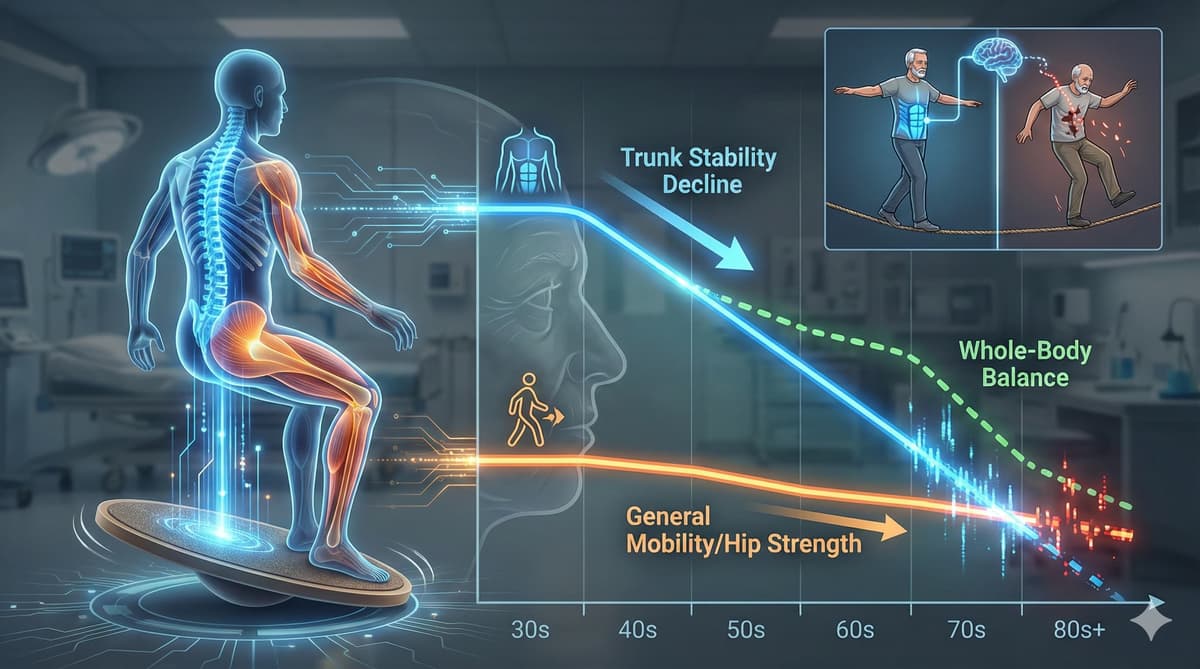
Core Stability: The Silent Biomarker of Aging That Outpaces Mobility and Strength
Key Takeaways
- •Minimum effective dose: 2–3 weekly sessions, 20‑30 minutes each
- •Neuromuscular gains appear in 2–4 weeks; muscle hypertrophy in 8–12
- •Single‑leg eyes‑closed stance >10‑second improvement signals success
- •Equipment cost under $50; high ROI via fall prevention
- •Maintenance requires one high‑intensity session per week after 12 weeks
Pulse Analysis
Core stability has emerged as a silent biomarker of aging, often eclipsed by more visible metrics like strength or VO₂ max. Recent longitudinal studies show that declines in low‑threshold proprioceptive control predict falls and functional loss even in physically strong adults. By isolating the lumbopelvic cylinder during seated, unstable‑surface exercises, the neuromuscular system can be retrained to execute rapid micro‑adjustments, effectively rewiring the “inverted pendulum” control loop that keeps us upright. This focus on neural software, rather than muscular hardware, fills a critical gap in geriatric fitness.
The “Neuromuscular Core Calibration” protocol translates robust meta‑analysis data into a practical prescription: 2–3 sessions per week, each delivering 20‑30 minutes of instability time, for a cumulative 360 minutes over six weeks. Early adaptations—enhanced firing synchrony—appear within 2‑4 weeks, while measurable increases in trunk muscle density require 8‑12 weeks. Safety is paramount; initial sessions should be performed in a constrained environment to mitigate acute fall risk, and individuals with herniated discs or uncontrolled hypertension must proceed cautiously. Simple field tests, such as the single‑leg eyes‑closed stance, provide a low‑tech validation metric, with a >10‑second improvement indicating successful neural integration.
From a business perspective, the protocol’s cost‑effectiveness is striking. A $50 Swiss ball delivers a high‑ROI intervention that can dramatically lower fall‑related medical expenses—one hip fracture can exceed $30,000 in acute care costs. Corporate wellness programs can embed brief instability drills into daily routines, complementing cardio and strength training without sacrificing productivity. As the demographic shift accelerates, scaling such evidence‑based, low‑cost solutions will become a competitive advantage for insurers, employers, and senior‑care providers seeking to extend healthy lifespan while curbing expenditures.
Core Stability: The Silent Biomarker of Aging That Outpaces Mobility and Strength
Comments
Want to join the conversation?