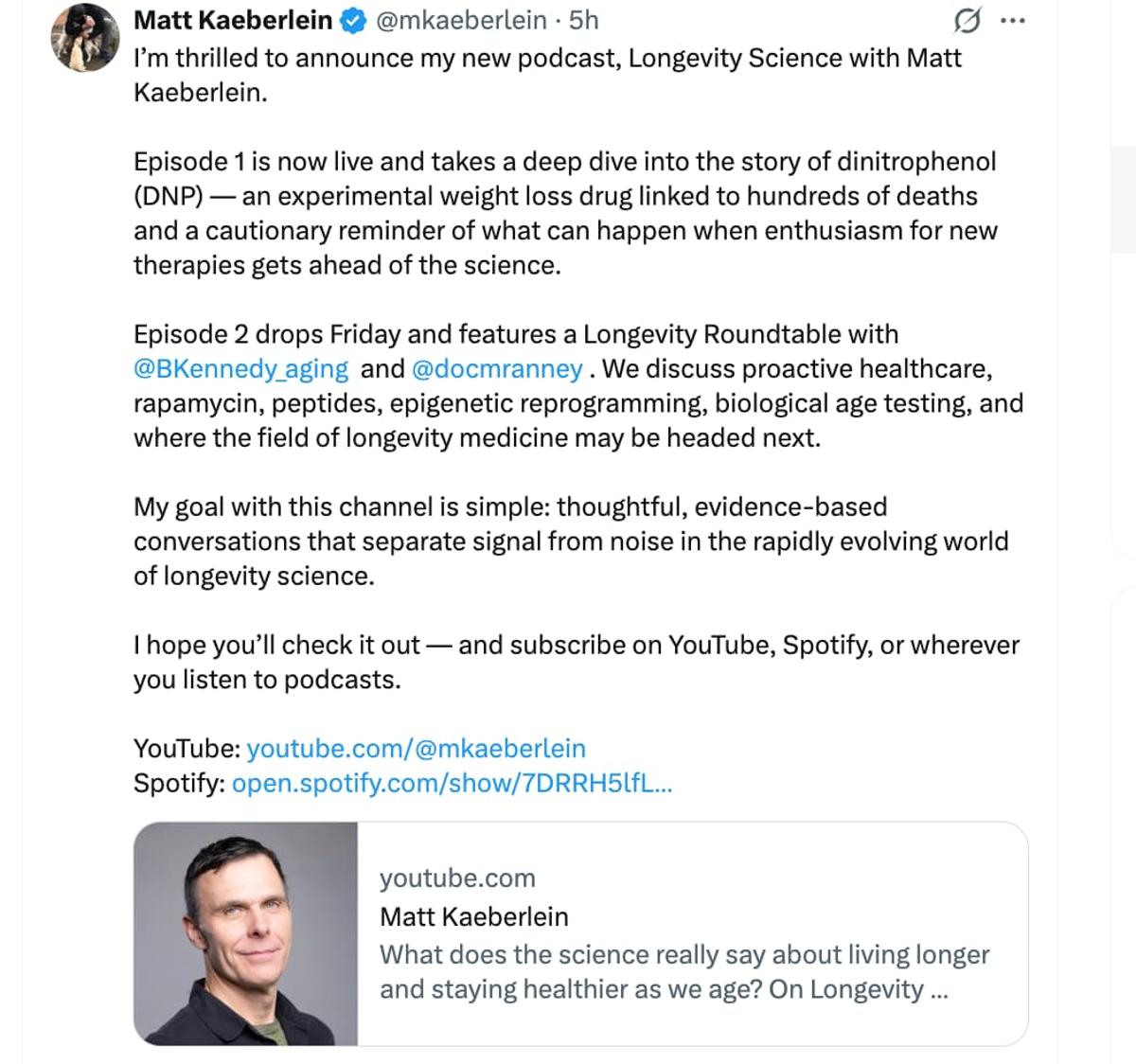
Matt Kaeberlein's New Longevity Science Podcast / Youtube Channel (May, 2026)
Key Takeaways
- •LinAge uses routine blood chemistry, enabling cheap, reproducible aging assessment
- •First‑gen DNA‑methylation clocks show high run‑to‑run variance and algorithm disagreement
- •Blood NAD+ levels remain stable with age, challenging a common longevity claim
- •Spermidine (6 mg daily) improves vaccine response via autophagy activation
- •LinAge can simulate biomarker normalization to prioritize interventions and detect subclinical plaque
Pulse Analysis
The geroscience community is moving from opaque epigenetic age estimators toward clinically grounded tools that clinicians can actually use. LinAge, trained on the NHANES dataset, converts familiar lab values—HbA1c, LDL‑C, blood pressure—into principal components that predict all‑cause mortality. Because these inputs are already part of standard health‑check panels, the clock can be deployed at scale without costly sequencing, and its repeatability far exceeds that of DNA‑methylation assays, which can swing by several years on repeat testing. This shift promises a pragmatic bridge between aging research and everyday medical practice, allowing physicians to quantify risk and track the impact of targeted interventions.
A parallel breakthrough emerged from the podcast’s critique of the NAD+ narrative. Large cohort analyses now show that whole‑blood NAD+ concentrations stay remarkably constant across the adult lifespan, undermining the premise that oral NAD+ precursors can reverse systemic aging. Instead, the focus is turning to metabolic pathways that demonstrably influence healthspan. Spermidine, at a modest 6 mg daily dose, has been shown to boost autophagy and enhance vaccine‑induced immunity in older adults, offering a low‑risk, evidence‑based strategy. Meanwhile, alpha‑ketoglutarate (AKG) supplementation, though still experimental in humans, shows promise in animal models by supporting TCA‑cycle function and amino‑acid metabolism.
For clinicians, LinAge’s in‑silico simulation capability is a game‑changer. By isolating the biomarker that contributes most to an individual’s mortality risk—such as elevated Lipoprotein(a) driving soft‑plaque formation—providers can prioritize interventions like PCSK9 inhibitors or statins before overt disease manifests. This precision approach aligns with value‑based care models, as it leverages reimbursable lab tests and directs high‑cost therapies to those most likely to benefit. As the field gathers more longitudinal data, we can expect refinements that integrate lifestyle, pharmacologic, and nutraceutical inputs, ultimately delivering a truly actionable aging clock for mainstream medicine.
Matt Kaeberlein's New Longevity Science Podcast / Youtube Channel (May, 2026)
Comments
Want to join the conversation?