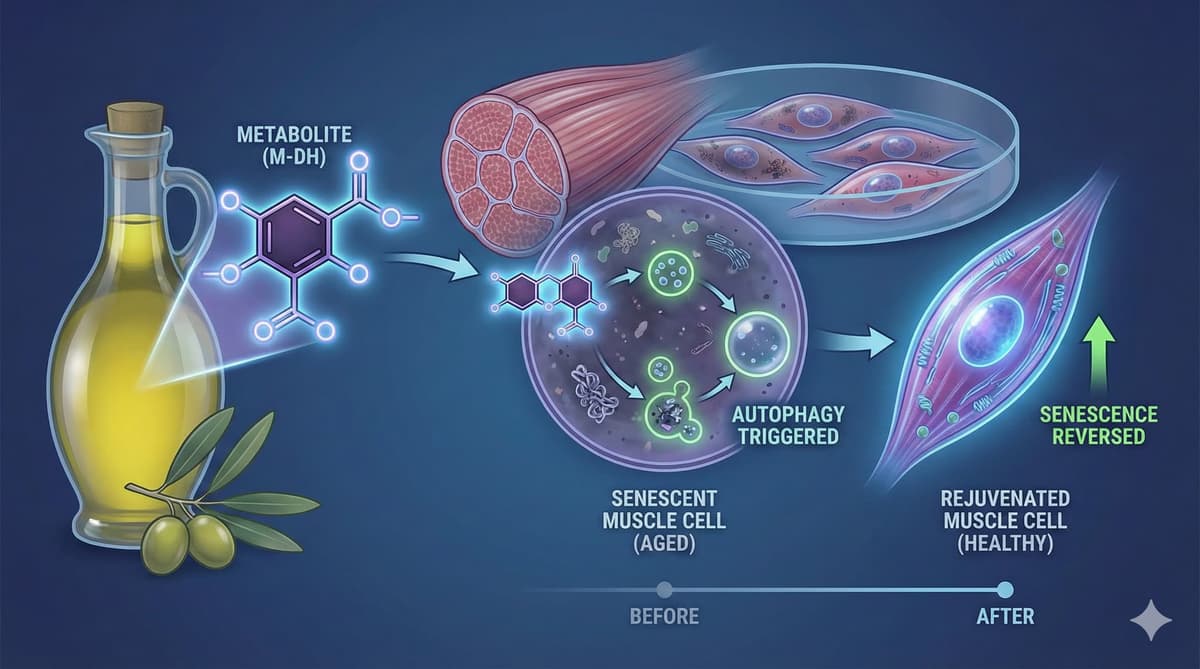
Olive Oil’s "Dark Horse" Metabolite Triggers Autophagy and Reverses Senescence in Human Muscle
Key Takeaways
- •Oleuropein aglycone cuts ROS in muscle cells by 43%.
- •Senescence markers drop 12% after OLE pretreatment.
- •OLE activates AMPK‑FOXO3a‑Sestrin, restoring autophagy.
- •Human-equivalent dose estimated at 250‑500 mg olive‑leaf extract daily.
- •Gut microbiome needed to convert oleuropein to active aglycone.
Pulse Analysis
The Mediterranean diet’s reputation for longevity has long been tied to olive oil, yet the specific compounds that drive muscle health remained vague. Recent work isolates Oleuropein Aglycone (OLE) as a direct modulator of the AMPK‑FOXO3a‑Sestrin axis, a signaling cascade that governs cellular energy balance, stress resistance, and autophagic clearance. By reducing reactive oxygen species by nearly half and lowering senescence markers, OLE demonstrates a cellular‑level anti‑aging effect that goes beyond generic antioxidant claims, offering a concrete target for researchers and clinicians focused on sarcopenia prevention.
Translating these in‑vitro results to real‑world use hinges on dosing and bioavailability. The authors estimate a human‑equivalent intake of 250‑500 mg of standardized olive‑leaf extract, delivering roughly 20% oleuropein, split across two daily doses to sustain AMPK activation. However, the aglycone form that triggers the pathway is produced by gut microbes cleaving the glycoside, making microbiome health a critical factor. Compared with pharmaceutical AMPK activators like metformin or rapamycin, OLE offers a milder, diet‑derived alternative with a favorable safety profile, though it cannot replace the potency of direct mTOR inhibitors.
For the nutraceutical market, the study validates a premium segment of high‑phenolic olive‑leaf extracts marketed for muscle maintenance and metabolic resilience. Investors and product developers should prioritize formulations that protect the aglycone from degradation and consider pairing OLE with pre‑biotics to enhance microbial conversion. While animal and early human trials hint at broader benefits—neuroprotection, fat oxidation, lifespan extension—rigorous clinical trials are needed to confirm dosing efficacy and long‑term safety in older adults. Until then, clinicians can cautiously recommend standardized extracts as part of a comprehensive anti‑sarcopenia regimen that includes exercise and protein optimization.
Olive Oil’s "Dark Horse" Metabolite Triggers Autophagy and Reverses Senescence in Human Muscle
Comments
Want to join the conversation?