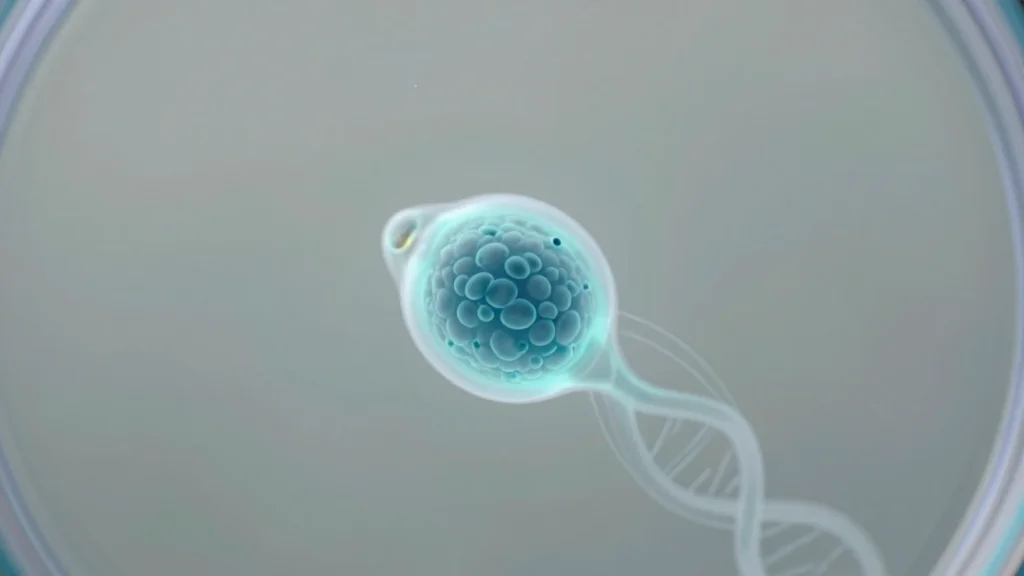
Reviewing What Is Known of the Natural Rejuvenation Taking Place During Reproduction

Key Takeaways
- •Oocytes retain intrinsic rejuvenation capacity despite maternal aging.
- •Epigenetic reprogramming, mitophagy, and proteostasis drive oocyte youth.
- •Partial reprogramming mimics natural oocyte reset for adult tissues.
- •Ovarian insights may enable systemic rejuvenation and longer healthspan.
Pulse Analysis
Aging research has long focused on the gradual accumulation of damage in somatic cells—DNA lesions, epigenetic drift, mitochondrial decline, and senescent cell buildup. Yet the reproductive system defies this trajectory: each successful conception produces a newborn whose cells are biologically "age zero," regardless of parental age. This paradox centers on the oocyte, the only adult mammalian cell that can fully erase accumulated wear and restore a pristine epigenetic landscape. By studying the ovary’s unique ability to maintain cellular youth, scientists are uncovering a natural counter‑measure to the hallmarks of aging that has been largely ignored by traditional geroscience.
The molecular choreography behind oocyte rejuvenation involves three interlocking systems. First, a wave of epigenetic reprogramming resets DNA methylation patterns, erasing age‑related epigenetic scars. Second, stringent mitochondrial quality control—through mitophagy and selective biogenesis—ensures that only the most efficient organelles persist, preserving energetic fidelity. Third, robust proteostasis mechanisms prevent protein aggregation and maintain turnover. Together, these processes create a cellular environment where age‑induced errors are not merely slowed but actively reversed. Recent studies have begun to map these pathways, revealing targets that could be co‑opted in adult tissues.
Translating ovarian biology into therapeutic avenues is now a priority for biotech firms and academic labs. Partial reprogramming, which transiently activates youthful gene networks without full dedifferentiation, mirrors the oocyte’s natural reset and has shown promise in mouse models of tissue degeneration. Coupled with senescence modulation and engineered stem‑cell niches, these approaches aim to recreate the ovary’s rejuvenation blueprint systemically. If successful, they could extend healthspan, reduce age‑related disease burden, and reshape how we think about longevity interventions.
Reviewing What is Known of the Natural Rejuvenation Taking Place During Reproduction
Comments
Want to join the conversation?