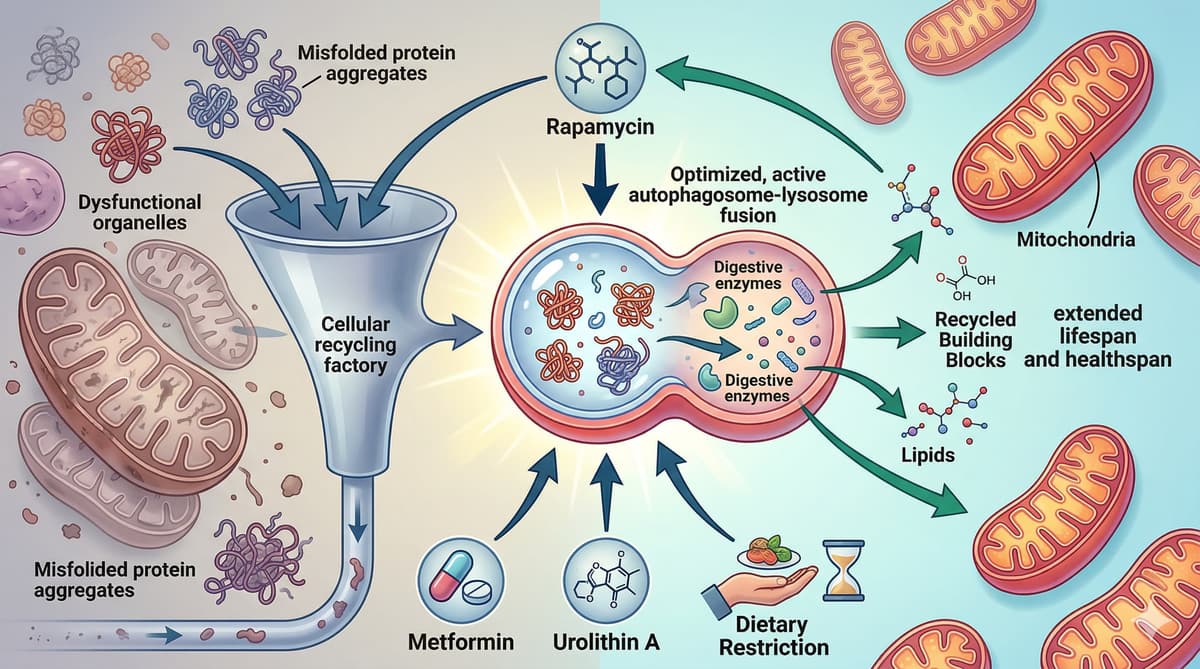
The Cellular Incinerator: How Interventions Like Rapamycin Hijack Autophagy to Hack Aging
Key Takeaways
- •Caloric restriction (~30% cut) boosts autophagy genes and lifespan in models
- •Intermittent fasting and spermidine‑rich foods trigger autophagy without extreme dieting
- •Endurance and resistance training sustain muscle autophagy, improving mitochondrial health
- •Regular sleep and hormetic heat/cold exposures preserve circadian autophagy rhythms
Pulse Analysis
Autophagy, the cell’s internal recycling system, has moved from a niche research topic to a cornerstone of aging science. By degrading damaged proteins and organelles, it restores metabolic balance and curtails inflammation, processes that underlie many chronic diseases. The pathway is tightly regulated by nutrient‑sensing hubs such as mTOR and AMPK, making it highly responsive to external cues. Understanding how everyday habits modulate these signals helps translate molecular insights into practical longevity strategies, positioning autophagy at the intersection of biology and lifestyle medicine.
Among the most robust triggers are modest caloric restriction, intermittent fasting, and spermidine‑rich foods. Animal studies consistently show that a 30% reduction in calories or time‑restricted feeding elevates BECN1 and LC3 markers, extending lifespan only when autophagy genes remain functional. Spermidine, abundant in wheat germ and soy, activates TFEB and reverses age‑related autophagy decline in immune cells. Human trials, though smaller, report improved insulin sensitivity and lower inflammatory markers after early‑day feeding windows, suggesting that nutrient timing can safely harness the same pathways without severe deprivation.
Physical activity, sleep quality, and controlled temperature stress round out the lifestyle toolbox. Endurance exercise amplifies muscle autophagy flux, while resistance training engages chaperone‑assisted selective autophagy, together preserving mitochondrial function. Adequate, regular sleep maintains circadian autophagy rhythms, preventing neurodegenerative protein buildup. Hormetic heat (sauna) and cold exposure further stimulate autophagic flux in adipose and liver tissue, though responses wane with age. For biotech firms and health‑tech platforms, these findings highlight a market for personalized regimens, wearable biomarkers, and interventions that safely amplify autophagy, accelerating the shift from reactive treatment to proactive longevity maintenance.
The Cellular Incinerator: How Interventions like Rapamycin Hijack Autophagy to Hack Aging
Comments
Want to join the conversation?