The Sugar Brain Drain: How Diabetes-Induced Lactate Accumulation Triggers Cognitive Decline
Key Takeaways
- •O‑GlcNAcylation of Creb3 drives LDHA‑mediated lactate surge
- •Elevated plasma lactate (>2.6 mM) predicts cognitive impairment risk
- •S325‑pe peptide blocks Creb3 modification, rescues memory in mice
- •Post‑meal glucose spikes accelerate neuronal apoptosis via metabolic trap
- •Metformin raises lactate; users must monitor thresholds for neuroprotection
Pulse Analysis
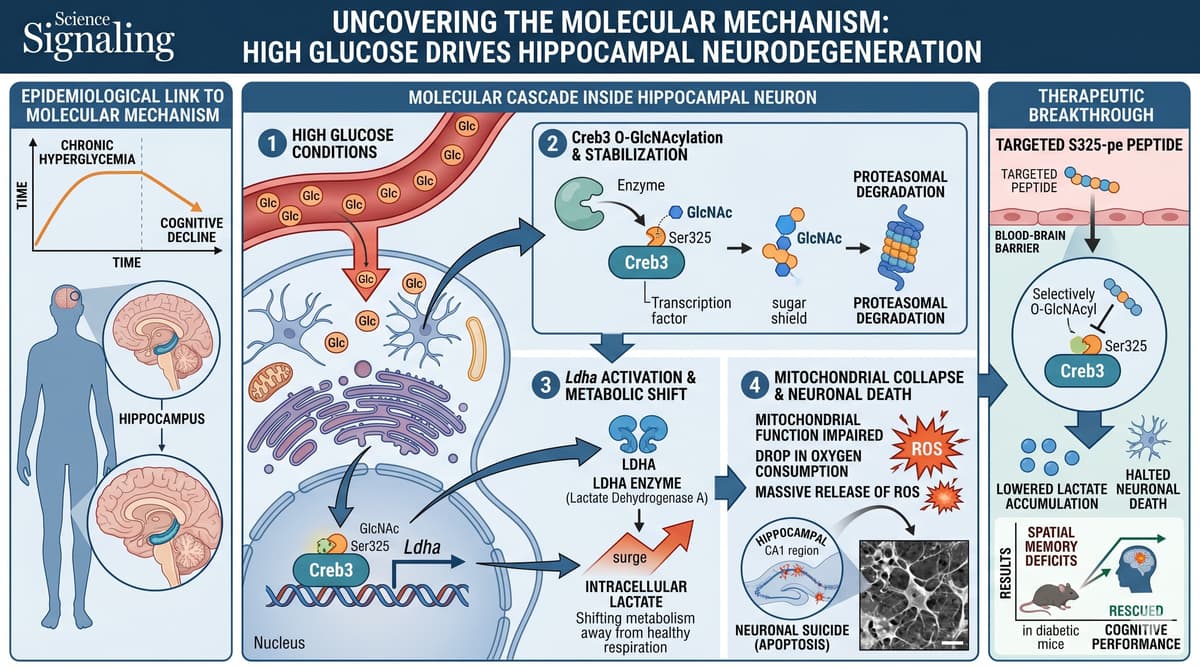
Diabetes has long been associated with an increased incidence of dementia, but the biochemical bridge between hyperglycemia and brain aging remained vague. Recent work published in Science Signaling clarifies that chronic excess glucose forces hippocampal neurons into a hyper‑glycolytic state, diverting pyruvate into lactate rather than oxidative phosphorylation. This metabolic rerouting not only depletes cellular oxygen consumption but also generates reactive oxygen species that erode neuronal integrity. By quantifying plasma lactate in a prospective human cohort, the authors demonstrated a clear threshold—around 2.6 mM—beyond which the risk of mild cognitive impairment rises sharply.
The study pinpointed a single post‑translational modification as the linchpin of this cascade. High glucose promotes O‑GlcNAcylation of the transcription factor Creb3 at serine‑325, shielding it from proteasomal degradation. Stabilized Creb3 then drives overexpression of the LDHA gene, amplifying lactate dehydrogenase A activity and flooding neurons with lactate. To counteract this, researchers engineered a cell‑penetrating peptide, S325‑pe, that selectively blocks the O‑GlcNAc site. In diabetic mice, the peptide normalized lactate levels, prevented apoptosis in the CA1 hippocampal region, and fully restored spatial learning performance.
These findings open several translational pathways. Plasma lactate emerges as a cheap, actionable biomarker for early neurodegeneration risk, complementing continuous glucose monitoring used by many biohackers. Pharmacologically, the Creb3 O‑GlcNAcylation axis offers a novel drug target; small‑molecule inhibitors or peptide mimetics could eventually replace invasive peptide delivery. Clinicians may also need to recalibrate metformin prescriptions, balancing its longevity benefits against lactate‑related neurorisk. Meanwhile, lifestyle measures that blunt post‑prandial glucose spikes—zone‑2 exercise, resistance training, or low‑glycemic diets—remain the first line of defense against the metabolic trap that fuels cognitive decline.
The Sugar Brain Drain: How Diabetes-Induced Lactate Accumulation Triggers Cognitive Decline
Comments
Want to join the conversation?