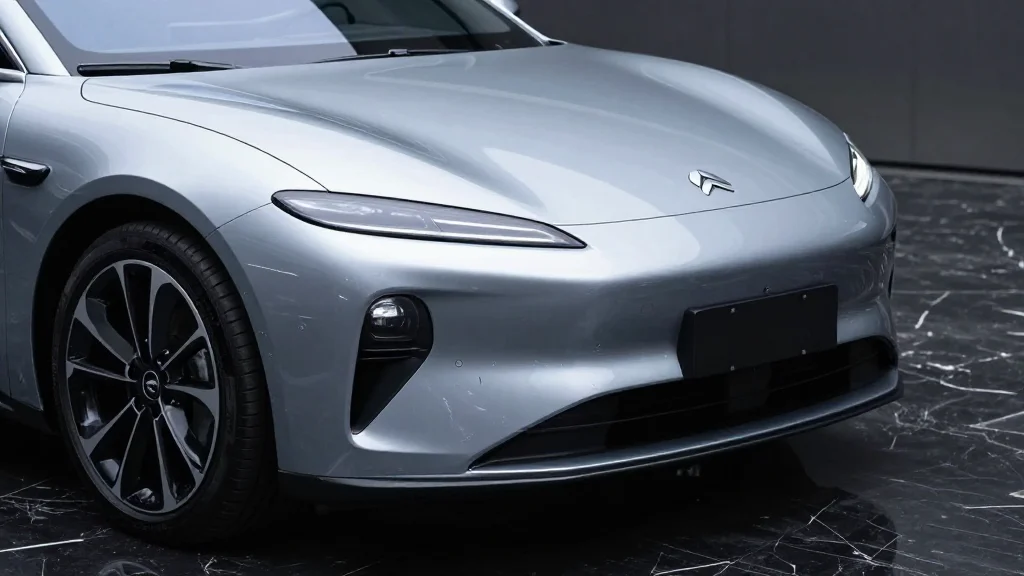
BYD Files Regulatory Paperwork for Seal 08 Luxury EV with 684 Hp Blade Battery 2.0

Companies Mentioned
Why It Matters
The Seal 08 filing illustrates a pivotal shift in the luxury EV landscape: a Chinese mass‑market automaker is now targeting the high‑end segment with performance figures that rival established premium brands. By coupling a 1,000 km range with ultra‑fast charging, BYD could redefine consumer expectations for convenience and capability, forcing incumbents to accelerate their own technology rollouts. Moreover, BYD’s vertical integration of battery production and its low‑cost LFP chemistry could pressure pricing across the luxury EV market, potentially making high‑performance electric cars more accessible to a broader affluent audience. The move also highlights China’s growing influence in shaping global EV standards, from battery architecture to autonomous driving systems.
Key Takeaways
- •BYD filed MIIT paperwork for the Seal 08 sedan, confirming a dual‑motor AWD version with 684 hp.
- •Blade Battery 2.0 promises over 1,000 km range and 400 km of charge in five minutes.
- •Seal 08 dimensions (5,150 mm L, 1,999 mm W, 3,030 mm wheelbase) place it in the full‑size luxury segment.
- •Launch slated for Q2 2026, positioning BYD against Tesla, Mercedes‑EQ, and Porsche in China’s premium EV market.
- •BYD’s LFP battery strategy could undercut nickel‑cobalt rivals on cost and supply security.
Pulse Analysis
BYD’s entry into the luxury EV arena with the Seal 08 reflects a broader maturation of Chinese automakers from volume‑focused players to full‑spectrum competitors. Historically, BYD built its reputation on affordable electric buses and compact cars, leveraging its in‑house battery expertise to dominate the domestic market. The Seal 08 represents a strategic pivot: leveraging that battery mastery to deliver performance and range that were once the exclusive domain of Western and German marques.
The timing is critical. Tesla’s Model S Plaid, with its 1,020 hp output, has set a high bar for performance, but its price remains a barrier for many Chinese buyers. BYD’s LFP‑based Blade Battery 2.0, while offering slightly lower energy density than nickel‑cobalt chemistries, compensates with safety, cost, and a robust fast‑charging ecosystem. If BYD can deliver the claimed 1,000 km range without sacrificing charging speed, it could shift consumer calculus toward domestic luxury EVs, especially as Chinese regulators continue to favor homegrown technology.
Competitive dynamics will hinge on how quickly rivals can match BYD’s charging infrastructure and price points. Mercedes‑EQ’s EQS and Porsche’s Taycan have begun rolling out 800 V platforms, but their reliance on imported battery cells may limit scalability. BYD’s vertically integrated supply chain could allow it to iterate faster, introduce new variants (such as the upcoming Sealion 08 SUV), and potentially export the platform to emerging markets hungry for high‑performance EVs at a lower cost. The Seal 08 filing, therefore, is not just a product announcement; it is a bellwether for the next phase of the global luxury EV competition, where Chinese manufacturers are poised to become serious challengers rather than niche players.
BYD Files Regulatory Paperwork for Seal 08 Luxury EV with 684 hp Blade Battery 2.0
Comments
Want to join the conversation?
Loading comments...