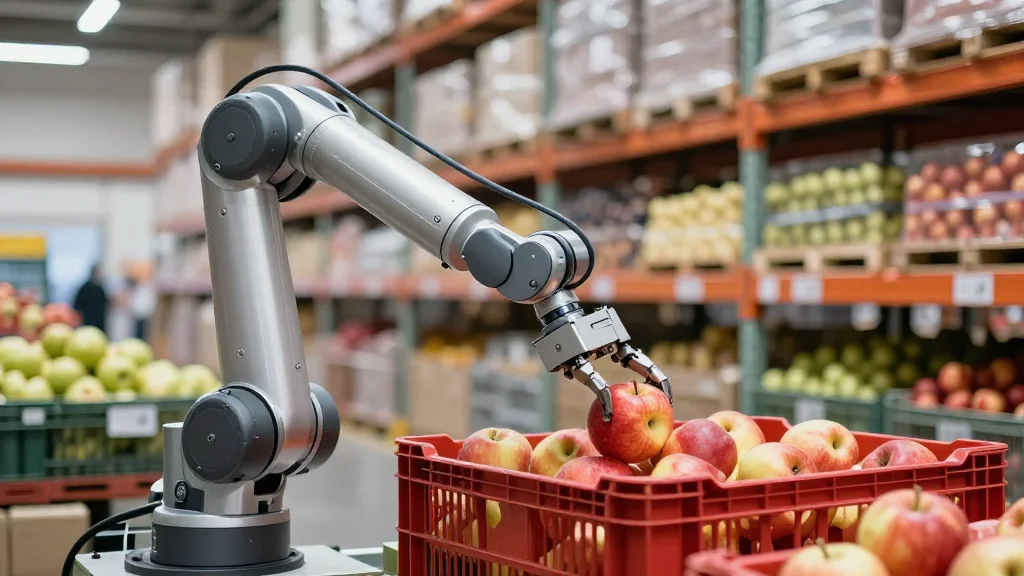
How Automation Is Helping Grocers Improve Fresh Food Logistics
Why It Matters
Accelerated, reliable fresh‑food logistics protect margins and improve shopper loyalty, giving retailers a decisive competitive edge in a crowded market.
Key Takeaways
- •Unified automation cuts inbound‑to‑shelf time for perishables.
- •FIFO/FEFO software reduces spoilage and waste.
- •Overhead gantry robots raise storage density up to 50%.
- •Modular systems adapt quickly to demand spikes or labor gaps.
- •Real‑time traceability builds consumer trust and meets regulations.
Pulse Analysis
The grocery sector faces mounting pressure to deliver fresher, more diverse produce while keeping prices competitive. Traditional manual handling struggled with the time‑sensitive nature of perishables, leading to waste and stockouts. Recent advances in robotics and warehouse‑control software now merge storage, picking, and sequencing into a single, high‑speed flow, enabling retailers to move items from receipt to shelf in minutes rather than hours. By embedding FIFO and FEFO logic, these platforms automatically prioritize older inventory, slashing spoilage rates and improving overall product quality.
Beyond waste reduction, the new generation of automation maximizes cubic space. Overhead gantry robots retrieve crates from densely packed, floor‑based grids, increasing usable storage capacity by as much as 50 percent without expanding a facility’s footprint. This density gain supports the growing consumer appetite for specialty, organic, and locally sourced SKUs, allowing grocers to broaden assortments while maintaining rapid fulfillment. Labor efficiency also improves, as fewer manual touchpoints translate into lower error rates and steadier throughput, even during peak holiday seasons.
Strategically, these technologies deliver a triple advantage: cost predictability, regulatory compliance, and brand trust. Modular, pre‑engineered systems can be scaled or re‑configured to address sudden demand spikes or labor shortages, preserving shelf availability and protecting profit margins. Integrated barcode scanning and real‑time data capture provide end‑to‑end traceability, satisfying both consumer demand for transparency and tightening food‑safety regulations. As automation becomes a standard component of grocery supply chains, retailers that invest early will likely see stronger loyalty, reduced waste expenses, and a more resilient distribution network.
How Automation is Helping Grocers Improve Fresh Food Logistics
Comments
Want to join the conversation?
Loading comments...