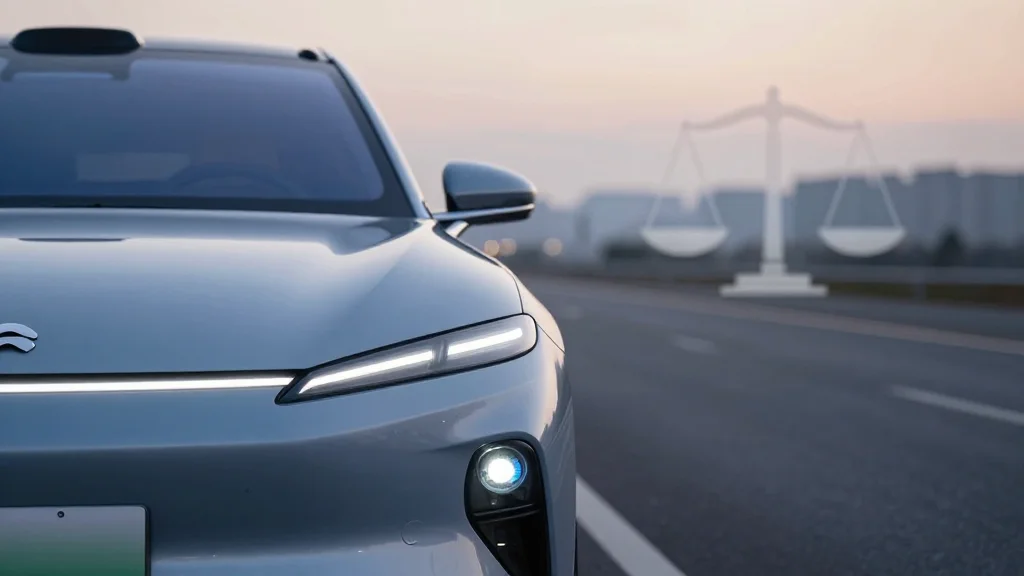
BYD Offers Unlimited Accident Coverage for God’s Eye, Challenging Tesla’s Legal Stance

Companies Mentioned
Why It Matters
The BYD announcement reframes the marketing narrative around driver‑assist technology from a feature highlight to a liability guarantee, potentially resetting consumer expectations for safety and insurance. If successful, BYD could force other OEMs to adopt similar policies, accelerating a market shift toward more consumer‑friendly risk allocation. For Tesla, the contrast underscores the legal and reputational risks of maintaining a driver‑responsibility stance while promoting near‑autonomous capabilities. The $243 million verdict serves as a tangible reminder that marketing language can become a legal liability, prompting a reevaluation of how autonomous‑driving claims are communicated to the public and regulators.
Key Takeaways
- •BYD pledges unlimited, no‑cap coverage for accidents when God’s Eye is active, effective immediately via OTA update.
- •Tesla faces a $243 million jury verdict for a 2019 Autopilot crash, reinforcing its driver‑liability position.
- •Wang Chuanfu said the policy shows BYD’s "absolute confidence in its own technology."
- •Tesla called the lawsuit "a fiction concocted by plaintiffs’ lawyers," per its public statement.
- •Both companies operate Level 2 ADAS systems, but their marketing approaches to liability diverge sharply.
Pulse Analysis
BYD’s unlimited coverage is a calculated marketing gamble that leverages its massive data pool—200 million kilometers per day—to mitigate perceived risk. By turning a technical limitation (Level 2 classification) into a consumer‑focused guarantee, BYD differentiates itself in a crowded EV market where brand trust is increasingly tied to safety assurances. Historically, automakers have shied away from assuming direct liability for ADAS failures; BYD’s move could set a new benchmark, especially in markets where insurance costs are a major purchase driver.
Tesla’s entrenched legal defense reflects a different strategic calculus. The company has built its brand on the promise of future full autonomy, yet it continues to emphasize driver responsibility to limit exposure. The $243 million judgment illustrates the financial stakes of that approach. As regulators tighten scrutiny on marketing claims, Tesla may need to balance its aspirational messaging with more concrete safety guarantees, or risk further costly litigation.
Looking ahead, the clash could catalyze broader industry standards for ADAS marketing. If regulators respond by mandating clearer disclosures about driver responsibility, both BYD and Tesla may be forced to adjust their messaging. Meanwhile, insurers will watch closely; BYD’s policy could disrupt traditional auto‑insurance models, prompting new products that align with manufacturer‑provided liability coverage. The outcome will shape not only brand perception but also the financial architecture of autonomous‑driving ecosystems.
BYD Offers Unlimited Accident Coverage for God’s Eye, Challenging Tesla’s Legal Stance
Comments
Want to join the conversation?
Loading comments...