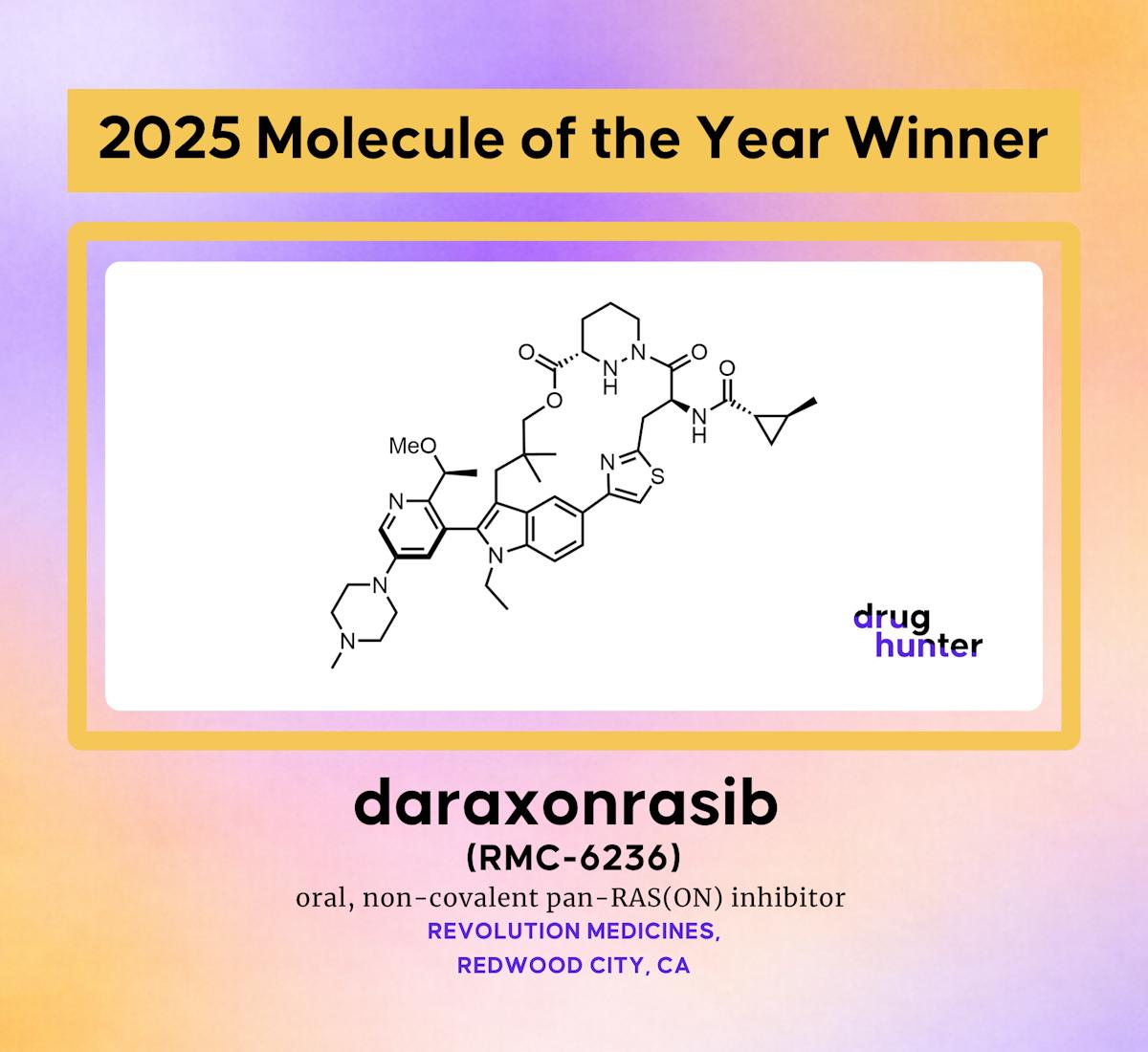
Daraxonrasib (RMC-6236): The 2025 Molecule of the Year

Key Takeaways
- •First oral pan‑RAS (ON) molecular glue inhibitor approved for trials
- •Shows 47% response rate in first‑line metastatic PDAC monotherapy
- •Targets active GTP‑bound RAS across KRAS, NRAS, HRAS mutants and wild‑type
- •Enables simultaneous inhibition of mutant and wild‑type RAS signaling
- •Drives shift from mutation‑specific to broad‑spectrum RAS therapeutics
Pulse Analysis
The RAS family has long been labeled "undruggable" because its smooth surface and high nucleotide affinity resist conventional small‑molecule binding. Early breakthroughs, such as covalent KRAS(G12C) inhibitors, proved that selective pockets could be exploited, yet they left most RAS‑mutant tumors untreated. Daraxonrasib flips the paradigm by forming a tri‑complex with cyclophilin A, creating a novel binding interface that locks the protein in its active, GTP‑bound conformation. This molecular‑glue strategy sidesteps the need for mutation‑specific pockets and opens a therapeutic window across KRAS, NRAS and HRAS, both mutant and wild‑type, marking a watershed moment for target‑class drug discovery.
Clinical readouts released in 2025 underscore the molecule’s promise. In second‑line metastatic PDAC, daraxonrasib delivered a median progression‑free survival of 8.5 months and overall survival exceeding 13 months, outcomes that compare favorably with existing standards. More strikingly, first‑line monotherapy achieved a 47% objective response rate and 89% disease‑control rate, while combination with gemcitabine‑nab‑paclitaxel pushed response to 55%. These data suggest that pan‑RAS inhibition can translate into tangible tumor shrinkage even in a disease historically refractory to targeted therapy, positioning daraxonrasib as a potential new backbone for PDAC regimens.
Looking ahead, the ongoing Phase 3 RASolute 303 trial will test whether the breadth of daraxonrasib’s mechanism can be replicated across other RAS‑driven malignancies, such as colorectal and lung cancers. Success could redefine the competitive landscape, forcing mutation‑specific drugs to reposition as niche options while broad‑spectrum agents become first‑line standards. Moreover, the molecular‑glue platform may inspire analogous approaches for other challenging targets, accelerating a wave of macrocyclic, beyond‑Rule‑of‑5 therapeutics. Investors and biotech firms are watching closely, as daraxonrasib’s trajectory could reshape both clinical practice and R&D pipelines in oncology.
Daraxonrasib (RMC-6236): The 2025 Molecule of the Year
Comments
Want to join the conversation?