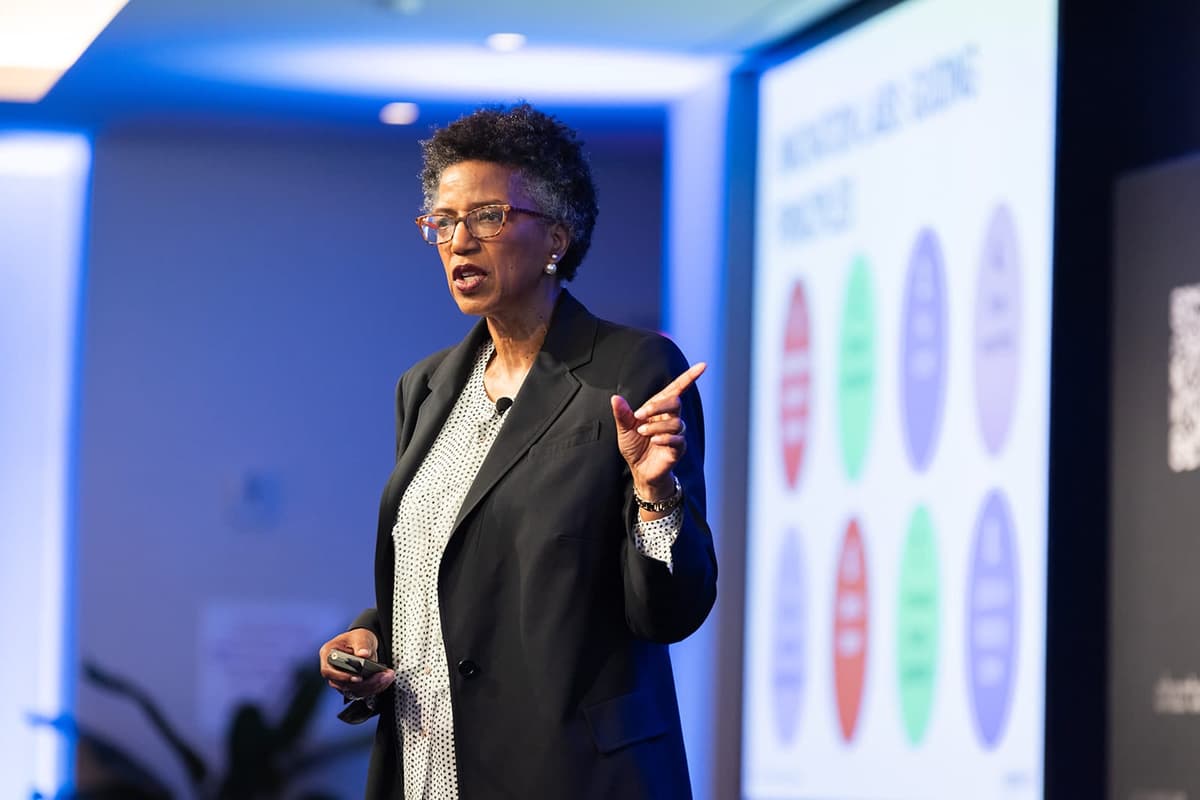
How to Build a Genius Culture
Harvard Business School professor Linda A. Hill’s new book *Genius at Scale* argues that building a culture of collaboration, experimentation, and continuous learning is more critical than hiring star talent for sustained innovation. The book spotlights how leading firms such as Mastercard, Delta Air Lines, Procter & Gamble, and Pfizer have institutionalized these cultural practices to embed genius into their employer brands. By detailing concrete programs—from cross‑functional labs to internal incubators—Hill provides a roadmap for companies seeking to scale creativity across the organization.

The Debate over What's Driving Entry-Level Hiring
Recent studies from the New York Federal Reserve and an academic paper argue that the rise of remote work is linked to a slowdown in graduate hiring and higher unemployment among Gen Z. The research points to a correlation between work‑from‑home...

Why Companies Are 'Treading Water' On Leadership Development
Companies are increasingly "treading water" on leadership development as budgets shrink and AI reshapes talent priorities. Wharton professor Peter Cappelli warns that layoffs, expanded spans of control, and rising burnout are accelerating a decades‑long decline in investment in people. The...

How 1Password Transformed Its Employer Brand to Compete for Cybersecurity Talent
Since Katya LaViolette became chief people officer in 2022, 1Password has expanded from under 500 to more than 1,500 employees across six countries. She repositioned the employer brand from a peripheral concern to a strategic asset, targeting the ultra‑scarce pool...
The New Talent Imperative: How Leading Organizations Are Getting Serious About AI Skills
Leading firms are recognizing that AI tool deployment alone won’t deliver value without a parallel focus on employee AI capabilities. A recent webinar highlighted how organizations are defining, sourcing, assessing, and developing AI skills for non‑technical roles, from basic literacy...
How One Company Shrunk Its Performance Review Process From Eight Weeks to 48 Hours
Remote, the HR‑software provider, slashed its performance‑review cycle from eight weeks to just 48 hours after a three‑year overhaul led by Chief People Officer Barbara Matthews. The previous system suffered from rating inflation, misaligned expectations, and low trust, mirroring broader...
Agentic AI as the Next Major HR Technology Frontier
Agentic AI—systems that act autonomously, make decisions and collaborate across workflows—has emerged as the next major frontier in HR technology. A recent webinar featuring ADP, Zapier and Charter executives clarified how agentic AI differs from current predictive tools and highlighted...

Why the New York Fed Created a ‘Department of Doubt’
The New York Federal Reserve created an internal Applied Critical Thinking (ACT) unit, dubbed the “Department of Doubt,” to inject systematic skepticism into its policy‑making process. Led by Meg McConnell, the team runs black‑swans simulations, documents forecasts, and forces staff to consider...

Charter: How to Combat the Physical Toll of Desk Work
NPR host Manoush Zomorodi’s new book “Body Electric” and its accompanying study reveal that brief, frequent movement breaks dramatically reduce the physical strain of sedentary desk work. The program, which engaged 23,000 participants, showed that five minutes of gentle activity...

Book Briefing: ‘Mission Ready’ by Lindy Elkins-Tanton
Lindy Elkins‑Tanton, director of the Berkeley Space Sciences Laboratory and leader of NASA’s $1.2 billion Psyche asteroid mission, has released “Mission Ready,” a guide on building high‑performing teams under pressure. Drawing from her experience steering the Psyche spacecraft, she argues that...

Why Your AI Efforts Have a Culture Problem
Microsoft’s 2026 Work Trend Index, based on a survey of 20,000 workers in ten countries, reveals that organizational culture and manager support are twice as predictive of employees perceiving AI as beneficial compared with individual mindsets. Only 19% of respondents...
Spring Cleaning for Your AI Tools
AI chatbots like Anthropic's Claude now retain a rolling memory of prior conversations, updating it every 24 hours to provide contextual continuity. Users can disable this memory, but doing so strips the model of useful context. Similar persistent‑memory features exist...

A Case Study for Redesigning Work for Longer Careers
U.S. life expectancy hit a record 79 years, prompting workers to extend their careers well past traditional retirement ages. People over 75 now represent the fastest‑growing segment of the American labor force, and a larger share are staying employed beyond...
Leading in the Age of AI: When Management Becomes the Differentiator
Organizations are pouring resources into AI fluency—employees’ ability to use AI tools, build workflows, and embed AI in daily tasks. Yet a growing constraint is emerging: as AI expands team capabilities, performance will increasingly hinge on how those teams are...

How Team Familiarity Can Speed Decision Making During a Crisis
A new study led by Wharton postdoctoral fellow Alexandra Bray shows that team familiarity dramatically speeds decision making, especially in low‑uncertainty crises. In routine settings, teams that have worked together make choices about six minutes faster than ad‑hoc groups. When...