Obituary: Peter H. Burghart
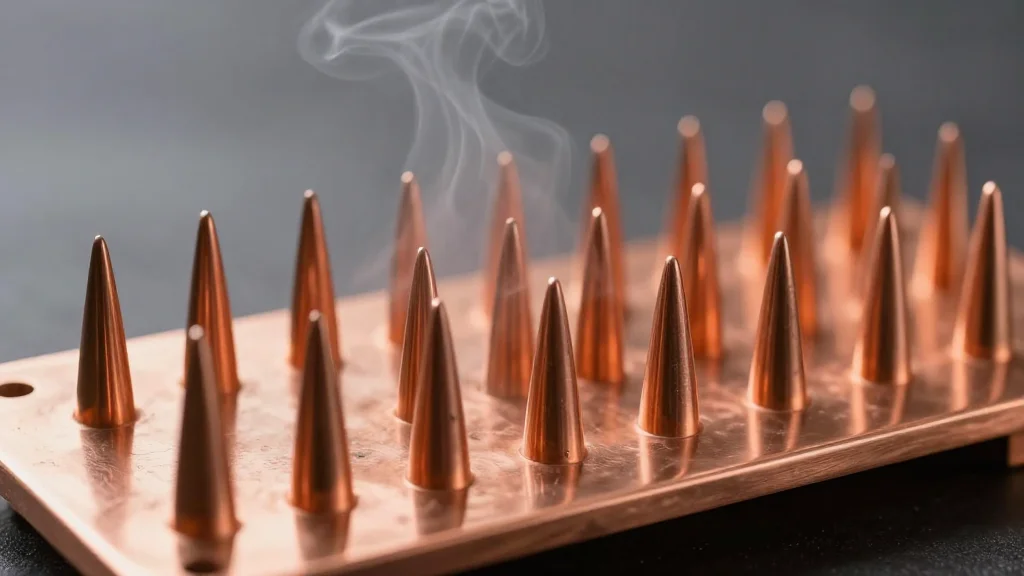
Researchers have developed an electrochemical 3D‑printing method that fabricates copper “Godzilla” spikes for data‑center cooling plates. The towering spikes dramatically increase surface area, boosting heat‑transfer efficiency by up to 40% compared with conventional flat plates. Early modeling suggests the technology could slash data‑center energy consumption by roughly 15%, offering a hardware‑level solution to the rising power demands of AI workloads. The process is compatible with existing manufacturing lines, positioning it for rapid industry adoption.

Conscious Spending Can Unlock Greener Science
Researchers are urged to adopt conscious spending habits to curb chemical waste and lower lab operating costs. Buying smaller reagent batches and recycling high‑use solvents can shrink the “chemical graveyard” while extending the life of existing inventories. Green technologies such...

Genome Mining Unlocks the Chemistry of Biocontrol Fungi
Researchers at the Technical University of Denmark applied genome‑mining tools to 82 Hypocreales fungi, uncovering dozens of secondary metabolites, many of which are non‑ribosomal peptides. The study revealed both common small peptides and rare large 18‑member structures, and successfully linked...
Silicon Insertion Methods Join Skeletal-Editing Toolbox
Two research teams have unveiled complementary silicon‑insertion strategies that expand the skeletal‑editing repertoire. Hao Wei’s group uses a nickel catalyst and readily available dialkylsilanes to insert silicon into benzofuran carbon‑oxygen bonds, forming oxasilacycles with only hydrogen as by‑product. Michinori Suginome’s team employs...

US and European Chemical Companies Expect Iran War Profit Surge
The war in Iran and the closure of the Strait of Hormuz have halted petrochemical output in the Persian Gulf, prompting U.S. and European chemical firms to anticipate a profit surge in 2026. A sharp rise in the oil‑to‑natural‑gas price...
Policy Watch: FDA Looks to Expand Real-Time Drug Clinical Trials
The FDA has launched an AI‑driven pilot that streams clinical‑trial data in real time for AstraZeneca and Amgen’s lymphoma and lung‑cancer studies, and is now seeking public input to broaden the approach. The Ninth Circuit Court declined to compel the...
C&EN Weekly Chemistry News Quiz, May 1
The latest C&EN weekly quiz spotlights several breakthrough chemistry stories. University of Oregon researchers demonstrated that cyclic voltammetry can accurately gauge coffee roast strength, offering a rapid quality‑control tool. Sun Pharma’s $11 billion acquisition of Organon propels it to the fifth‑largest...

Researchers Measure Overlooked Stratospheric Aerosols
In 2023, NASA’s WB‑57 high‑altitude aircraft, equipped with a custom instrument, measured aerosol particles smaller than 150 nm in the lower stratosphere for the first time. The data revealed that these ultra‑fine, organic‑rich particles dominate the surface area available for stratospheric...

European Lawmakers Shelve Major Revision of REACH Chemical Regulation
European Parliament’s ENVI committee voted to shelve the ambitious overhaul of the EU’s REACH chemical regulation, arguing that the bloc needs certainty and predictability amid economic pressure. Environment Commissioner Jessika Roswall confirmed the cancellation, shifting focus to simplifying and modernising...
Directly Decorating Double Bonds
A team led by Tobias Ritter at the Max Planck Institute has unveiled a general alkene alkylation method that couples alkyl‑zinc reagents, derived from inexpensive carboxylic acids, to thianthrenium‑activated olefins. The palladium‑catalyzed cross‑coupling works on virtually any alkene with an...
Environmental DNA Brings the East River’s Fish Population Into Focus
Researchers from The Rockefeller University used environmental DNA (eDNA) metabarcoding to catalog vertebrate life in New York City’s East River over a year. The technique identified dozens of fish species and even traced human dietary DNA, such as chicken, despite...
New York Center Ranks Academic Institutions for ‘Industrial Readiness’
The Cure innovation center in New York City unveiled an "industrial readiness" index that evaluates more than 300 U.S. academic institutions on their ability to turn biomedical research into commercial products. Rankings place Harvard, Stanford, Penn, MIT and UCSF at...

Astellas’s R&D Head Talks Strategy Ahead of Looming Patent Cliff
Astellas Pharma faces a looming patent cliff as its blockbuster prostate‑cancer drug Xtandi, which generated about $4.6 billion in the 2025 fiscal year, loses U.S. patent protection next year. To offset the expected revenue hit, chief R&D officer Tadaaki Taniguchi is accelerating...

Jellyfish-Inspired Gel Captures Nanoplastics
German researchers have engineered a temperature‑responsive gel that mimics jellyfish mucus to capture nanoplastics—plastic particles smaller than 1 µm—from water. The synthetic amphiphilic copolymer self‑assembles into a 3‑D network that adsorbs hydrophobic nanoplastics, achieving 68‑100 % removal within 90 minutes when heated. Cooling...

CAS Built an Agentic AI Named Newton
The American Chemical Society’s CAS division launched CAS Newton, an agentic conversational AI built on its curated scientific literature across chemistry, biology, materials science and patents. Newton is embedded in SciFinder and BioFinder and will soon support secure enterprise integrations with...