Federal Movers & Shakers | May 1, 2026
The federal government announced a slate of senior appointments this week, including Richard O’Malley as Deputy Under Secretary for Defense Acquisition and Sustainment, Abby Warren as Assistant Secretary for Export Administration at the Bureau of Industry and Security, and Jeffrey Ledbetter as Inspector General for HUD, all requiring Senate confirmation. The Department of Energy named Patricia McBride as Chief Research Officer at Fermilab, while the Tennessee Valley Authority installed Mike Skaggs as interim CEO. Additional designations include Julie Broussard Berko as COO of the Federal Mediation and Conciliation Service and Anthony Santoro as Acting U.S. Marshal for West Virginia. These moves reflect a broader staffing push across defense, commerce, energy, and justice agencies.

FAS 2.0 Becomes ASD/Create: GSA’s Quiet Rewiring of Federal Procurement Power
The General Services Administration is rebranding its Federal Acquisition Service as Acquisition Solutions Development/Create (ASD/Create), rolling out the change the week of May 4. The reorganization shifts the agency from a neutral contract facilitator to a strategic buyer that centralizes portfolio‑level...

The Costs of Contract Duplication
The Army’s Marketplace for Acquisition of Professional Services (MAPS) is duplicating multiple existing federal contracting vehicles, inflating bid, proposal, and administration costs for both government and industry. Large firms are spending hundreds of thousands of dollars each, while the cumulative...

A Court Ruling Protected the Institute for Museum and Library Services, but the Fight Isn’t Over
A federal district court ruled that the Institute of Museum and Library Services (IMLS) cannot be dismantled, and the administration withdrew its appeal, preserving the agency’s staff and authority. Meanwhile, the White House’s FY 2027 budget proposal seeks to eliminate all...

Markets Have Felt Shaky for Months, but the Returns Tell a Very Different Story
Despite months of headline volatility, federal Thrift Savings Plan (TSP) funds have posted solid gains this year. The C Fund swung from a 4.3% loss at the end of Q1 to a 4.5% gain by mid‑April, while the S Fund...

This Is the Public Sector AI Cheat Code
Jordan Morrow, a leading data‑literacy expert, will speak at Qlik’s 2026 Public Sector Summit in Washington, D.C., where he will cut through AI hype and outline a human‑centered roadmap for government agencies. He frames data literacy as essential for the...

How Shared Experience Plays a Role in Helping People Reset Under Sustained Stress
The Veteran Tickets Foundation (VTF), founded in 2008, provides free tickets to live sports, concerts and family shows for veterans, reservists, and first responders. A third‑party impact study surveyed more than 1,600 participants and found that attending events improves well‑being,...

DoD Strikes Deals with Major Tech Firms to Deploy AI on Classified Networks
The U.S. Department of Defense announced agreements with eight major technology firms—including SpaceX, OpenAI, Google, NVIDIA, Microsoft, Amazon Web Services, Reflection, and Oracle—to embed advanced artificial‑intelligence models into its Impact Level 6 and Impact Level 7 classified networks. The move expands the...

Pentagon Asks Congress for New Tools to Attract, Retain Cyber Talent
The Pentagon has asked Congress to approve new personnel tools for fiscal 2027 aimed at strengthening its cyber workforce. The proposal would broaden the cyber interagency transfer authority, give cyber excepted‑service (CES) employees overseas‑return rights, and shorten the CES probationary...

USDA Employees in Food Assistance Programs Folded Into Relocation Plans
The U.S. Department of Agriculture announced that most Food and Nutrition Service (FNS) employees will be moved from its Alexandria, Virginia headquarters to five regional hubs across the country. The relocation will place SNAP staff in Indianapolis, child‑nutrition teams in...

Extreme Weather Is Forcing Federal Agencies to Rethink Who Bears the Risk in Superfund Sites
EPA’s Office of Inspector General released a national screening of 157 federal‑facility Superfund sites, highlighting that extreme weather—sea‑level rise, flooding, and wildfires—could overwhelm existing remediation systems. The report notes roughly 13 million residents live within three miles of these sites, exposing...

Space Power Is the Next U.S. Strategic Vulnerability. Here’s Why.
Power generation in space is emerging as the United States' next strategic vulnerability, as the ability to produce, deploy, and replenish energy for proliferated satellite constellations becomes a core deterrence factor. Declining launch costs have shifted focus from ultra‑efficient, low‑mass...

Healthcare Affordability Part 4: How Annuitants Can Use Expected Healthcare Costs to Help Choose the Right Health Plan
Retirees who receive federal annuities must navigate Medicare Parts A and B while deciding between traditional FEHB coverage, Medicare Advantage (MA) offered through FEHB carriers, or commercial MA plans that require suspending FEHB. Part B carries a $202.90 monthly premium, with...

White House Says Funds to Pay TSA and Other Homeland Security Workers Will ‘Soon Run Out’
The White House warned that emergency funds used to pay TSA and other DHS employees will run out by May, creating a looming risk of airport disruptions. The Office of Management and Budget urged the House to approve a Senate‑backed...

Good Policy Still Depends on Numbers the Public Can Trust and on Systems Built to Sustain Them
The Economic Indicators Initiative, spearheaded by Brookings senior fellow John Sabelhaus and funded by the Alfred P. Sloan Foundation, convenes think tanks across the political spectrum to safeguard the nation’s core economic statistics. It targets four pillars—inflation, labor‑force metrics, GDP...

Some of the Federal Government’s Most Trusted Public Data Tools Aren’t Being Maintained
USA Facts evaluated 55 federal data tools, finding two offline, roughly 40% missed scheduled updates, and 10% suffered reduced functionality. The gaps stem from opaque reasons, including funding lapses from the 43‑day shutdown and staffing changes. Missing or delayed data...

Army’s Project ARIA Seeks to Accelerate AI Adoption Across the Force
The U.S. Army launched Project ARIA to fast‑track artificial‑intelligence integration across its force. The initiative focuses on three thrusts: a “model armory” that delivers AI tools to soldiers at the tactical edge, automating the Planning‑Programming‑Budgeting‑Execution (PPBE) process, and building a...

Social Security Expands Performance Award Eligibility, as Other Agencies Rein in Theirs
The Social Security Administration is broadening performance‑award eligibility, adding employees with 3.5‑3.7 ratings and increasing bonus rates to 1.2‑1.5% of base salary. In contrast, the Health and Human Services department capped Quality Step Increase awards at 3% of eligible staff,...

GAO Flags Hundreds of Classified Contractor Security Violations
The Government Accountability Office reported that the Defense Counterintelligence and Security Agency (DCSA) conducted over 4,600 security reviews in fiscal 2025, uncovering 815 classified‑information violations by cleared contractors. Data spills accounted for nearly 60% of those breaches, while other issues...

How Automated Testing Helps Agencies Meet DoD Modernization Requirements
U.S. defense agencies are turning to AI‑enabled automated testing to meet the Department of Defense’s Acquisition Transformation Strategy (ATS) requirements. Manual regression testing can no longer keep pace with rapid ERP upgrades, high‑impact cloud migrations, and legacy‑modern system integrations. Continuous,...

A Court Decision Has Strengthened the CFPB’s Footing as Debates over Its Future Continue
A federal court ruling in April 2026 forced the Consumer Financial Protection Bureau to request funding from the Federal Reserve’s earnings, interpreting “earnings” as revenues rather than profits. The decision, issued by Judges Davila and Jackson, obligates the Fed to...
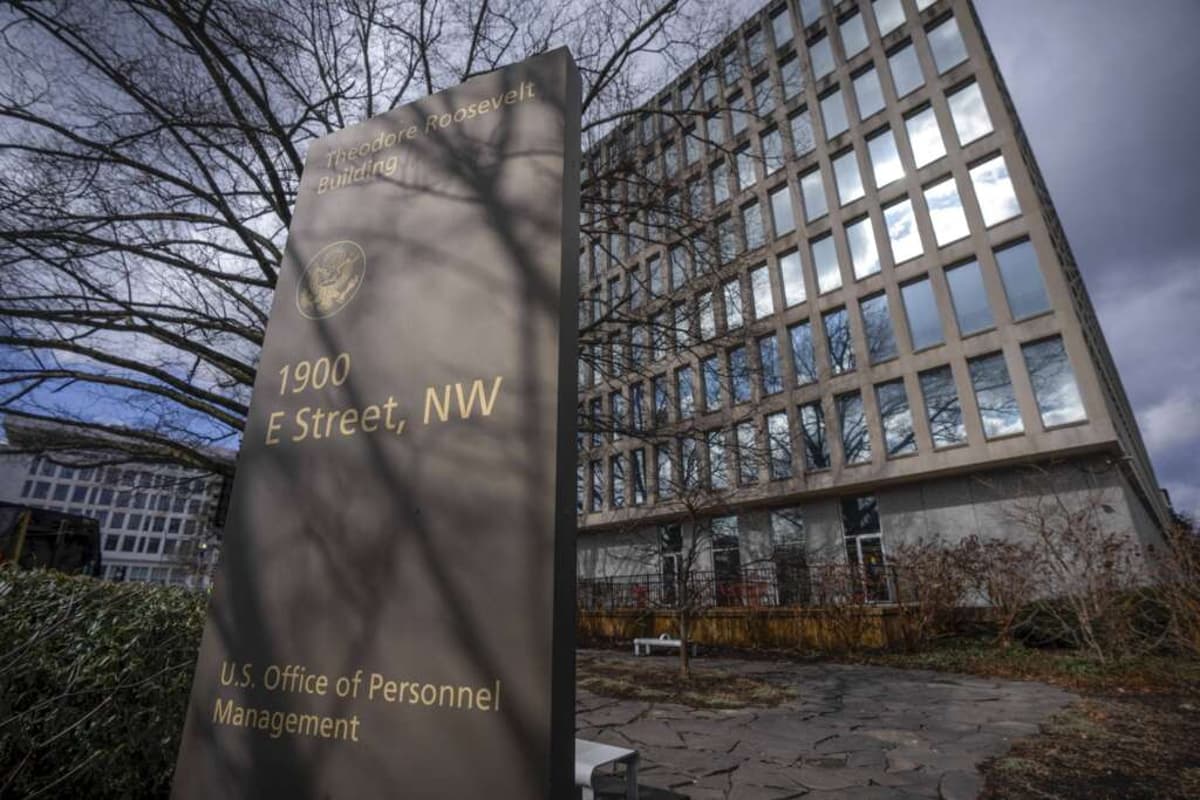
OPM’s 2027 Budget Proposal Hinges on Modernizing Federal HR
The Office of Personnel Management (OPM) submitted its FY 2027 budget request, proposing $375 million in discretionary spending—$43 million less than the House’s $418 million recommendation and below current levels. Despite a shrinking workforce of roughly 2,074 FTEs, OPM earmarks funds for a sweeping...

Rev. 3 Is Coming – Start Preparing for the Next CMMC Requirement
The Department of Defense’s Cybersecurity Maturity Model Certification (CMMC) will soon require compliance with NIST SP 800‑171 Revision 3, which supersedes the current Rev 2 baseline. Rev 3, released in May 2024, adds three new control families—supply‑chain security, incident response, and advanced threats—while reducing the...

CMMC Won’t Fail on Controls. It Will Fail on Proof.
The Cybersecurity Maturity Model Certification (CMMC) is evolving from a checklist of controls to a verification regime that demands provable evidence. Contractors often have the right technical safeguards but lack the ability to produce continuous, defensible proof on demand. This...

Social Security Plans ‘Limited’ Rollout of Systems to Manage Its Workload
The Social Security Administration is debuting its new Appointment Scheduling Calendar (ASC) and Workload Management (WLM) systems in Nevada and Tennessee on April 25, after pausing a planned nationwide rollout. The limited deployment will let the agency gauge impacts on customer...

Two Administrative Moves Are Getting the Attention of Federal Employees and Retirees
The Office of Personnel Management has issued a new request for detailed medical and pharmacy claims data from Federal Employees Health Benefits (FEHB) plans, prompting privacy concerns among federal workers. At the same time, the U.S. Postal Service announced a...

Some of the Postal Service’s Highest‑stakes Responsibilities May Be Getting Harder to Carry Out
U.S. Postal Service leaders have warned Congress that rising costs and operational strain could force service cuts, especially in rural areas. Representative Nikki Budzinski emphasized the need to preserve universal service and urged lawmakers to explore cost‑saving reforms—such as pension...
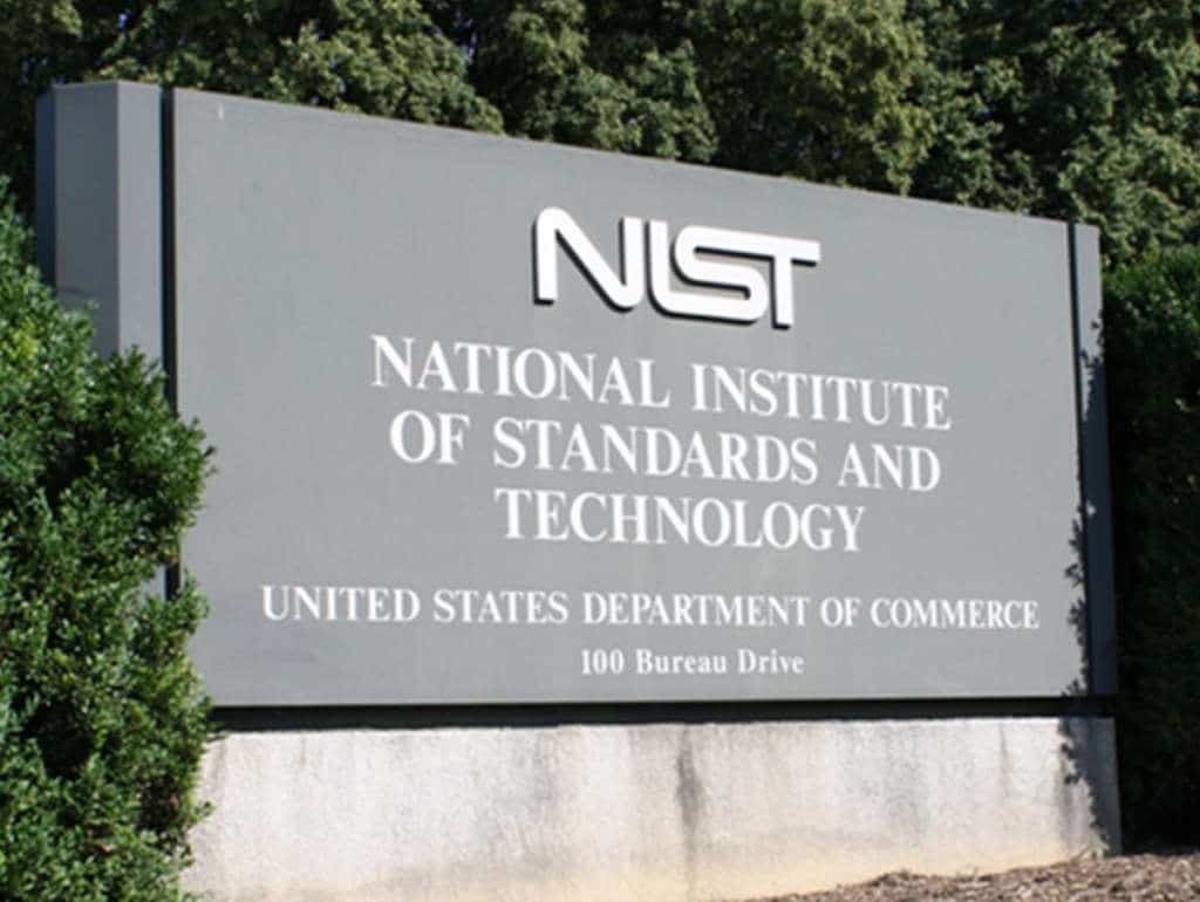
NIST Cyber Center to Launch OT ‘Visibility’ Project
The National Institute of Standards and Technology’s Cybersecurity Center of Excellence is rolling out a new operational‑technology (OT) visibility project aimed at helping critical‑infrastructure owners inventory and monitor legacy assets. The initiative will demonstrate how to achieve OT asset visibility...

House Appropriators Omit Civilian Federal Pay Raise From 2027 Spending Bill
House appropriators advanced the fiscal 2027 Financial Services and General Government (FSGG) spending bill without any provision for a civilian federal pay raise. A Democratic amendment proposing a 3.1% increase was rejected 28‑32 along party lines, widening the gap with...

DoD Seeks to Split Defense Health Program Into Two Accounts in Fiscal 2027
The Pentagon’s FY2027 budget proposes ending the single Defense Health Program and replacing it with two distinct accounts: Combat Operational and Medical Readiness (COMP) and a Private Sector Care Program (PSCP). The request totals $42.5 billion in discretionary spending—$20.3 billion for COMP...

Dr. Oz Announces a 50-State Audit of Medicaid Program Oversight
Dr. Mehmet Oz, CMS administrator, announced a nationwide audit requiring all 50 states to revalidate Medicaid providers within 30 days, expanding the federal anti‑fraud push beyond the states previously targeted. The audit focuses on high‑risk areas and follows recent errors in...

Federal Agencies Still Don’t Speak the Same Identity Language. That Has to Change.
Federal agencies across Defense, Homeland Security, the intelligence community and the FBI operate with fragmented identity systems that lack common data standards and governance. This disjointed architecture creates exploitable seams for adversaries, especially when individuals move between border, law‑enforcement and...

OSINT Is Transforming the Intelligence Battlespace
Representative Scott Perry warns that open‑source intelligence (OSINT) is entering a new era of orchestrated autonomy, where AI agents continuously ingest media, satellite imagery, financial flows and cyber data without human prompts. This shift promises faster, more comprehensive intelligence production...

Quantum Computing Is a National Priority, but Who’s Actually in Charge?
The GAO’s latest review of the National Quantum Initiative reveals that the federal government is spending roughly $200 million annually on quantum computing, yet the strategy lacks clear subordinate objectives and performance metrics. Multiple agencies are involved, but no single entity...

HHS Seeks Employee Reassignments to Tackle Months-Long Reasonable Accommodation Backlog
The Department of Health and Human Services (HHS) is confronting a backlog of over 9,000 reasonable accommodation requests from employees with disabilities. The backlog includes roughly 3,000 cases at the CDC, which accounts for a third of the total. HHS...

Trump Administration Tosses Degree Requirements for Federal IT Managers
The Office of Personnel Management announced that the federal 2210 IT management job series will no longer require a bachelor’s degree, shifting hiring to competency‑based assessments. The change is the first phase of OPM’s Federal Workforce Competency Initiative, which aims...

Republicans Launch a New Effort to Fund the Department of Homeland Security
The Senate voted 52‑46 to launch a budget‑reconciliation effort that would allocate roughly $70 billion to fund Immigration and Customs Enforcement and Border Patrol for the next three years, effectively reopening the Department of Homeland Security after the longest partial shutdown...

The Wrong Enemy in the War on Fraud
The article exposes the 911 S5 botnet, built by Chinese national YunHe Wang, as the largest ever dismantled, compromising over 19 million devices in 200 countries and facilitating fraudulent pandemic unemployment claims that contributed to $5.9 billion in losses. Federal fraud across programs...

The Missing Layer in Federal Data Protection
Federal agencies have long secured data at rest and in transit, but data in use remains vulnerable. Confidential computing, built on trusted execution environments (TEEs), encrypts memory and isolates workloads, offering a third layer of protection. The technology is already...

Sometimes Even a Solid Argument Isn’t Enough to Save a Bid Protest
The U.S. Navy awarded a $109 million best‑value contract for PMW 160 tactical networking, selecting Solute over Noblis by a $7 million margin. Noblis protested, arguing the agency improperly credited Solute’s affiliate past performance in a solicitation that was silent on the issue....

‘A Better Group of People’: A Year After Deep Staffing Cuts, HHS on Track to Grow Its Workforce
A year after slashing 20,000 positions, the Department of Health and Human Services (HHS) reports a headcount of 72,000 and a plan to hire an additional 12,000 employees. Secretary Robert F. Kennedy Jr. said the new hires will better align...

Observability as the Backbone of Compliance in a New Federal Cyber Era
Federal agencies are moving toward continuous compliance validation as AI adoption and a new national cybersecurity strategy raise the stakes for real‑time governance. Lee Koepping argues that observability—beyond simple uptime—must become a unified, enterprise‑wide capability that ties together telemetry, configuration...

Aerospace and Defense: Innovating Securely at Speed
Aerospace and defense firms face mounting pressure to deliver new capabilities faster while preserving mission assurance and security. Executives are turning to agile development, modular open architectures, and continuous digital engineering to compress innovation cycles. Strategic acquisitions of AI, digital,...

Unions Sue FLRA over Plans to ‘Politicize’ Labor Representation Decisions
A coalition of eight federal unions representing over 1 million employees has filed a lawsuit against the Federal Labor Relations Authority (FLRA), alleging that its new interim final rule unlawfully politicizes labor representation decisions. The rule, set to take effect on...

ARPA‑H’s ‘1 Cure’ Program Bets Smarter Design Can Expand Cancer Care to More People, Faster
ARPA‑H has launched the 1‑Cure program to create a universal radiotherapy platform that, together with smart biomaterials and AI‑driven treatment planning, can treat dozens of cancer types with a single, low‑cost approach. The technology aims to expose tumors to the...

Space Force Lays Out 15-Year Space Operation Plans
The U.S. Space Force unveiled a 15‑year operational blueprint that anticipates roughly 30,000 satellites in orbit by 2040 and emphasizes artificial intelligence and autonomous systems as core enablers. The plan coincides with a recruitment surge that met its 2026 target...

Forest Service Plans to Carry Out Major Reorganization with or without Approval From Congress
The U.S. Forest Service announced a sweeping reorganization that will relocate its headquarters to Salt Lake City and close 57 of its 77 research facilities along with all nine regional offices. About 500 employees—roughly 1.5% of its 30,000‑strong workforce—are expected...

Wildland Firefighters on Track for 25% Hazard Pay Boost for Prescribed Burns
The Office of Personnel Management has issued proposed regulations that would grant a 25% hazard‑pay increase to federal wildland firefighters performing prescribed‑burn operations. Currently, hazard pay is only available for uncontrolled wildfires, despite similar health and safety risks in controlled...

Fewer Federal Workers, Same Mission: Why AI Is the Productivity-First Technology Critical to Agency Operations and Efficiency
The federal government is confronting a shrinking workforce—317,000 employees departed in 2025—while still tasked with delivering services. Budget pressures have limited overall spending cuts, but IT outlays rose to $126 billion in 2024, prompting agencies to turn to artificial intelligence for...

The Tactical Edge Is Now: Deploying AI and Communications in Disconnected Environments
Federal IT modernization has long prioritized cloud‑centric, multi‑cloud solutions, but field operations often lose connectivity, forcing a shift to resilient edge architectures. The article argues that graceful degradation—designing systems to shed complexity and keep core functions alive—is the defining metric...