
Pakistan’s High-Wire Act Gets Riskier
Pakistan has deployed 8,000 troops, a squadron of fighter jets, and an air‑defence system to Saudi Arabia under the 2025 defence pact. The move comes as Tehran and Riyadh are locked in an escalating war, and Islamabad seeks to maintain its role as a neutral mediator. Pakistan hopes the deployment signals commitment to Riyadh, secures a fresh $3 billion aid package, and deters Iranian aggression without provoking a direct clash. The gamble could force Islamabad into a kinetic role if the U.S.–Iran cease‑fire collapses.

Trump’s War Is Wrecking Trump’s Economy
The United States’ war on Iran has triggered the largest post‑World War II energy shock, sending oil prices from $58 to about $100 a barrel and driving an 18% jump in energy costs. Inflation has risen to 3.8% year‑on‑year, with...

What Are U.S. Military Dollars Buying in Egypt?
U.S. provides Egypt with $1.3 billion in Foreign Military Financing each year, a practice that has continued for nearly four decades. Critics argue the aid has failed to advance U.S. strategic interests, while Egypt has pursued weapons from Russia, China, and...

The Myth of Zero Enrichment
The article argues that U.S. demands for "zero enrichment" in Iran are now unrealistic after two wars and a decade of diplomatic deadlock. It traces the evolution from the 2015 JCPOA, through the Trump withdrawal, to the 2025 strikes that...

China’s Rare-Earth Card Looms Over Trump-Xi Summit
China controls about 85% of rare‑earth processing and over 90% of permanent‑magnet production, giving it a potent bargaining chip as President Trump heads to a summit with Xi Jinping. The Trump administration has poured billions into Project Vault, taken equity stakes,...

Iran War Chokes ‘Major Driver’ of Global Economy
The U.S. war in Iran has choked the Strait of Hormuz, trapping roughly 15 million barrels of crude and 5 million barrels of petroleum products each day. The resulting supply squeeze pushed U.S. diesel prices 60 percent higher than a year ago, the...

Europe Shrugs Off Trump’s Latest Threats
President Donald Trump’s renewed threats to pull U.S. troops from Europe have been met with a markedly calmer response from European leaders. Germany’s defense minister called the planned reduction of 5,000 troops “foreseeable,” and Italy and Spain issued measured statements...

Who Wants Hezbollah to Stay Armed?
A new King’s College London study of over 2,000 Lebanese finds that while only 18% politically support Hezbollah, 45% oppose its disarmament. Opposition is driven primarily by moral grievances against the Lebanese state—perceived corruption, unfair resource allocation, and the 2020...

China’s Malacca Dilemma, After Hormuz
The Iran‑Israel conflict showed that insurance premiums can choke oil flows as effectively as naval blockades. When war‑risk rates for the Strait of Hormuz spiked to double‑digit percentages, Chinese imports were hit despite diplomatic guarantees. The article argues that China’s...

Iran Does Not Have a Right to Enrich Uranium
U.S. President Donald Trump is demanding that any new agreement with Tehran require Iran to abandon uranium enrichment permanently, rejecting the 15‑year limit in the 2015 JCPOA. The article argues that the Nuclear Non‑Proliferation Treaty does not grant Iran an...

Governments Can’t Agree on What AI Actually Is
Governments worldwide are unable to agree on a concrete definition of artificial intelligence, creating a fundamental barrier to coordinated regulation. The divide stems from epistemic disagreements about AI’s speed, scale, and transformative potential, leading nations to adopt vastly different policy...

Southeast Asian Leaders Tackle Iran War Vulnerabilities
ASEAN leaders convened a stripped‑down summit to address the economic fallout from the Iran‑Israel war, agreeing to fast‑track a dormant 2009 emergency fuel‑sharing pact and launch a regional power‑grid and fuel‑stockpile initiative. The bloc also pledged to diversify crude supplies,...

What in the World?
This week’s quiz highlighted several geopolitical shifts: President Donald Trump announced a significant drawdown of U.S. forces in Germany, while Vladimir Putin declared a two‑day cease‑fire in Ukraine to commemorate the World War II defeat of Nazi Germany. Taiwan’s President Lai Ching‑te...

China Is Transforming Brazil’s Car Market
Chinese automaker BYD became Brazil's best‑selling car brand in April 2026, signaling a shift in consumer perception after an aggressive product‑placement campaign. Chinese investment in Brazil's auto sector hit nearly $1 billion last year, supporting BYD's new Bahia manufacturing hub that...

What’s in Trump’s New Counterterrorism Strategy?
President Donald Trump signed a new national counterterrorism strategy that places drug‑cartel operations in the Western Hemisphere at the top of the U.S. security agenda, shifting away from the jihadist‑centric focus of previous administrations. The document also spotlights left‑wing extremist...

How the Abraham Accords Fueled a New Era of Conflict
The 2020 Abraham Accords, initially hailed as a diplomatic breakthrough, have evolved into a security pact that deepened Israeli‑Gulf military cooperation. U.S. legislation and the shift of Israel into CENTCOM enabled joint missile‑defense systems and a surge in arms sales,...

How China Is Winning the Global AI Race
China’s open‑source AI models are overtaking Western offerings by combining competitive performance with dramatically lower costs. Moonshot AI’s Kimi K2.6 charges roughly $4 per million tokens, while Alibaba’s Qwen now accounts for more than half of global open‑source model downloads. The...

China Tests a Rare Tool in Its Sanctions Arsenal
China invoked its blocking statute on May 5, publicly prohibiting domestic firms from complying with U.S. sanctions that blacklisted five Chinese refineries for processing Iranian oil. This marks the first overt use of the statute, which allows firms to sue for...
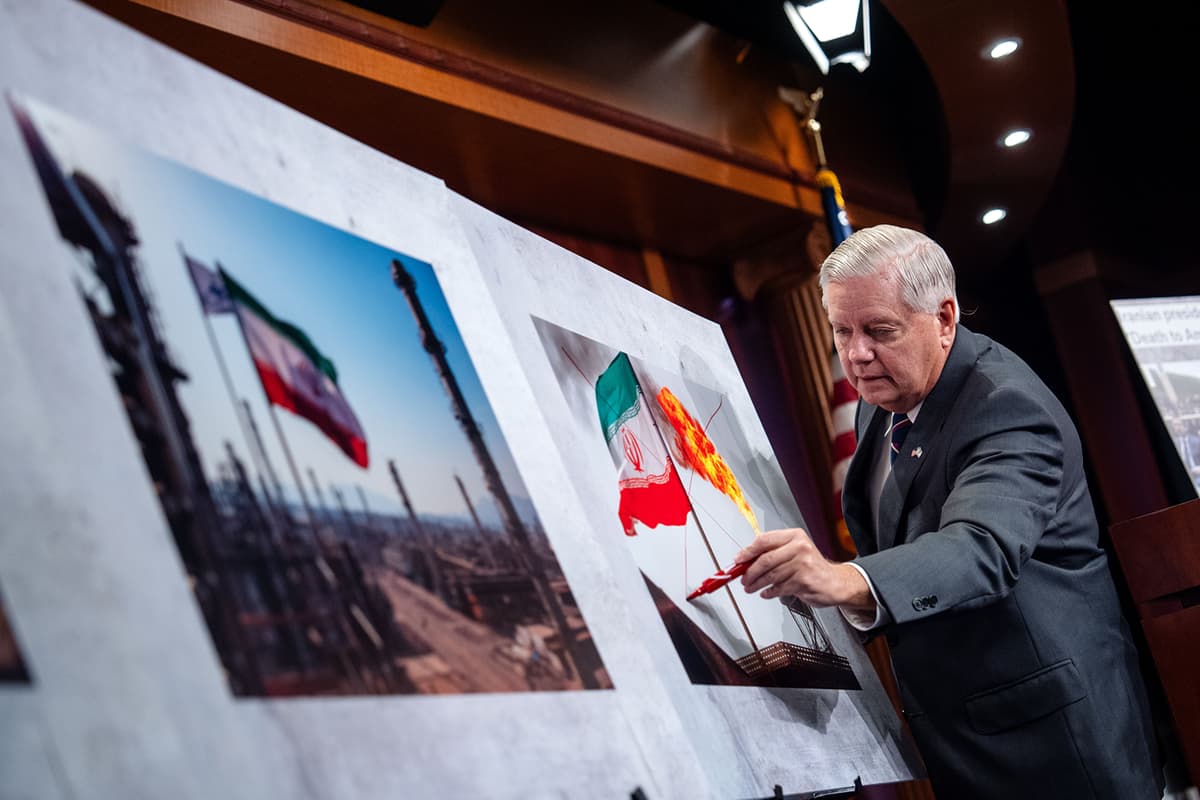
Washington Is Still Chasing the Perfect War
The article argues that Washington continues to chase a myth of a "perfect war," using the two‑month‑old Operation Epic Fury against Iran as a case study. It highlights how senior politicians and think tanks repeat the same interventionist logic that drove the...

Is the Iran War Pushing Southeast Asia Into China’s Arms?
The Iran‑War‑induced energy shock has exposed Southeast Asian economies to fuel shortages and soaring costs, despite their security ties to the United States. The Philippines declared a national energy emergency and is scrambling for a 1 million‑barrel buffer, while Vietnam is...

The United States’ Korea Strategy Is Working Against Itself
The United States is pulling South Korea deeper into its rivalry with China, forcing Seoul to shoulder more of the burden for deterring North Korea while confronting a surge in Chinese gray‑zone incursions. Chinese aircraft and naval units have repeatedly...

Iraq’s Continuing Struggle for Sovereignty
On April 9, Iraq’s parliament named Nizar Amidi president and later nominated Ali al‑Zaidi as prime‑minister‑designate, both after missing constitutional deadlines. The new leadership inherits a crisis where Iran‑aligned militias launch drone attacks on U.S. and Gulf interests from Iraqi soil,...

Trump’s Southeast Asia Trade Deals Are in Limbo
Malaysia has become the first Southeast Asian nation to formally terminate its tariff agreement with the Trump administration after the U.S. Supreme Court ruled the president lacked authority for the “Liberation Day” tariffs. The decision leaves six ASEAN members—Cambodia, Indonesia,...

U.S. War in Iran Leaves Ukraine’s Air Defense in Limbo
The United States’ war in Iran is consuming roughly half of its Patriot missile inventory, leaving Ukraine’s air‑defense program on uncertain footing. Since April 2023, Kyiv has relied on the Prioritized Ukraine Requirements List (PURL) to receive Patriot interceptors, but...

Mali Is the Key to Understanding Africa’s Trajectory
The article argues Mali serves as a bellwether for Africa’s political and security trajectory, highlighting its 1992 democratic breakthrough and the recent April 2026 insurgent assault that killed the defense minister. It links Mali’s turmoil to similar crises in Burkina Faso and...

Trump’s War Exposes the Weakness of Middle Powers
The article argues that Donald Trump’s aggressive foreign‑policy moves, from the February strike on Iran to the unilateral blockade of the Strait of Hormuz, have laid bare the structural weakness of middle‑power diplomacy. While Canadian Prime Minister Mark Carney urged...

Trump: 60-Day War Powers Deadline ‘Totally Unconstitutional’
President Donald Trump declared the 60‑day War Powers deadline for ending the Iran conflict “totally unconstitutional” and said he will not seek congressional approval to continue operations. The White House argues the cease‑fire pauses the clock, a position at odds...

Will the Next Fed Chairman Be More Compliant With Trump?
Kevin Warsh, a former Fed governor and Trump ally, is poised to become Federal Reserve chair. His background as a market‑fixer during the 2008 crisis and ties to Republican circles contrast with his hawkish stance on inflation. Warsh has pledged...

‘Hokum’ Is Haunted by Ireland’s Dark History
Irish director Damian McCarthy’s new folk‑horror film *Hokum* opens in U.S. theaters on May 1, 2026. The story follows novelist Ohm Bauman (Adam Scott) as he investigates a haunted hotel suite tied to Ireland’s buried sins, especially the legacy of the Magdalene Laundries. McCarthy...

What in the World?
Foreign Policy’s weekly quiz recaps ten headline‑making developments from late April, ranging from Iran’s conditional offer to reopen the Strait of Hormuz to the United Arab Emirates’ withdrawal from OPEC. It also highlights China’s block of Meta’s AI‑focused acquisition, Hungary’s...

Two Novels Take on the Post-American Dream
Foreign Policy highlights two debut novels that probe the post‑American Dream. Sarah Wang’s *New Skin* follows Linli Feng as she navigates her mother’s illegal cosmetic‑injection empire and a reality‑TV showdown, exposing the health and legal fallout of America’s plastic‑surgery craze....

Why Trump Might Come to Regret the Iran War
The article argues that the Trump‑initiated U.S.–Israel war against Iran, now in its third month, is unlikely to produce a transformative outcome. Operation Epic Fury has inflicted tactical setbacks on Tehran but has not forced a diplomatic settlement, leaving the...

India Rethinks Energy Security Amid War
India’s energy security is under strain as the Iran war disrupts Middle‑East oil and gas supplies, prompting a record 256 GW peak power demand and acute LPG shortages for over 330 million households. National Security Advisor Ajit Doval’s visit to the UAE...

Where Is Pakistan Again?
The World Bank reclassified Pakistan from its traditional South‑Asia grouping to a new MENAAP (Middle East, North Africa, Afghanistan, Pakistan) region in July 2025. This shift places Pakistan alongside economies facing war‑related slowdowns, dropping its growth outlook from the South...

Can South Africa’s Apartheid-Era Negotiator Chart a Smooth Course in the U.S.?
South Africa has appointed former apartheid‑era negotiator Roelf Meyer as its ambassador to the United States, a move aimed at easing the strained relationship with the Trump administration. Tensions escalated after Washington expelled the previous ambassador and imposed a 30%...

The Global Economic Impact From the Iran Conflict
The IMF has lowered its 2026 global growth outlook to 3.1% from 3.4% as the Strait of Hormuz remains closed, pushing oil prices toward $100‑$110 a barrel. In its adverse scenario, world growth could slip to 2‑2.5% with inflation edging...

China Pulls the Plug on Meta’s AI Acquisition
Meta’s $2.5 billion acquisition of Singapore‑based AI startup Manus was approved by Chinese regulators in December but was abruptly blocked in April. The reversal reflects a rapid shift in Beijing’s national‑security calculus over artificial intelligence. Meta now faces a likely loss...

Japan and China Are Edging Dangerously Close to Conflict
Japan’s Maritime Self‑Defense Force destroyer Ikazuchi transited the Taiwan Strait on April 17, prompting a sharply worded rebuke from Beijing. The reaction is amplified by the anniversary of the 1895 Treaty of Shimonoseki and lingering anger over a recent embassy intrusion...

Russia’s War Boom Masks an Economic Implosion
Russia reports a record‑low 2.1% unemployment rate, but the labour market is collapsing under a shortage of roughly 2 million workers in 2025, projected to top 10 million by 2030. The defence industry, buoyed by state subsidies and draft deferments, pays wages...

What Congress Could Do to Stop the War
Julian Zelizer argues that Congress still holds the constitutional power to stop U.S. wars by withholding appropriations, citing the 1970‑73 Case‑Church amendment that ended combat funding for Vietnam and Cambodia. He warns that the Republican‑controlled Congress is currently allowing President...

Beijing Is Using Influencers to Burnish Its Image
China is adopting a Dubai‑style influencer strategy, dubbed “Chinamaxxing,” to polish its global image. The trend gained traction after American streamer IshowSpeed’s viral 2025 China visit, prompting Western creators to showcase curated Chinese experiences. Influencers with under 10,000 followers can...

Israel and Syria’s Shared Fight Against Hezbollah
Syrian President Ahmed al‑Sharaa, who ousted Bashar al‑Assad in December 2024, has begun actively disrupting Hezbollah’s weapons smuggling and sabotage networks inside Syria. Syrian security forces recently thwarted a Hezbollah‑linked plot in Quneitra and have seized hundreds of rockets destined for...

The Hormuz Hit to Helium
The Iran‑UAE conflict has disrupted helium supplies, as Qatar halted production at its Ras Laffan LNG plant and the Strait of Hormuz remains blocked. Spot helium prices have doubled after a 14% cut in Qatari exports, tightening a market already dependent on...

U.S. Floats Punishing NATO Members for Refusing to Join Iran War
The United States is weighing punitive measures against NATO allies that have denied U.S. forces access to European bases for operations against Iran. A Pentagon memo, attributed to policy adviser Elbridge Colby, suggests possible suspension of Spain’s NATO membership and a...

The Planet Is Doing Better Than You Think
Conservation researchers John Gittleman and Stuart Pimm argue that the prevailing apocalyptic narrative on biodiversity overlooks substantial successes. They note that roughly $140 billion is spent each year on conservation, a level comparable to the U.S. Energy Department’s budget, and that...

Why Are the Saudis Sitting Out the War With Iran?
Saudi Arabia is watching the U.S.-Israel war with Iran from the sidelines while its Vision 2030 megaprojects face budget cuts and timeline extensions. The kingdom’s Public Investment Fund is pivoting toward renewables, advanced manufacturing, logistics and tourism, and Riyadh continues to...

Trump’s Iran War Approaches a Fresh Legal Hurdle
President Trump’s six‑week war against Iran is nearing the 60‑day deadline imposed by the 1973 War Powers Resolution, which requires congressional authorization after that period. With the clock set to expire on May 1, 2026, Republican leaders such as Senate Appropriations...

Washington’s One-Dimensional Chess in the Horn of Africa
The Trump administration is reportedly holding secret talks to lift U.S. sanctions on Eritrea, a move that diverges from the usual pattern of sanction relief following political reform or conflict resolution. Eritrea’s authoritarian regime, led by Isaias Afwerki since 1993, shows...

The Quad Is on the Brink of Extinction
The Quadrilateral Security Dialogue (Quad) is teetering on collapse after President Donald Trump repeatedly declined to attend key summits, leaving the group without its U.S. anchor. Tensions over tariffs, defense‑spending targets, and a stalled U.S.–India trade deal have strained relations...

How Iran and the United States Are Planning Their Next Moves
President Donald Trump unilaterally extended the U.S.-Iran cease‑fire just before it was set to expire, prompting Tehran to label the continued American blockade of Iranian ports an act of war. The conflict has choked the Strait of Hormuz, a conduit...