Supply Chain KPIs Are No Longer Keeping Up with the Job
Supply chain leaders are now tasked with resilience, speed, risk mitigation, and strategic alignment, yet most organizations still evaluate performance with legacy cost‑centric KPIs. The Institute for Supply Management warns that this mismatch incentivizes short‑term savings at the expense of continuity and agility. New metrics such as supplier diversification, recovery planning, decision latency, and exposure visibility are gaining prominence. Companies that revamp their KPI frameworks will better demonstrate value beyond cost control.

Medtronic: Strengthening Regulated Medical Device Supply Chains
Medtronic, one of the world’s largest medical‑technology firms, is redefining its supply‑chain model to meet the stringent demands of regulated healthcare. Beyond cost and service, the company now measures performance on traceability, documentation integrity, and compliance continuity, requiring end‑to‑end visibility...

Why Speed-to-Adjustment Is Becoming a Competitive Advantage in Consumer Supply Chains
Consumer supply chains are shifting from pure efficiency to speed‑to‑adjustment as demand becomes fragmented, volatile, and digitally driven. Traditional static optimization can become obsolete within days, prompting firms to adopt continuously updated planning and response capabilities. Inventory is re‑positioned as...

Nike: Tightening the Link Between Demand Signals and Global Supply Planning
Nike is reshaping its supply chain by tightly linking real‑time demand sensing with global inventory planning. The company moves beyond traditional forecasting, using continuous intelligence to reposition stock across wholesale, owned stores, digital channels, and regional fulfillment networks. Faster adjustments...
John Deere: Connecting Equipment Demand, Parts Planning, and Dealer Execution
John Deere is reshaping its supply chain by tightly linking equipment demand, parts availability, and dealer execution through a connected digital platform. Seasonal planting and harvest cycles make downtime costly, prompting the company to integrate real‑time demand signals, equipment condition...

Honeywell to Sell Productivity Solutions and Services Business to Brady for $1.4 Billion
Honeywell agreed to sell its Productivity Solutions and Services (PSS) business to Brady Corporation for $1.4 billion in cash, a move that fits Honeywell’s broader strategy to simplify its industrial portfolio. The deal, slated to close in the second half of...
Why Manufacturing Execution Is Becoming More Software-Defined
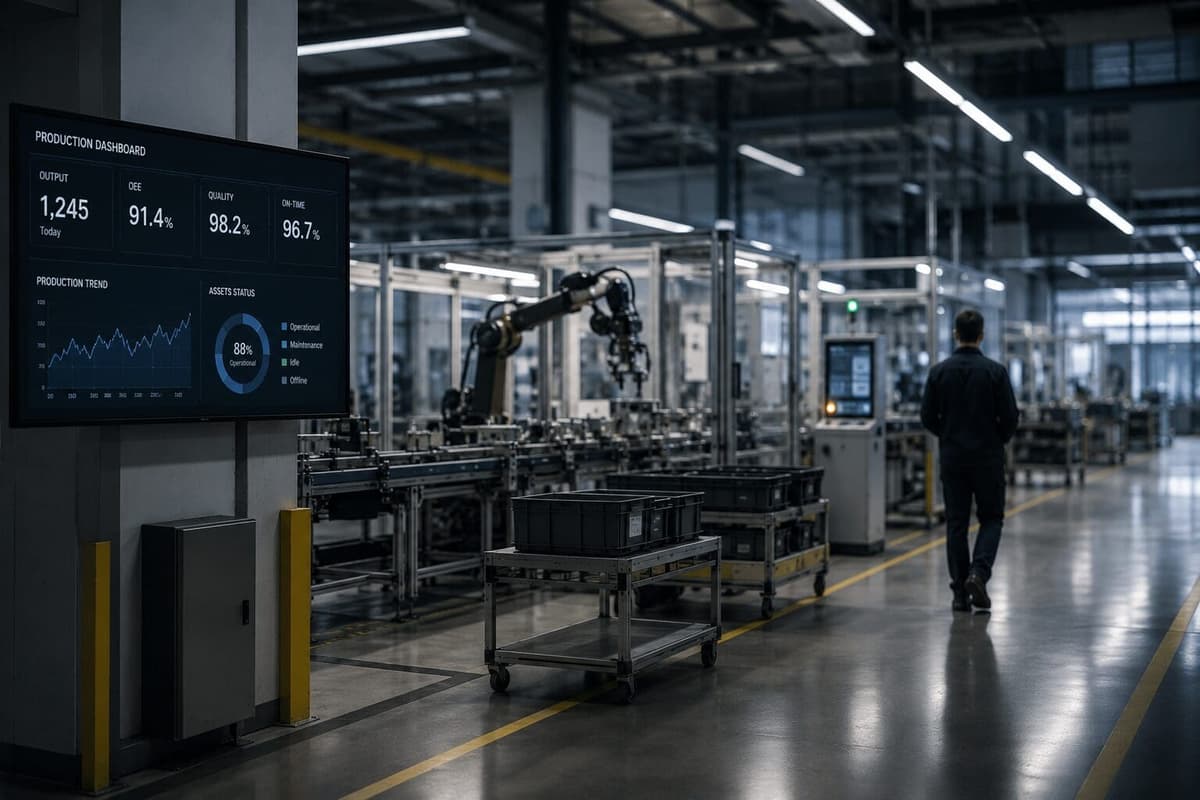
Manufacturers are moving beyond hardware‑centric optimization toward software‑defined execution layers that orchestrate machines, data, and workflows in real time. The shift is driven by volatile supply chains, compressed product cycles, and the need for rapid operational adaptation. Companies like BMW...

BMW: How Humanoid Robots Are Moving From Plant Trials Toward Production Work
BMW is expanding its humanoid robotics program from a Spartanburg pilot to a production‑scale rollout at Plant Leipzig in Germany. The Spartanburg test saw Figure AI’s Figure 02 robot handle over 90,000 sheet‑metal components across 1,250 operating hours, supporting 30,000 X3...

What Supply Chain Leaders Need to Understand About MCP, A2A, and Graph-Enhanced AI
Supply chain AI is moving from isolated copilots to a coordinated intelligence layer built on Model Context Protocol (MCP), Agent‑to‑Agent (A2A) communication, and graph‑enhanced retrieval‑augmented generation (RAG). MCP supplies persistent operational context, while A2A enables autonomous agents to exchange decisions...

Saudi Arabia’s Logistics Giant Would Be More Than a PIF Portfolio Move
Saudi Arabia’s Public Investment Fund is weighing a merger of its maritime carrier Bahri, Saudi Global Ports and Saudi Railway Co. into a single logistics champion. The move would create an integrated corridor that links sea, rail and inland hubs,...

How AI Is Collapsing the Gap Between Supply Chain Planning and Execution
AI is compressing the traditional divide between periodic supply‑chain planning and reactive execution, creating a continuous decision‑making loop. Forecasts, inventory policies, and transportation plans can now be updated in near real‑time as demand, capacity, and risk signals evolve. The shift...
BJ’s Wholesale Club Shows How Warehouse-Club Supply Chains Are Evolving
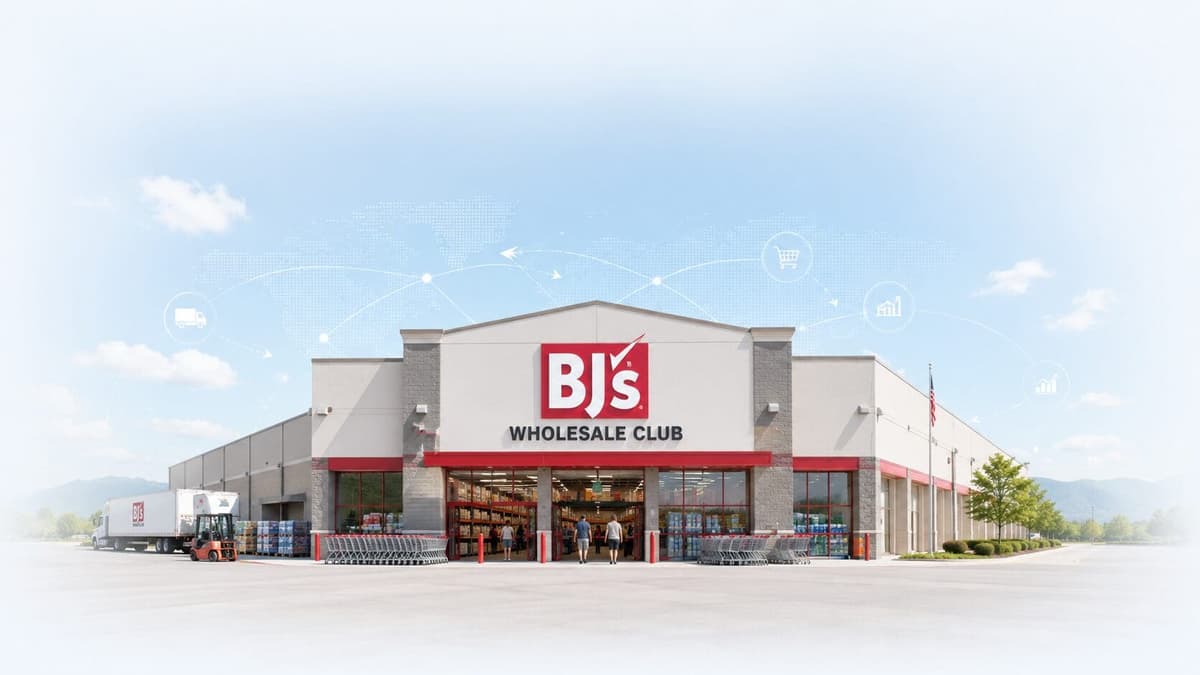
BJ’s Wholesale Club continues to leverage its low‑SKU, direct‑purchase, cross‑docking model while adding digital fulfillment, fresh‑grocery capabilities, and a push into Texas. Strong membership renewal rates fund aggressive pricing, new club openings, and digital investments, and the 2022 acquisition of...

Meta and Standard Chartered Signal AI’s Next Phase: Operating Model Redesign
Meta is reshuffling roughly 7,000 employees into AI‑centric groups, while Standard Chartered plans to eliminate more than 7,000 corporate‑function roles by 2030 through automation. Both moves signal a shift from using AI as a productivity add‑on to redesigning enterprise operating...

US National Freight Strategic Plan Puts Freight Back at the Center of Supply Chain Strategy
The U.S. Department of Transportation unveiled the 2026 National Freight Strategic Plan, positioning freight as a national operating system that underpins supply‑chain resilience, energy security, and industrial competitiveness. The plan outlines six strategic priorities—safety, efficiency, security, resilience, innovation, and workforce...

NextEra-Dominion Deal Shows Power Is Becoming a Supply Chain Constraint
NextEra Energy and Dominion Energy have announced an all‑stock merger that would create the world’s largest regulated electric utility, combining roughly 110 GW of generation assets and a 130‑GW pipeline of large‑load opportunities. The deal underscores how AI, data‑center expansion, electrification...