
Molecular De-Extinction Looks to the Past to Find the Molecules of the Future
Scientists are leveraging machine-learning techniques to resurrect ancient genes and peptides, a process termed molecular de-extinction. Recent studies have recreated antimicrobial peptides from extinct species such as mammoths, demonstrating potent activity against contemporary drug‑resistant pathogens. The approach combines paleogenomics, synthetic biology, and AI-driven design, accelerating the discovery pipeline beyond traditional screening. Industry and academic groups are now filing patents and exploring therapeutic applications, signaling a shift toward bio‑inspired drug development.

Spatially Tunable Multiomic Sequencing Using Light-Driven Combinatorial Barcoding of Molecules in Tissues
Researchers introduced Barcoding by Activated Linkage of Indexes (BALI), a light‑driven combinatorial barcoding platform that writes spatial DNA barcodes directly onto diverse biomolecules in tissue sections. The technique lets users define the number, size, shape and resolution of regions, enabling...

Position-Dependent Feedback Drives Scaling and Robustness of Morphogen Gradients
A new theoretical framework shows that morphogen‑expander feedback can achieve gradient scaling even when the expander’s concentration varies with position. The model demonstrates that position‑dependent expander profiles enhance both scaling and robustness throughout a tissue, whereas uniform expander levels only...
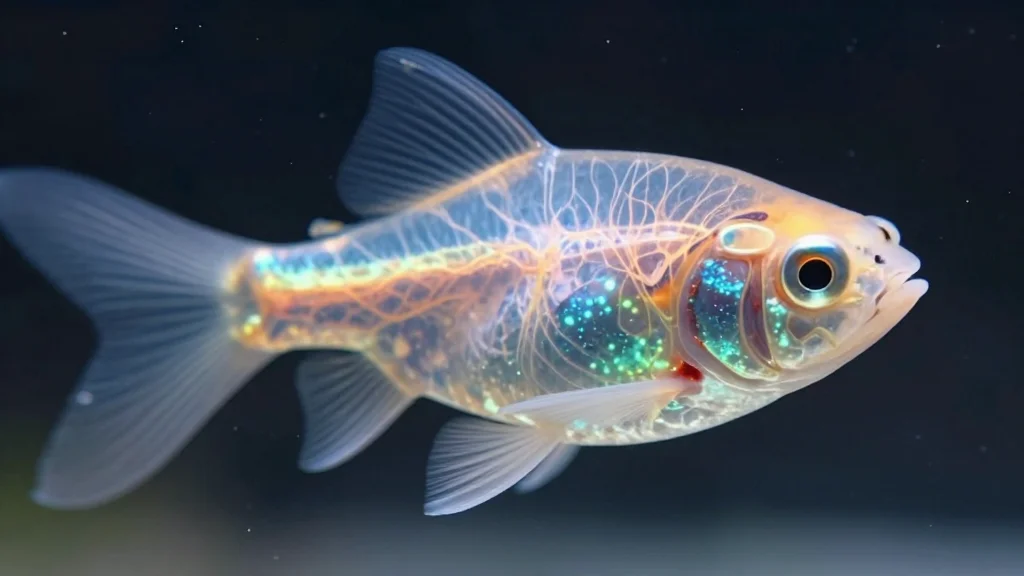
Cross-Individual Translation of Spontaneous Zebrafish Brain Activity Through a Shared Latent Representation
A team of neuroscientists introduced latent‑aligned Restricted Boltzmann Machines (LaRBMs) to uncover a shared latent space across whole‑brain, single‑cell recordings in six larval zebrafish. The model identifies spatially localized co‑activation motifs that recur across individuals, enabling bidirectional translation of spontaneous...
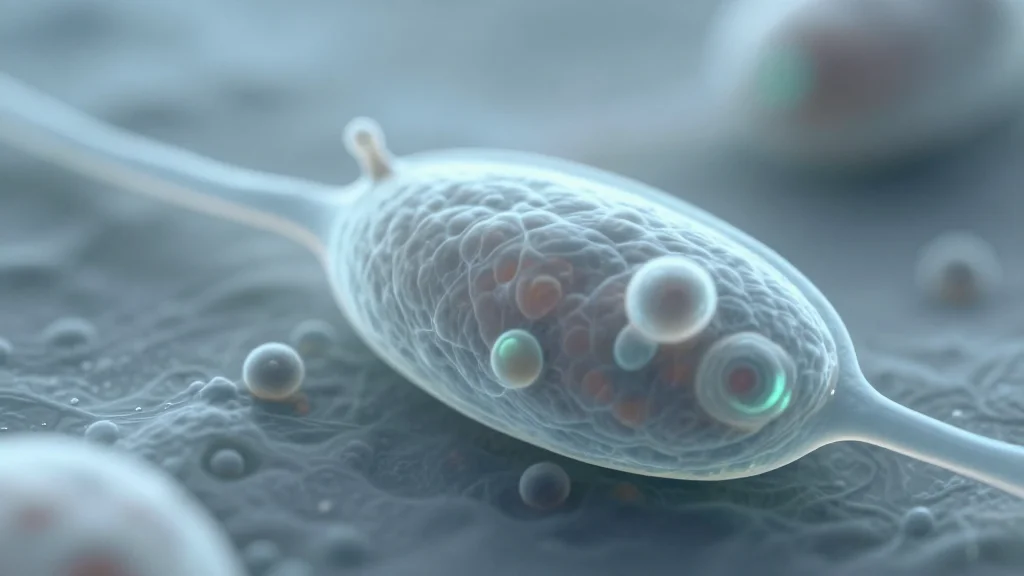
Phospholipase D Regulates On-Membrane Diffusivity of a Myristoylated Protein and Defines the PIP3 Patch Territory
Researchers discovered that phospholipase D (PLD) markedly reduces lateral diffusion in both artificial lipid bilayers and living Dictyostelium cells. Cytosolic extracts cut lipid mobility in half, an effect replicated by adding purified PLD, while pharmacological inhibition restores fluidity. The PLD product...

Human Pannexin Mutations and Their Implications in Erosive Osteoarthritis
Researchers identified the first germline PANX3 mutation (R24H) associated with erosive hand osteoarthritis (EHOA), demonstrating loss‑of‑function channel activity. A second independent PANX1 mutation (R152H) showed gain‑of‑function, increasing ATP release and cytotoxicity. Both mutations, despite opposite effects on channel activity, converge...

Wolbachia-Mediated Viral Transmission Enhancement in Insect Vectors
Researchers have identified the bacterial symbiont Wolbachia as a key facilitator of southern rice black‑streaked dwarf virus (SRBSDV) transmission in the white‑backed planthopper. High‑transmission planthopper populations harbor elevated Wolbachia titers, and the Wolbachia surface protein (WSP) directly binds the viral...

Rapid Sensing and Relaying of Cellular Hyperosmotic Stress Signals via RAF–SnRK2 Core Condensates
Researchers have identified B4‑subgroup RAF kinases as direct sensors of cellular hyperosmolarity in plants. Upon osmotic stress, these kinases undergo liquid‑liquid phase separation, forming core condensates with ABA‑independent SnRK2 kinases. The condensates protect SnRK2s from inhibitory PP2C phosphatases, enabling swift...

Soft, Skin-Interfaced Electronics Enable Cannula-Free Wireless Monitoring of Sleep Respiration
Researchers have unveiled a soft, skin‑interfaced nasal patch that monitors sleep respiration without a cannula. The ultrathin device translates airflow‑induced tissue deformation into strain signals using a laser‑induced graphene sensor and liquid‑metal interconnects. A modular architecture separates a disposable skin‑contact...

Data-Driven Particle Dynamics: Structure-Preserving Coarse-Graining for Emergent Behavior in Nonequilibrium Systems
A new hybrid machine‑learning framework embeds thermodynamic principles into coarse‑grained models of nonequilibrium particle systems. Using the metriplectic bracket formalism, the method guarantees discrete conservation of momentum, first‑ and second‑law compliance, and fluctuation‑dissipation balance. Self‑supervised learning uncovers hidden structural variables...
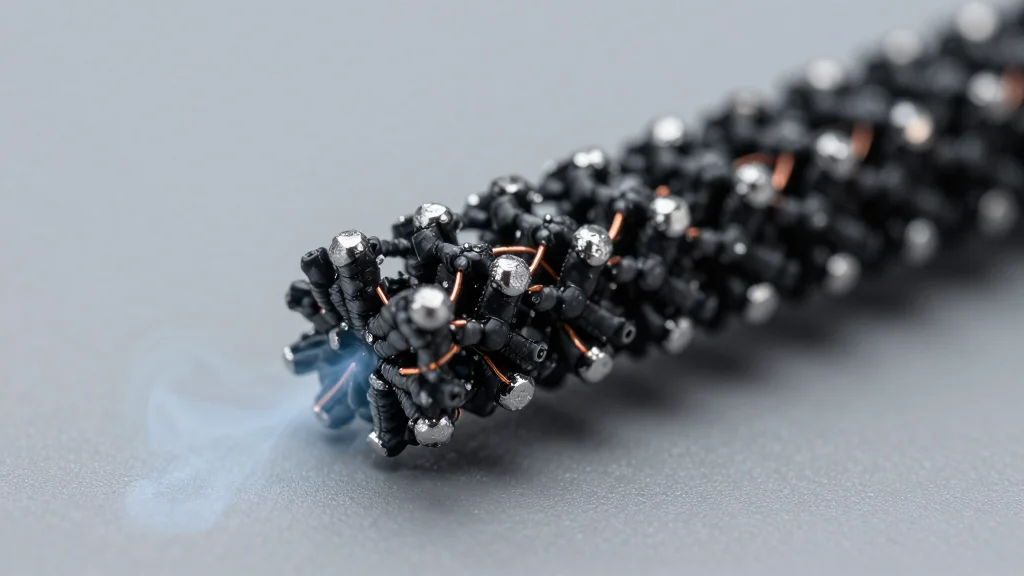
Inside-Out-Engineered CuOx/Ru Sites for Efficient Electrochemical Nitrate Reduction to Ammonia
Researchers introduced an inside‑out catalyst, CuOx@CNT/Ru, that couples ultrasmall Ru nanoparticles on carbon nanotubes with confined CuOx nanowires. The architecture delivers a record ammonia yield of 146 mg h⁻¹ mg_cat⁻¹ at –0.7 V vs RHE, with 99 % Faradaic efficiency and 43 % energy efficiency at...
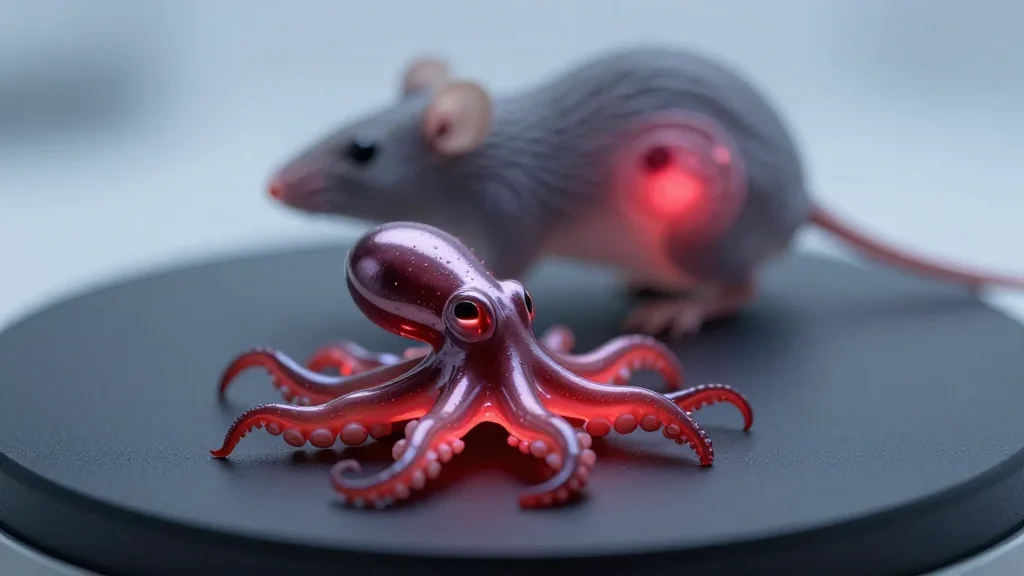
An Octopus Probe for High-Performance >1,300 Nm NIR-II Fluorescence Molecular Imaging of Cancer
Researchers at Stanford introduced the Octopus (OCTP) probe, a modular NIR‑II fluorescence agent that emits beyond 1,300 nm and targets the folate receptor. In pre‑clinical mouse studies, OCTP delivered markedly higher tumor‑to‑background ratios and brighter tumor signals than the FDA‑approved Cytalux...

Unexpected Behavior of Ultra-Low-Crosslinked Microgels in Crowded Conditions
Researchers Marín‑Aguilar and Zaccarelli used monomer‑resolved molecular dynamics to probe ultra‑low‑crosslinked (ULC) microgels under crowding. Across a wide packing‑fraction range they discovered that ULC particles interpenetrate without faceting, suppress the structural reentrance typical of Hertzian spheres, and never undergo a...
Epigenetic Constraints and Enhancer Innovation Link Neuronal Plasticity to Evolutionary Adaptation
Researchers used Caenorhabditis nematodes to show that epigenetic silencing of the serotonin‑reuptake gene *mod‑5* keeps VC4/VC5 neurons non‑serotonergic in *C. elegans*. In the *Angaria* clade, a newly evolved enhancer rewires this locus, producing a permanent serotonergic phenotype that alters egg‑laying...

A Plasma-Based DNA Test for Quantification of Disease Burden in Acute Myeloid Leukemia Patients Undergoing Bone Marrow Transplantation
Researchers at Johns Hopkins introduced a plasma‑based DNA assay, v96, that monitors up to 96 AML‑specific mutations in patients undergoing allogeneic bone‑marrow transplantation. In a cohort of 30 AML patients, the test detected molecular evidence of residual leukemia in 100%...